

Case Study: Frontal Knee Pain (Part 2)
During the initial stages of rehab, the primary focus was to maintain muscle function which can be inhibited by pain. During assessment, it was also established that Jonny was weaker on one side of his outer hip muscles (glutes) when looking at the way he balanced on one leg. The video below looks at a couple of simple exercises he worked on to improve this.

Case Study: Frontal Knee Pain (Part 1)
Knee pain is a common issue in runners. It can start off as a niggle and can easily be ignored until the point where running is no longer tolerable. This is frustrating particularly when training for a race or event. In part 1 of this month’s case study, we will look at some common physiotherapy techniques we use for pain relief in the treatment of anterior (pain in the front of) knee pain.

Jonny hurt his knee during a 42-mile Ultra Marathon which was on trail and had plenty of up and down hill sections. This caused an acute overload of the structures around his knee cap, causing pain and swelling.

Case Study: Ankle Sprain Rehab - Part 2
Part 2 of our ankle rehab case-study following Mariam's injury two weeks before a trail marathon.
Part 2 of our ankle rehab case-study following Mariam's injury two weeks before a trail marathon. This is a sports physiotherapy approach to the treatment and management of an injury leading up to a specific event. In this episode, we looked at progressing her exercises and training modification leading up to the run.


Case Study: Ankle Sprain Rehab: Part 1
We all know injuries happen and, in most unfortunate instances, they can happen before a sporting event you have been training for months. It can be disheartening when you’ve spent countless hours training for such an event with the prospect of having to pull out. In this month’s case study, we will be looking at managing an ankle injury coming from a personal experience from one of our own physios, Mariam. We will be demonstrating a sports physiotherapist’s approach to dealing with an injury leading up to an event over a 3-part series. Part 1 is below:

Dry Needling: The most effective pain treatment you may never have heard of!
Dry needling is a type of acupuncture that has become very popular with physiotherapists in recent years in our treatment of injury and pain.
Dry needling is a type of acupuncture that has become very popular with physiotherapists in recent years in our treatment of injury and pain. Also known as Western Medical Acupuncture, Dry Needling differentiates itself from traditional acupuncture by being administered to soft tissue structures such as muscles and fascia (connective tissue) in order to stimulate the central and peripheral nervous systems. This results in the release of pain relieving substances within the body, which can desensitise painful structures as well as the loosening of excessively tight muscles, therefore restoring movement and function and facilitating a healing response. Dry needling is often used in conjunction with other treatment techniques as part of a treatment plan. This is different from traditional Chinese Medicine type Acupuncture which places needles along meridian lines and is based on a model of treating and restoring energy flow within the body.

Why is it called Dry Needling and how does it work?
This was to differentiate it from the more traditional western medicine approach to treating painful muscles and joints that involved the use of a hypodermic needle to inject a medication such as a steroid solution.
Dry needling uses only a thin acupuncture-type needle to stimulate and deactivate myofascial trigger points, muscles and connective tissues. This can also have both diagnostic and treatment benefits whenever a practitioner is attempting to address problems in deeper muscles and structures that massage techniques cannot be effective at reaching.
Myofascial Trigger Points can be found to be causing pain in nearly every musculoskeletal pain problem. (Myo=Muscle; Fascia=Connective tissue - the term ‘myofascia’ describes that area). These trigger points present as hypersensitive localised muscle tenderness that can also cause prolonged ache in a more widespread area. They can arise from overloading and overuse of muscles and structures such as in sport or after trauma, or even while sitting with a poor posture with the example being pain to the neck or back. As well as pain, myofascial trigger points can cause weakness of the affected muscles and restrict range of movement, both which can contribute to other problems and compensations developing.
Generally as the needles used are so thin, a patient can often not even feel the needle being inserted. When dry needling is administered effectively to a myofascial trigger point the patient may experience a local twitch response from the muscle. This instantaneous involuntary contraction confirms the presence of a myofascial trigger point and the practitioner may stimulate this twitch response a number more times manually using the needle or via an electrical current from a TENS machine to successfully deactivate.
Results can often be instantaneous when assessing restricted ranges of movement in muscles and joints and your practitioner will often demonstrate this with before and after treatment testing.
After a dry needling treatment a patient may instantly experience improvement in their pain and dysfunction being treated however it is quite common to experience muscle soreness around the needle site for between 24-48 hours. This post treatment soreness, however, is comparable to what can be expected from most hands-on therapies such as deep tissue massage.
As dry needling is administered in a clinical environment by highly trained and regulated physiotherapists, it should be considered to be a very safe treatment option and your clinician will have taken every precaution to minimise risk of injury or infection from the needle. It would however not be advisable to try for anyone who suffers from a significant phobia of needles.

Injuries and conditions to consider dry needling with:
Postural and work-related pain
Sports injuries affecting all muscles and joints
Muscle and Joint Tightness
Disc injuries
Migraines and Tension-Type Headaches
Tendon Injuries
Fibromyalgia and Complex Regional Pain Syndrome

Foam Rolling: What is it? What’s the Evidence? How to apply it!
Self-myofascial release is a name given to the use of equipment or tools to perform self-massage and stretching with the aim of increasing joint range of motion and improving muscle recovery and performance. One of the most commonly used tools is a foam roller. You will often see people in gyms attempting to manoeuvre their bodies in various positions over one of these rollers.
Foam Rolling
What is it?
Self-myofascial release is a name given to the use of equipment or tools to perform self-massage and stretching with the aim of increasing joint range of motion and improving muscle recovery and performance. One of the most commonly used tools is a foam roller. You will often see people in gyms attempting to manoeuvre their bodies in various positions over one of these rollers.
Most commonly rollers will be used in a way that the body is positioned with the roller in contact with a specific muscle or muscle group. The user then uses gentle motion to stretch and massage the area while controlling the pressure exerted by adjusting their position and the weight going through the area.
The theory is that using foam rollers used to massage and stretch our muscles, joints and soft tissues can make them more pliable thereby increasing range of motion. It is also theorised that pressure applied to soft tissues can stimulate change through the central nervous system by sending signals which alter the tissue activity and reduce tension levels.
What’s the evidence?
In general terms, self-myofascial release using a foam roller appears to have short-term effects of increasing joint range of motion without exhibiting any negative effects on muscle or joint performance. There is also some evidence to suggest that post exercise muscle soreness can be reduced while muscle recovery is enhanced when foam rolling is used after strenuous or intense exercise.
The overall summary of the evidence to date suggests that foam rolling is a safe tool to use prior to or after exercise to assist with warm up and/or recovery. However, the research is limited and fails to come to a consensus on what the optimal methods, techniques or frequency of foam rolling should be. There is not yet enough research or evidence to define the best way to roll specific muscles or how many sets or repetitions is appropriate.
How can I apply it?
The general consensus is that foam rolling is safe and can be a welcome addition to assist in warm up and recovery. While we do not have enough evidence to create exact protocols there is room here for individual preference and some experimentation to see what works best for you. From personal experience and from reviewing the literature we would suggest trying:
3-5 sets of 30+ second repetitions on each targeted muscle or muscle group
Apply gradual pressure in various planes and directions.
For larger or longer muscle groups consider dividing the application into 2-3 areas
Consistent application aiming for a minimum of 3 times per week
Slight discomfort during application is acceptable but strong or intense pain is not
Position yourself carefully to avoid unnecessary strain on other muscles or joints
Below are a few examples of positions used to foam roll various muscles

Foam rolling outer thigh
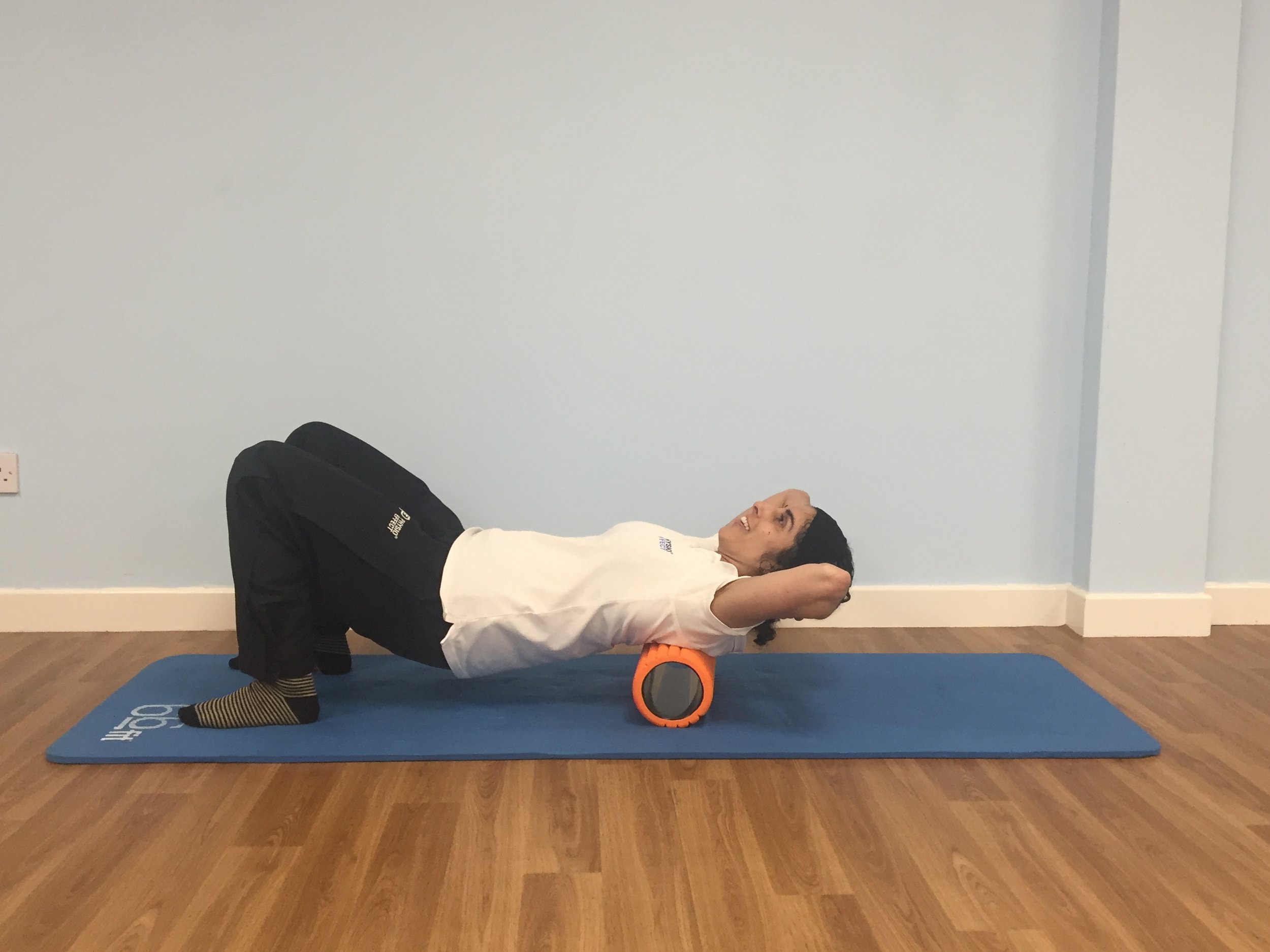
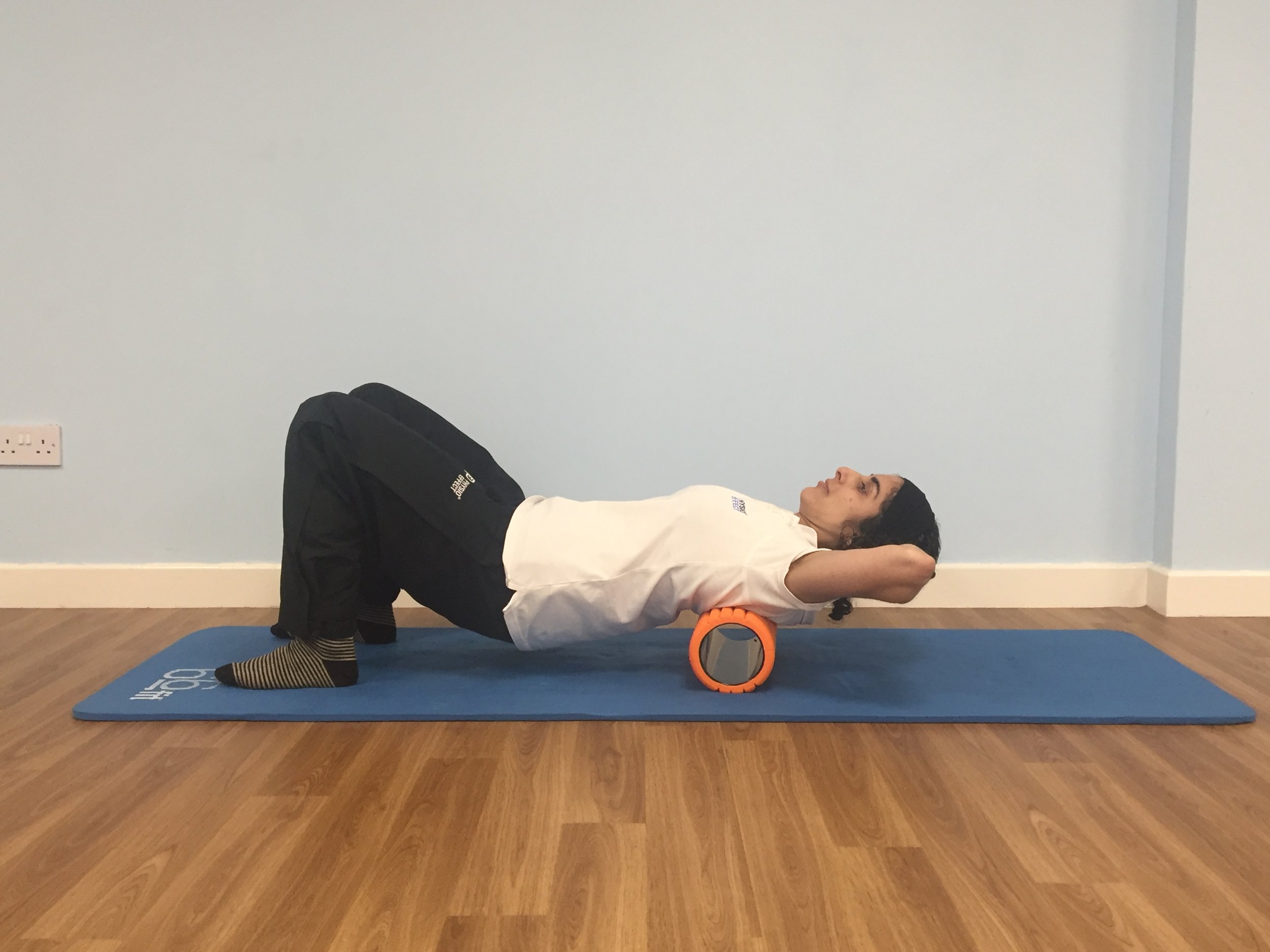

Foam rolling upper back

Foam rolling calf muscle
A word of caution
Foam rolling can be a useful adjunct to any exercise or training routine and may also be used by more sedentary individuals to reduce muscle and joint stiffness. Foam rolling, however, is not an appropriate tool for treating damaged or injured tissues and we would warn that it should not be used as such. Always seek advice from a qualified professional if you are in any doubt.
Foam rolling does not replace or negate the need for adequate warm up and the use of correct techniques when exercising. We would suggest using foam rolling to compliment your existing training or exercising routine but not to replace any aspect.
————————
Article written by Daniel Wray – Senior Physiotherapist and Director at Physio Effect
The dedicated team at Physio Effect provide a full package of services that will ensure you’re supported through your pain management, injury prevention, assessment, recovery and helping you achieve your ultimate performance goals. We offer a range of services including Physiotherapy, Sports Massage, Craniosacral Therapy, Clinical Pilates and Yoga.

Kinesio-Taping
Despite the clear lack of evidence for its use the spread of kinesio-taping throughout health and sport practices does not appear to be waning. As a Physiotherapist with more than 10 years in clinical practice I have been officially trained and certified as a kinesio-tape practitioner and while I recognise the lack of hard clinical evidence I do still have a place for using kinesio-taping in my practice.
Article written by Daniel Wray – Senior Physiotherapist and Director at Physio Effect
6th November 2017
What is Kinesio-taping?
Kinesio-taping is a commonly used form of support taping applied to the muscles and joints of the body. There’s a good chance you will have seen this brightly coloured tape on a friend or colleague or through its wide use across many sports including football, tennis and swimming. Tape is normally applied by a trained health and fitness professional and can stay in place anything from 24 hours up to one week. The tape can stay in place after bathing or swimming and its breathable elastic properties mean it is generally well tolerated by the skin.
The theory behind kinesio-taping suggests that it works via its unique elastic properties lifting the skin to improve fluid movement and alleviate pain. A suggested mechanism of how this works is the alleviation of pressure on pain receptors interrupting the normal transmission of pain signals to the spinal cord. Other popular notions suggest that application of kinesio-tape can help stimulate and strengthen a weakened muscle or relax and release a stiff or tightened muscle depending on the level of tension applied to the tape. It may also offer support and restriction of movement when this is required as part of treating injured tissues or joints.
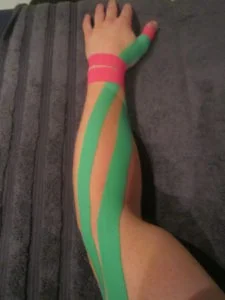
Kinesio taping application for shoulder support
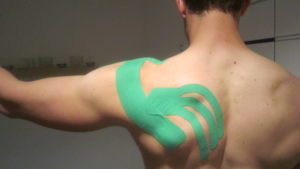
Kinesio-taping application for shoulder support
What’s the evidence?
As Physiotherapists and health professionals it is central to good practice that we seek out solid evidence to support the use of any therapy or treatment. Kinesio taping falls almost entirely into a category of little to no hard scientific evidence supporting its use. There have been numerous studies and systematic reviews of the evidence that conclude that kinesio-taping offers little to no clinically significant benefit. It appears most of the evidence and positive reviews from patients and health professionals to support kinesio-taping are anecdotal or based on single case reports or small samples.
Should I use kinesio-taping?
Despite the clear lack of evidence for its use the spread of kinesio-taping throughout health and sport practices does not appear to be waning. As a Physiotherapist with more than 10 years in clinical practice I have been officially trained and certified as a kinesio-tape practitioner and while I recognise the lack of hard clinical evidence I do still have a place for using kinesio-taping in my practice.
There is no clear evidence that proves any clinical risk in using kinesio-taping and anecdotally within practice I have had many patients report a sense of support or relief associated with the tape application. There may well be an element of placebo effect here but as long as that effect is positive and the potential benefits or lack thereof have been openly and realistically explained to patients then I see no issue with kinesio-tape use as part of a bigger clinical picture.
The use of kinesio-taping should not be considered as a complete treatment for any injury or condition and patients should understand it has limited evidence. Kinesio-taping should be considered as one aspect of treatment and any practitioner using it should be able to provide a rationale for doing so even if this comes down to personal clinical experience over specific evidence. Kinesio-taping should not be considered the mean to the end and should be an adjunct to support a full treatment and rehabilitation plan based on careful evidence based clinical assessment.
Article written by Daniel Wray – Senior Physiotherapist and Director at Physio Effect
The dedicated team at Physio Effect provide a full package of services that will ensure you’re supported through your pain management, injury prevention, assessment, recovery and helping you achieve your ultimate performance goals.