

Proprioception Drills for Hill Runners
Trail and hill running as a sport is demanding on our bodies. Common injuries are often as a result of overloading an area of the body not able to meet the demands placed on it, particularly as running is a repetitive, high-impact activity. Here are some of our favourite exercises to help improve strength, proprioception and build fatigue resistance to improve your running economy.
written By Mariam Kilpatrick - Physiotherapist and Ultra-runner
Trail and hill running as a sport is demanding on our bodies. Common injuries are often as a result of overloading an area of the body not able to meet the demands placed on it, particularly as running is a repetitive, high-impact activity. Here are four of our favourite exercises to help improve strength, proprioception and build fatigue resistance to improve your running economy.
STEP UP
What you will need…
A Bench or box that is knee height.
Technique Tips
Try NOT to push through your back leg.
Step up with the weight primarily on your heel.
Maintain a knee window i.e. knees on either side of your midline.
Perform 8-12 reps each leg, aim to perform 5-6 sets with a max of 30s rest between each one.
2. SINGLE LEG BALANCE
What you will need…
An unstable surface to balance on i.e. a bosu ball, wobble board or cushion.
Technique Tips
While balancing on one leg try;
Writing the letters of the alphabet with the other.
To draw a clock face.
Closing your eyes.
Perform 1 minute each leg, aim to perform 2-3 sets with a max of 30s between each one.
3. POLEQUIN STEP UP
What you will need…
A slant/decline board OR
A small block placed beneath your heel to elevate it, while standing on a step. This puts your foot into a decline position.
Technique Tips
Keep your weight on the block.
Lightly tap your other heel to the floor.
Maintain a knee window i.e. knees on either side of your midline.
Perform 8-12 reps each leg, aim to perform 5-6 sets with a max of 30s rest between each one.
4. TRAMPETTE BALANCE
What you will need…
A trampette
OR
Your child’s back yard trampoline.
Technique Tips
Aim to land on the same spot, don’t bounce all over the place.
Don’t let you knee fold inwards.
Spend a minute on each leg, aim to work 5-6 sets or work to fatigue.

The Glasgow Running Clinic
If you’d like to improve your running technique or are keen to prevent or return from injury, Physio Effect offer a bespoke running analysis service to get you operating at peak performance. Call our reception team on 0141 230 4766 to find out more and schedule your appointment.
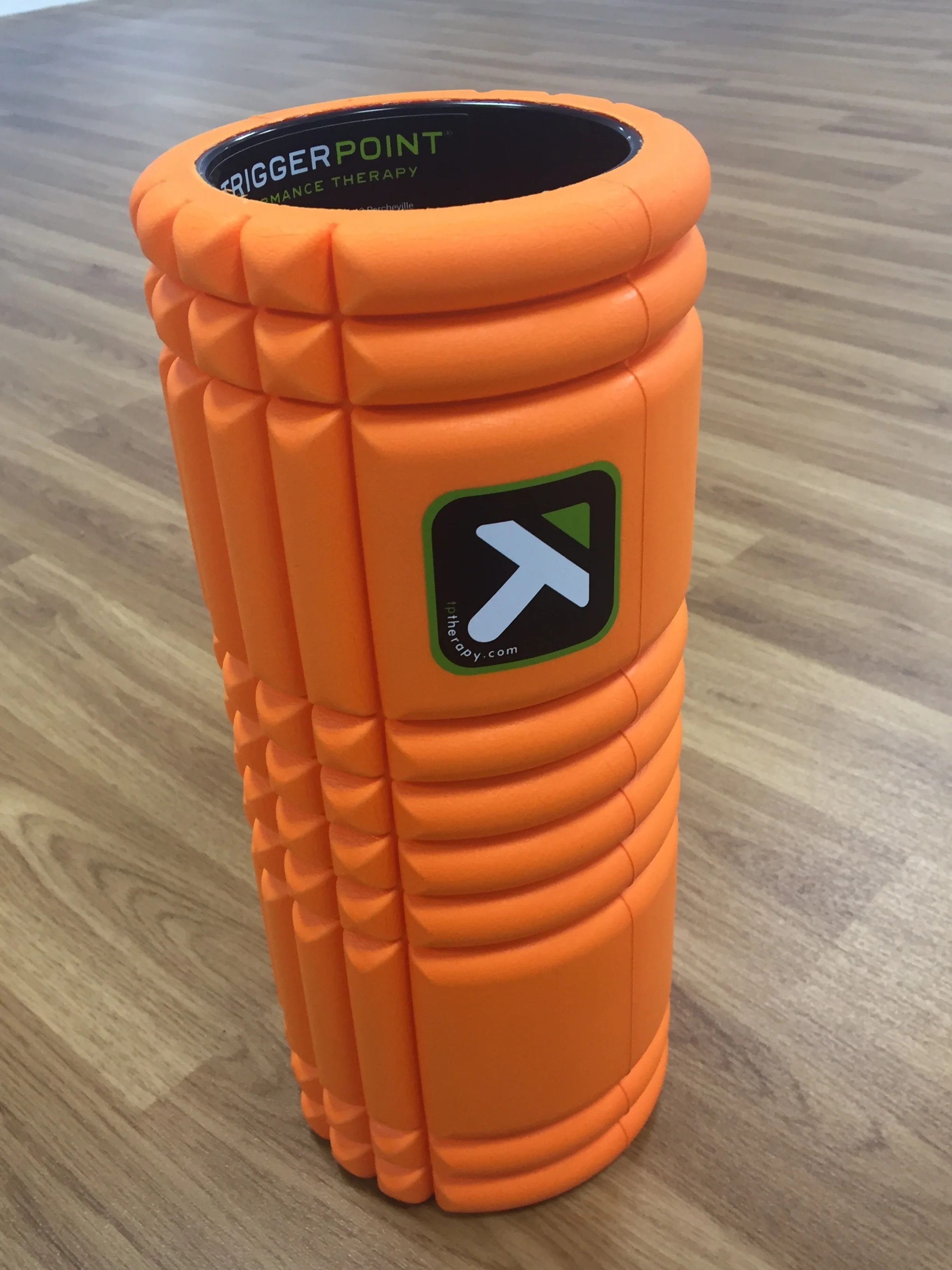
Foam Rolling: What is it? What’s the Evidence? How to apply it!
Self-myofascial release is a name given to the use of equipment or tools to perform self-massage and stretching with the aim of increasing joint range of motion and improving muscle recovery and performance. One of the most commonly used tools is a foam roller. You will often see people in gyms attempting to manoeuvre their bodies in various positions over one of these rollers.
Foam Rolling
What is it?
Self-myofascial release is a name given to the use of equipment or tools to perform self-massage and stretching with the aim of increasing joint range of motion and improving muscle recovery and performance. One of the most commonly used tools is a foam roller. You will often see people in gyms attempting to manoeuvre their bodies in various positions over one of these rollers.
Most commonly rollers will be used in a way that the body is positioned with the roller in contact with a specific muscle or muscle group. The user then uses gentle motion to stretch and massage the area while controlling the pressure exerted by adjusting their position and the weight going through the area.
The theory is that using foam rollers used to massage and stretch our muscles, joints and soft tissues can make them more pliable thereby increasing range of motion. It is also theorised that pressure applied to soft tissues can stimulate change through the central nervous system by sending signals which alter the tissue activity and reduce tension levels.
What’s the evidence?
In general terms, self-myofascial release using a foam roller appears to have short-term effects of increasing joint range of motion without exhibiting any negative effects on muscle or joint performance. There is also some evidence to suggest that post exercise muscle soreness can be reduced while muscle recovery is enhanced when foam rolling is used after strenuous or intense exercise.
The overall summary of the evidence to date suggests that foam rolling is a safe tool to use prior to or after exercise to assist with warm up and/or recovery. However, the research is limited and fails to come to a consensus on what the optimal methods, techniques or frequency of foam rolling should be. There is not yet enough research or evidence to define the best way to roll specific muscles or how many sets or repetitions is appropriate.
How can I apply it?
The general consensus is that foam rolling is safe and can be a welcome addition to assist in warm up and recovery. While we do not have enough evidence to create exact protocols there is room here for individual preference and some experimentation to see what works best for you. From personal experience and from reviewing the literature we would suggest trying:
3-5 sets of 30+ second repetitions on each targeted muscle or muscle group
Apply gradual pressure in various planes and directions.
For larger or longer muscle groups consider dividing the application into 2-3 areas
Consistent application aiming for a minimum of 3 times per week
Slight discomfort during application is acceptable but strong or intense pain is not
Position yourself carefully to avoid unnecessary strain on other muscles or joints
Below are a few examples of positions used to foam roll various muscles

Foam rolling outer thigh
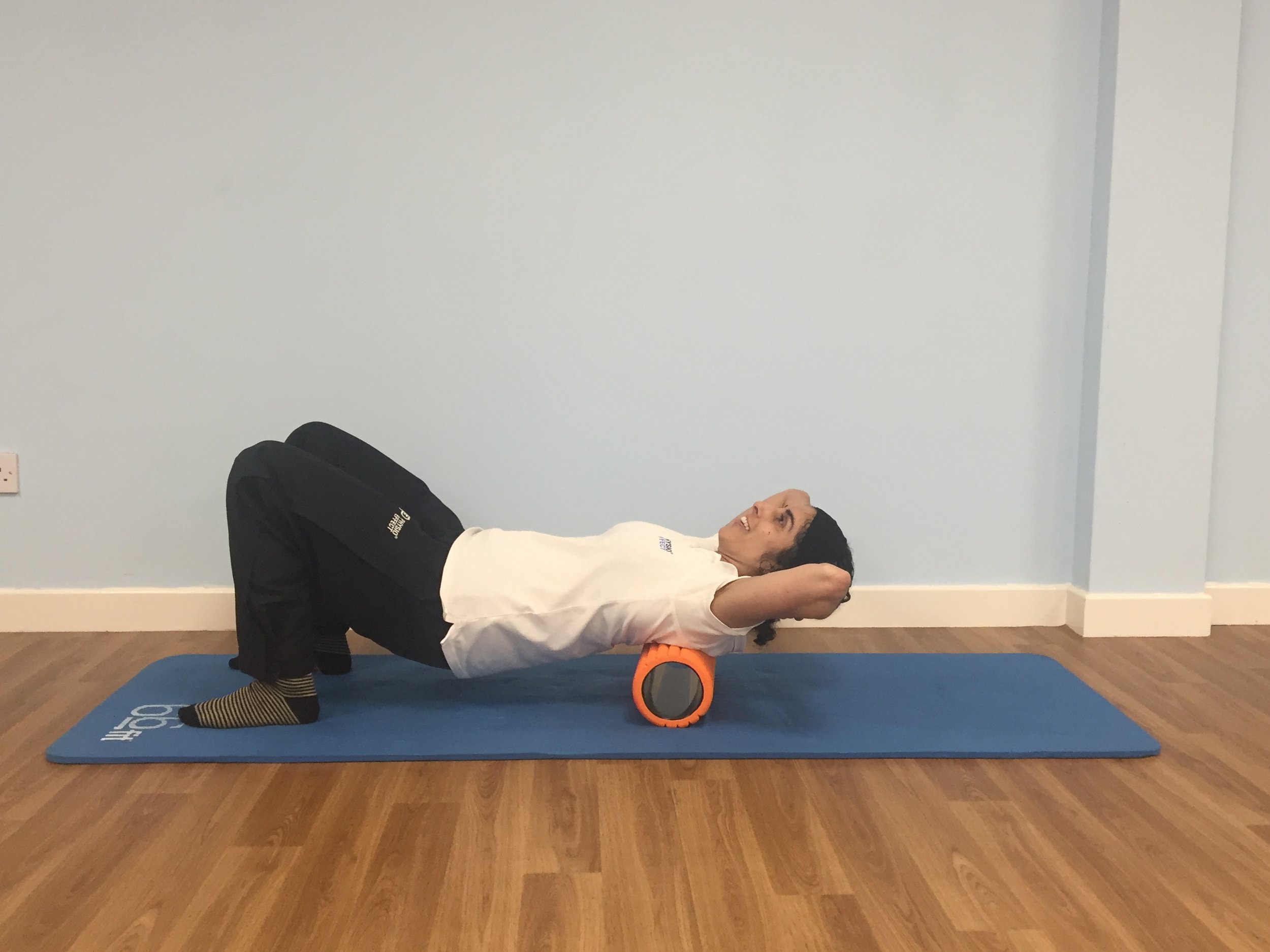
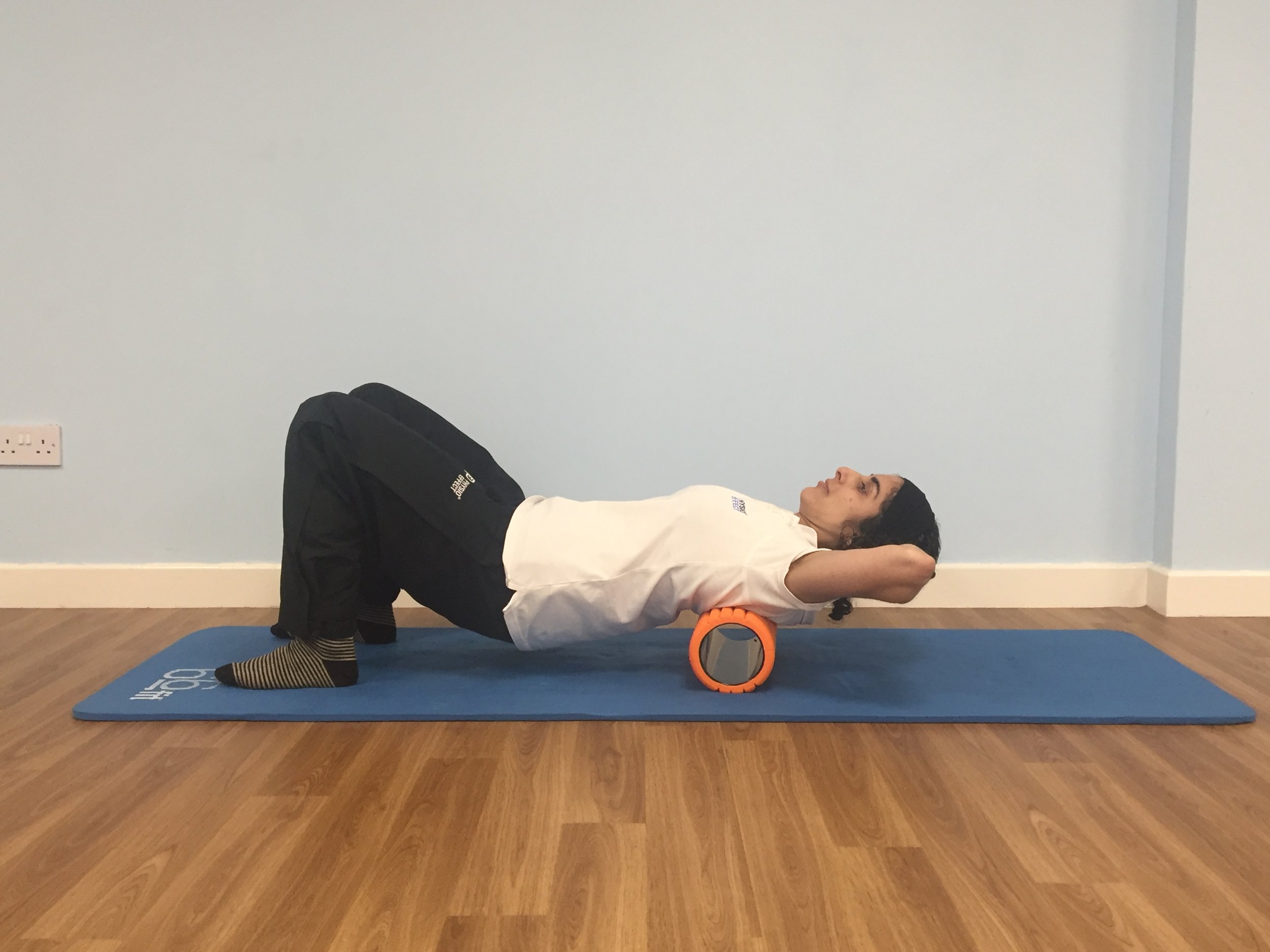

Foam rolling upper back

Foam rolling calf muscle
A word of caution
Foam rolling can be a useful adjunct to any exercise or training routine and may also be used by more sedentary individuals to reduce muscle and joint stiffness. Foam rolling, however, is not an appropriate tool for treating damaged or injured tissues and we would warn that it should not be used as such. Always seek advice from a qualified professional if you are in any doubt.
Foam rolling does not replace or negate the need for adequate warm up and the use of correct techniques when exercising. We would suggest using foam rolling to compliment your existing training or exercising routine but not to replace any aspect.
————————
Article written by Daniel Wray – Senior Physiotherapist and Director at Physio Effect
The dedicated team at Physio Effect provide a full package of services that will ensure you’re supported through your pain management, injury prevention, assessment, recovery and helping you achieve your ultimate performance goals. We offer a range of services including Physiotherapy, Sports Massage, Craniosacral Therapy, Clinical Pilates and Yoga.