

Back Pain - A Self Help Guide
Back pain is very common. It’s frustrating at best and debilitating at worst. This guide will help you develop strategies for long term change to get rid of back pain and stay pain free long term. No magic bullet or ‘Guru’ advice here, just sensible and actionable tips allowing you to take control and start your journey to a pain free back.
Written by Daniel Wray (BSc Hons Physio/ PG Dip Sports Physio)

Back Pain?
We’ve all been there…..
Why does my back hurt?
Back pain is common, if you’re reading this i’m sure you have suffered at least one episode of back pain in your lifetime and in all likelihood more than that. It’s frustrating and restricting and can have a huge negative impact on your quality of life.
There are many reasons for back pain and unfortunately it’s rarely a quick fix. The most common form of back pain is often referred to as mechanical pain which is an umbrella term describing dysfunction in the soft tissues and joints preventing or impeding normal function. This may be stiffness, weakness, muscle shortening, joint wear and tear or any combination of these plus other factors.
In the absence of acute trauma back pain rarely appears suddenly or overnight and for most it’s a gradual and cumulative process related to lifestyle. Our modern lifestyles are simply too sedentary with too many hours spent in static positions meaning our joints and muscles don’t get the movement stimulus they need to stay flexible, hydrated and healthy.

Familiar hunchback posture?
For many people what began as a minor back ache or stiffness spirals steadily into chronic pain and disability and it can seem like you’re stuck in a repetitive cycle of injury and pain. We try to make changes but the daily grind means we continue to rack up hours of sedentary, static, and repetitive behavior trapping us in this negative cycle. The pain can force further lifestyle changes meaning less movement and exercise which reinforces the negative cycle and it can seem impossible to break free. Having a dodgy sore back slowly becomes the norm and we just accept it and carry on.
It’s not all bad news - here’s what you can do…
It all seems pretty grim and depressing right? Well the good news is that for the most part the majority of back pain, even when extremely painful and debilitating, is not due to serious pathology and it can get better. There are of course exceptions to this and we would always advise you seek advice from a qualified health professional if you have serious concerns about your back pain.

The bad news, if you look at it that way, is that the fix is rarely instant and usually requires significant effort on your part to make lifestyle changes and prioritise time every single day to look after your back. Of course if you Google hard enough (we’ve all done it) you will find some ‘Guru’ promising an overnight fix in exchange for a significant amount of your hard earned cash but truthfully the magic bullet doesn’t exist. Below we have listed some strategies you can implement to make a real difference.
6 self help strategies to help manage back pain:
1- Keep moving. Complete rest is not going to help and generally increases stiffness, pain and fear avoidance behaviors. Of course we must adapt our movement depending on the level of pain and there may be a need to avoid certain postures, positions or movements for a short period of time which is fine. I don’t recall any scenario with a patient where we couldn’t find at least one simple movement they could do to keep some gentle activity in their back to promote healing and relaxation while building confidence that they are not going to stuck in pain forever. Experiment with different movements and stretches (see below video) gently and slowly and see what you can manage comfortably and that will give you a starting point which you can gradually add other movements to as your pain allows.

Lunge with arm and spine rotation
2- Establish routine & be proactive not reactive. You need to act consistently and with purpose. Don’t wait until your pain is crippling to decide you need to try some exercises to relieve it. Even if you’re feeling okay find a rhythm that allows structured gentle movement and exercise to be part of your daily routine ideally multiple times a day. Frequent exercise micro breaks to interrupt static postures will reduce the build up of pressure and stiffness and are more desirable than trying to undo hours of sedentary behaviour with a single bout of exercise. Think 2-3 minutes activity every hour rather than a 30 minute blast at the end of the day. Use a timer to remind you.
3- Accept responsibility & seek guidance. It is your body and your back and you need to find a way forward, nobody can do it for you. Don’t pass responsibility onto any therapist (no matter what some ‘Guru’ promises) and assume that by chucking money at it that will be enough to fix you. Do find help from someone you trust who has your best interests at heart and involves you in all aspects of any treatment or rehab plan. Passive treatments such as massage, acupuncture, and manipulation can be great for pain relief but long term are only as good as the agreed exercise plan and responsibility you take in changing your lifestyle. Be wary of any therapist promising to fix you but providing no education or prescription of exercises you can use to help yourself.
4- Exercise for fun. Find a form of exercise you genuinely enjoy and commit regularly to it. Don’t drag yourself to the gym if you hate every minute of it, exercise should be enjoyable and a way to relax your mind as well as your body. Try new things and see what you enjoy. Ultimately your long term compliance will wain if you pursue something because you feel you have to rather than because you really want to.

Back Strengthening - Extensions on the GHD machine
5- Manage stress. One of the biggest silent assassins to any life goal is high stress levels. You can have all the good intent in the world in changing lifestyle and exercising more but if you are under high levels of stress you can easily sabotage any progress. I realise this is a broad blanket statement and stress management is a big topic beyond the scope of this article but at the very least be aware of how it contributes and can damage your progress, then start to look for solutions.
6- Be patient. You won’t change things overnight and chances are you will have many peaks and troughs in your recovery. This is normal. Try to be patient and remember a backward step with increasing pain symptoms is not the end of the world, try to continually adapt but keep taking positive actions even when you feel frustrated and annoyed. If you follow the steps above you should see over time the more severe episodes of back pain decrease while your ability to manage and recover from any acute episodes will improve.
Picking Exercises - Where to start?
It’s imperative to get moving ASAP with pretty much every kind of back pain or injury but the exact type of exercise or stretch you choose to get started with will differ depending on your level of pain, stiffness and disability. Below is a back mobility exercise flow covering a multitude of different exercises and positions. Try it but STOP if you feel any specific movement aggravates your pain. At most a slight awareness of stiffness or aching is permissible but do not force anything and take it slowly and gently.
You may decide that only a couple of these exercises work for you in your current situation and that is fine, identify what you can do and exclude what you can’t. That will be your start point and I would advise doing these exercises a minimum of 3 times per day but ideally more frequently at least initially. As you become more comfortable hopefully you can add more of the movements to your repertoire.
Long term most people will require a combination of strength and flexibility exercises but it is important that these are specific to your own individual requirements. The routine below is provided as a starting point but is not all encompassing so please seek advice on your own needs but do use these stretches to try and initiate positive change through movement. The exercises are broken down individually in the pictures below the video & you can download a PDF cheatsheet to keep for your reference at the end of this blog.
Back Mobility Flow Video:
Seeking Guidance? We Can Help
Our experienced team at Physio Effect Glasgow are specialists in back pain and have helped 1000s of people recover and get back their quality of life. We talk the talk and walk the walk and will combine exercise based rehab with highly skilled hands on therapies to ensure you get the best possible treatment.
Most importantly we will listen and work with you in partnership to identify your specific issues and formulate an agreed unique treatment plan. We will relieve your back pain and give you long term self management strategies to strengthen your back and reduce the chance of pain relapse.
Please contact us if you have questions or to book an appointment and get your journey to back pain recovery under way.
Exercise Breakdown:
Here is a breakdown of each of the exercises included in the back mobility flow video. These are available in a handy PDF download from the Subscription box at bottom of the page.
Exercise 1
Cat & Camel Stretch
Begin in all 4s position. Cat posture - Allow your spine to soften and hollow along its entire length. Tilt your tailbone gently to the ceiling. Relax you lower back, rib cage, shoulders and neck
Camel Posture - Arch your whole spine slowly and gently to the ceiling in one large ‘C’ shape. Tuck your tailbone between your legs
Hold each position for around 10 seconds. Transition from one to the other 6-8 times.

1- Cat Pose

2- Camel Pose
Exercise 2
Childs Pose to Cobra
Begin in all 4s position. Childs pose - Gently sit bottom back towards heels as far as is comfortable opening knees and hips softly and as required
Cobra Pose - Allow weight to come forward and lower hips gently to floor. Stay relaxed in hips and lower back and if required bend elbows slightly so that hips can rest in contact with floor.
Hold each position for around 10 seconds. Transition from one to the other 6-8 times

1- Childs Pose

2- Cobra Pose
Exercise 3
Childs Pose Side Bend
Begin in Childs Pose - Walk you hands around to one side into side bend aiming for at least a 45 degree angle, you should feel a good stretch down your side. Hold 20-30 seconds.
Walk hands around in same way to other side and again hold 20-30 seconds in side bend.
Repeat 2-3 times on each side
1- Childs Pose

2- Side Bend Right

3- Side Bend Left
Exercise 4
Lunge Hip Flexor Opener
Begin in Lunge position. Gently engage your lower tummy muscles and tuck your pelvis in. Aim to feel a stretch in the front of your hip and top of thigh
Gently engage your buttock muscles and lean slightly forward taking care not to arch your lower back
Hold the position 30-60 seconds. Repeat 1-2 times left and right

1- Lunge Hip Flexor Opener

2- Lunge Hip Flexor Opener - Forward Lean
Exercise 5 - Part 1
Lunge Hip Opener with Alternate Arm Rotations
From Lunge position reach hands forward and rest on floor beside front foot. Take outside arm and reach under and between legs ‘threading the needle’ holding for a few seconds
With the same arm rotate outward and upward toward ceiling trying to get arm to a straight vertical position, hold for a few seconds then return to ‘thread the needle’
Repeat this 10 times

1- Lunge Position Hands Forward on Floor

2- Lunge Position Hands Forward ‘Thread The Needle’

3- Lunge Position Hands Forward - Rotate arm vertically reaching for ceiling
Exercise 5 - Part 2
Lunge Hip Opener with Alternate Arm Rotations
After completing Part 1 of this series stay in the same position but extend out your back leg as far as is comfortable
Take inside arm now and rotate upward to the ceiling trying to achieve the straight arm vertical position, Hold for a few seconds
Bring the same arm down and with bent elbow drive your elbow towards the floor down the inside of your shin. Hold for a few seconds then rotate back to the vertical arm position
Repeat this 10 times

4- Lunge Position Extend Back Leg

5- Lunge Position Inside Arm Rotate to Ceiling

6- Lunge Position Inside Elbow Drive to Floor
Exercise 6
A-Frame Walk to Squat
From the all 4s position drive your hips into the air with straight knees and gentle lower your heels towards the floor into the A-Frame (it does not matter if you can’t fully extend knees or reach the floor with your heels). Hold for 10 seconds feeling stretch in back of legs
Keeping hands on floor slowly walk feet in towards hands and slowly sit down into a squat, hold for 10 seconds
Walk back to A-Frame position and hold for another 10 seconds
Repeat 4-6 times

1- A-Frame Position

2- A-Frame Walk to Squat

3- A-Frame Walk to Squat 2

4- Finish in Squat
Thank You
Thank you for taking the time to read this post, we sincerely hope that you find it useful and can use it to implement some positive changes and reduce your back pain. Take your time and work at your own level but be persistent and try to gradually improve on your own baseline.
Please download your own FREE PDF Cheatsheet to keep and to help with your practice and share this post with anyone who could benefit. If you have any questions or comments please just ask we would love to hear from you. Stay healthy and move well.

A Guide On Returning To Running After Pregnancy
Running after having a baby is the obvious choice for many new mums wanting to begin or return to exercise. There are however some important things to consider in order to safely return to running and any other high impact exercise after having your baby. Returning too soon can cause long term implications including pelvic floor dysfunction, pelvic girdle pain and other musculoskeletal issues. This guide outlines the impact pregnancy and birth has on your body and important healing time-frames you must be aware of before returning to running. You will also find 2 free Pilates strength videos to give you an idea of the kinds of exercise that will help prepare your postnatal body for the demands of running
Written by Mariam Kilpatrick - Physio, Clinical Pilates Instructor, Mum and Ultra-marathon runner
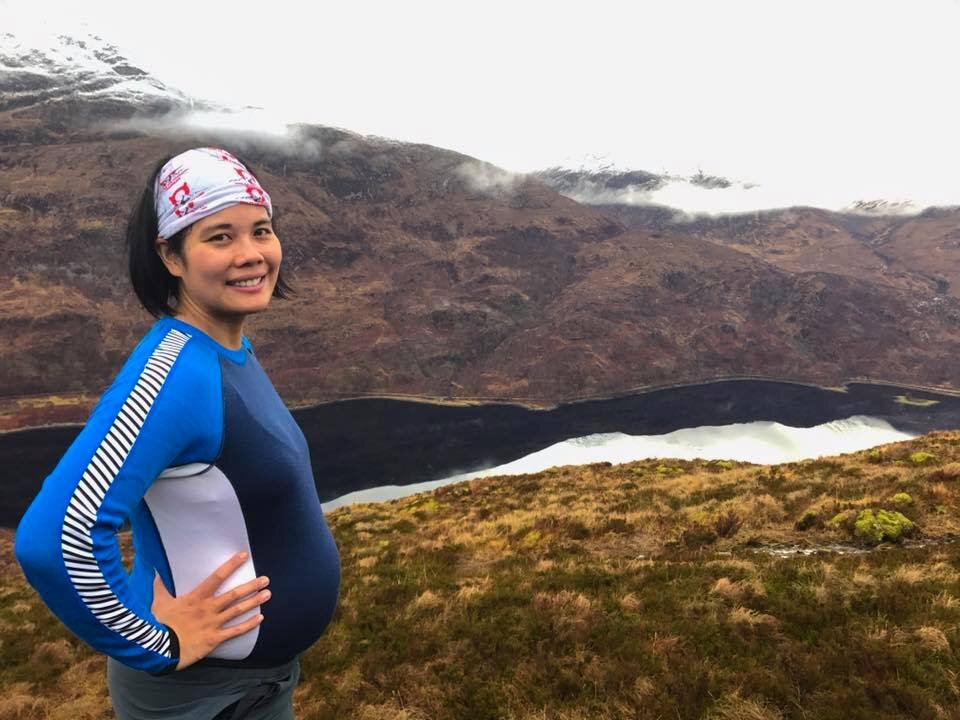
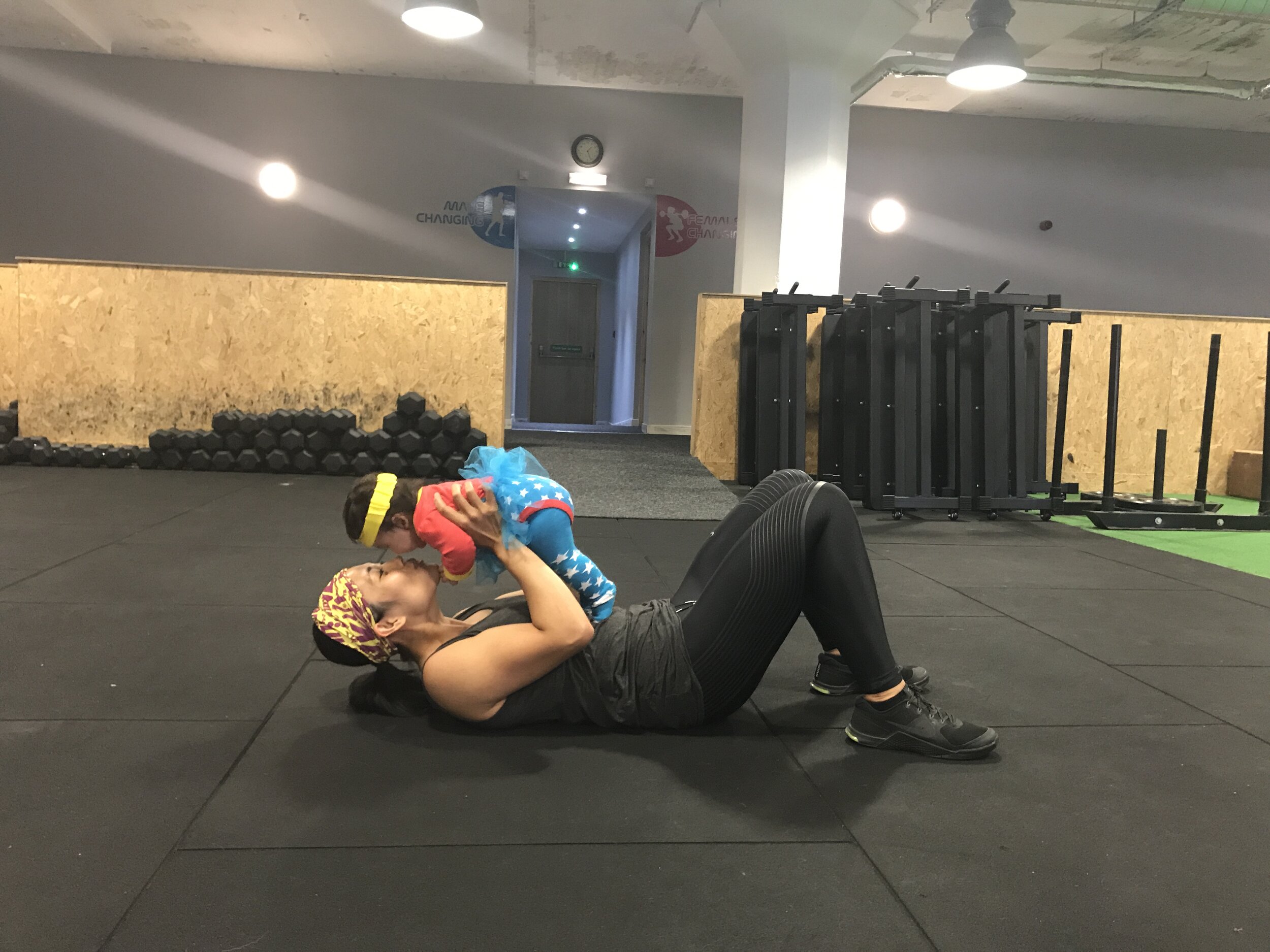
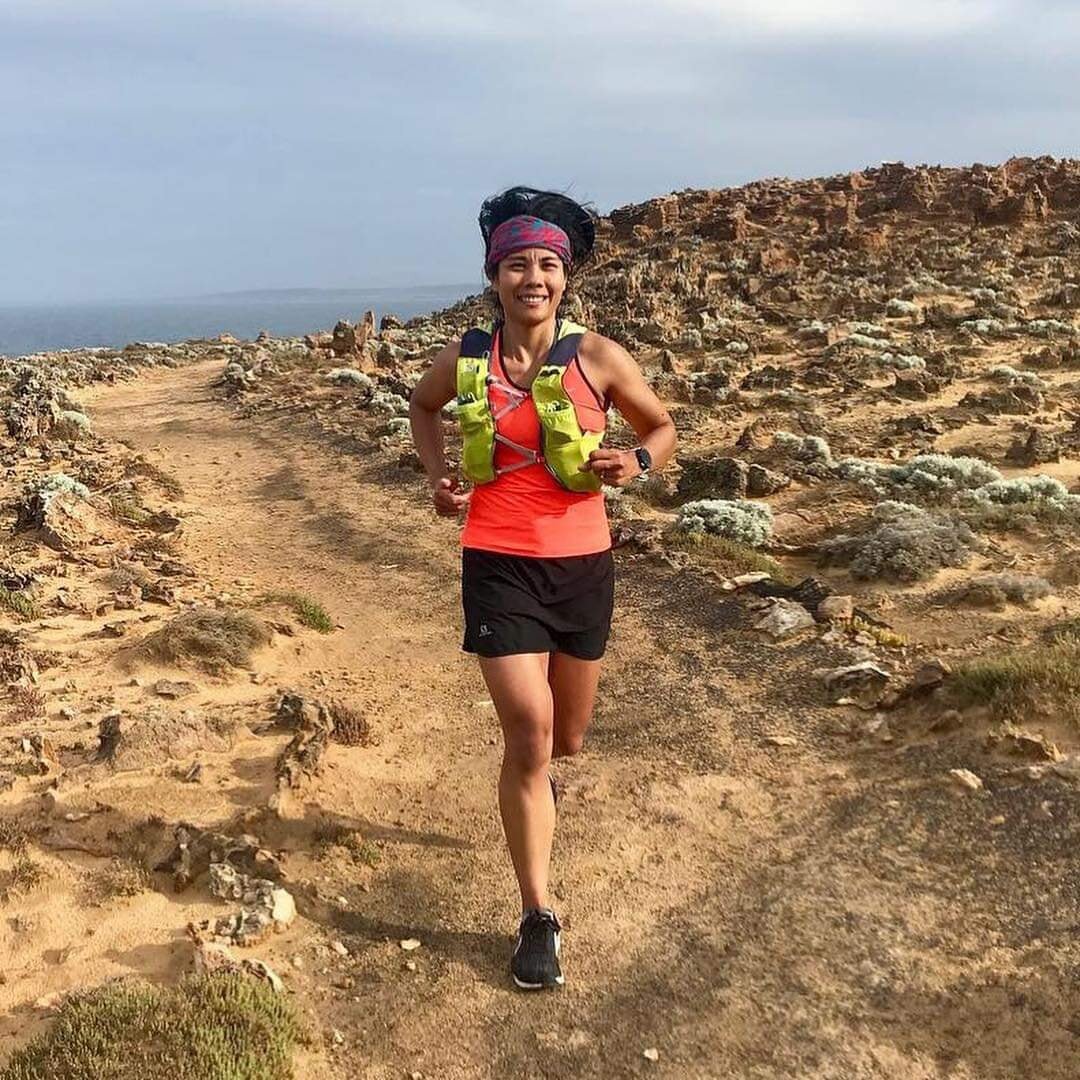
One of the most common questions I hear from new mums after giving birth is, “When can I start running?” A fair question, as it’s one of the simplest forms of exercise to fit in around your baby, no gym membership required and a good way to burn off that extra baby weight. We’ve all been there.
There are however some important things to consider in order to safely return to running and any other high impact exercise after having your baby. Returning too soon can cause long term implications causing pelvic floor dysfunction, pelvic girdle pain and other musculoskeletal issues. This usually happens because you haven’t adequately rehabilitated your body following the huge stresses placed upon it during pregnancy and childbirth. Giving birth (either vaginal or C-section) can be considered equal to a major sports injury which would require the same attention, specific rehab and a graded return to any sport. It is just as important to work on muscles affected by pregnancy and childbirth (such as the pelvic floor and abdominals) as it is to work on the muscles around your knee if you’ve had a knee injury/surgery.
My baby is 6 weeks old now so I’m good to go…right?!
Healing of the body after childbirth goes well beyond the traditional 6-week timescale that many health professionals go by.
Did you know…
The levator hiatus, the opening between the levator ani muscles (which forms part of your Pelvic Floor) stretches and widens significantly during pregnancy and childbirth. This can take between 4-6 months to recover (Stær-Jensen et al 2015)
After a C-section, the abdominals only regains 50% of its original strength by 6 weeks postpartum and 73%-93% of original strength by 6-7 months postpartum (Ceydeli et al 2005)
Up to 30% of first time mums will experience urinary incontinence (Milsom et al 2004)
Up to 56% of new mothers between 3-6 months postpartum demonstrate pelvic organ prolapse where one or more of the pelvic organs (bowel, bladder or uterus) descends downwards to the vaginal opening (Bø et al 2017). This can result in incontinence issues and the feeling of heaviness/dragging in the vagina.
You can’t go wrong with strong!
Your Pelvic Floor is a hugely important part of your body. It is made up of layers of muscle and connective tissue. These layers stretch like a hammock from the tailbone at the back, to the pubic bone in the front. They support your pelvic organs and control your bladder and bowel movements. The front passage (pee hole), the vagina and the back passage (poo hole) all pass through the pelvic floor muscles. Throughout your pregnancy, your pelvic floor has carried the weight of your baby, the placenta and a 50% increase in blood volume! As such, this will greatly affect its ability to do its job properly compared to pre-pregnancy function. It is therefore vital to work on these muscles after having a baby, regardless of the type of birth you had (whether vaginal or C-section).
In the latter stages of pregnancy, the connective tissue or fascia between your outermost abdominal wall (your six-pack muscles) can thin out/stretch to allow for a growing baby bump. After giving birth, you can be left with a gap between the two sides and sometimes it can look like you are still pregnant i.e. the dreaded “mum-tum”. This is called a Diastasis Recti or abdominal separation, a common condition that causes a lot of grief for many mums. However, like any muscle in the body, these can be addressed and worked on with specific corrective exercises targeting your deep abdominals.
When you are running, multiple times your body-weight in the form of ground reaction force is produced on impact with the ground. This has to be absorbed and controlled by the tendons, muscles and joints in the legs. Strengthening the muscles of the lower legs and core help prevent injury and increase the muscles’ load bearing capabilities.


Guidelines for postnatal exercise progression
Week 0-2: Walking, pelvic floor muscle strength and endurance exercises, basic abdominal exercises
Week 2-4: Introduce functional body weight exercises such as squats and lunges
Week 4-6: Introduce low impact cardio such as static bike, rowing machine or X-trainer
Week 6+: Progress to resistance training such as Pilates for pelvic floor/core and weights training
Week 12+: Graded/progressive return to running (e.g. Couch to 5K)
Some expert physiotherapists have developed a free guidance to help health and fitness professionals who work with postnatal runners which can be found here.
Postnatal Pilates
Pilates is a great form of rehabilitation to target the working relationships of your pelvic floor and core muscles (abdominals and diaphragm) especially in the first few months after having your baby. The benefits of Pilates include:
Strengthening your Pelvic Floor
Targeting your deep abdominal muscles to help heal Diastasis Recti (abdominal separation)
Addressing muscle imbalances that may be contributing to lower back pain or pelvic girdle pain
Targeting postural muscles of the back, neck and shoulder girdle

Postnatal Pilates Class at Physio Effect
Pilates for Runners
Try these free sample routines for strengthening your legs and gluts:
Pilates legs workout
Pilates Gluts Workout
We Want To Help You Get Your Body Back On Track
Physio Effect specialises in helping mums recover their health, fitness and confidence after having a baby. Our Cry-Baby Pilates classes where new mums attend with their babies has been a great success and very popular!
Want to read some REVIEWS about our classes from other mums? Click the links & read below: Yell.Com Reviews or Facebook Reviews
The cry baby Pilates classes led by Mariam were an absolute highlight of my maternity leave. They offered important rehab for all the changes to my body left by pregnancy and a c-section and the strengthening work got me back safely running sooner than I expected - yay! The classes were warm, friendly and supportive and my baby Helena loved meeting the other babies too (as well as getting cheeky cuddles from Mariam). Couldn’t recommend more highly to new mums!
Katherine C via Facebook reviews
I’ve recently completed 2 blocks of Crybaby Pilates with Mariam & would highly recommend it for postnatal recovery. Mariam was great at making you feel relaxed, gradually building up the intensity of the exercises over the weeks so it wasn’t too daunting in the beginning. I liked how the exercises also allowed you to interact with your baby. The classes are small enough that you get the opportunity to get to know the other mums & babies, which helps you feel completely at ease in the class too. I now feel back to my pre-baby self & body, ready to start running & hitting the gym! Thank you!
Keri. L.K via Facebook reviews
Seek Help & Advice Sooner Rather Than Later
As with everything in life, there isn’t a one size fits all when it comes to returning to running after pregnancy. Factors that need to be considered include:
Type of birth you had; was it a straightforward vaginal birth, a vaginal birth with complications such as forceps delivery/episiotomy/tears, a C-section? The timescales may be different for each case!
Previous level of exercise (e.g. were you a runner before pregnancy?)
Experiencing symptoms of lower back pain, pelvic or pubic pain, leakage and/or feeling of vaginal heaviness (which could be a sign of pelvic organ prolapse), coccyx/tailbone pain (which could be a sign of a hypertonic or tight pelvic floor)
Are you currently breast-feeding? Pregnancy hormones stay in the body for about three months postpartum, continuing to loosen joints, muscles, tendons and ligaments as they did in preparation for delivery. For those breast-feeding, hormones can still have a loosening effect even months after you stop.
Lifestyle changes such as sleep deprivation, lack of routine, demands of breastfeeding and altered eating habits which can cause energy deficiency and fatigue.
If you are unsure, it is advisable to seek help from a specialist trained physiotherapist or a pelvic health practitioner.
If you would like to chat to one of our physiotherapists you can use the link below to book an appointment. Or if you prefer send us a message with any questions you have and we will get back to you as soon as we can.
Thank You
Thanks for taking the time to read this guide, we hope you find it useful. Please share with anyone else who might benefit and if you have any questions comment and let us know. Please subscribe for regular updates and advice on everything health and fitness related - Zero spam promise.

Postnatal Pilates at Physio Effect
Running Technique - The key to your untapped running potential
Learn how Physio Effect can help assess your running technique and how this could be the key ingredient that’s been missing in your quest to be a faster and better runner while also reducing your injury risk. Slow motion video analysis combined with advanced running metrics analysis, achieved via wearable Runscribe Pods, gives a complete picture of your running health. Based on this we can advise on simple techniques to improve and optimise your running technique making you faster, stronger and less prone to injury
Repetition can facilitate skill and and your running skill will greatly impact your running economy and risk of injury!
Written by Jonathan Kilpatrick: Sports Physio at Physio Effect, Running Analysis Specialist and fully fledged Ultra-runner
These are massive differences, so why are we all not working on our running technique?
Simply put, most of us wouldn’t know where to start or how to even identify if we have any technique issues. Running is such a complex interaction of whole body movement and coordination that it’d be impossible to be self aware enough to accurately identify you own running technique issues while you’re actually running. Most runners also don’t have a running coach, and the vast majority that do use a coach are not in an elite sporting set up and will likely only use a coach remotely for guidance with a running plan.
Often when we get injured as runners or aren’t performing as well as we’d like, we are much more inclined to look for reasons that are much easier for us to do something about than addressing the white elephant in the room - our own running skill and technique. I feel this is part of the reason why as a sports physio I will often see the same runners multiple times for recurrences of the same injuries, or injuries on the same side of body that can be related to the original issue. During treatment we can manipulate a number of things that are causing excessive overload such as footwear, running mileage or strength deficits. Improvements from this approach may however be short lived if a large part of the reason for the overload in the first place was due to an individuals running style or technique.
What do runners think causes injury?
When runners were asked in a study to identify the reasons the considered to be causing their injuries, they suggest the following:
Not Stretching
Not Warming Up
Wearing the Wrong Shoes
Excess Training
Lack of Strength
With the exception of static stretching there could be an argument that each of these could contribute to running related injury. As previously mentioned above, it must however be appreciated that runners with technique training benefited by a 62% decrease in injury rates over a year following a short period of running training. This could indicate running technique to be one, if not the biggest causes of running related injury. The more uninterrupted running training you can manage in any given year will also give you more opportunity to improve your running efficiency and reach your maximum potential in any running plan that you’re following.
As also previously stated above, running technique can influence your running performance massively to the tune of a 31% improvement. Without addressing your running technique you could unknowingly be wasting a lot of your energy and effort in a number of different ways such as creating excessive upward motion rather than forward motion, to give just one example. Technique issues could be the difference between a 25 minute 5k time and a sub 20 minute one based on such improvements. In reality this effect may become less with faster and more experienced runners but proportionately they will seem just as important once those runners can break through their own glass ceiling of performance.
Here is a 2 part podcast where Jonny Kilpatrick from Physio Effect chatted to Kate from the Glasgow Triathlon club about injuries and performance in endurance sports. This chat expands on the need to address technique issues in sports such as running as well as discusses numerous other running related injuries and how to prevent and treat them.
How and where can I get my running technique assessed?
It is possible to do a running analysis on yourself using slow motion video and a combination of running dynamics such as cadence (steps per minute) and relating these to you injury histories . This is however quite difficult and would require additional equipment such as a camera that will film in slow motion, analysis software, a tripod, a treadmill and equipment to capture your running dynamics such as a high end running watch that may need to combined with running pods to assess efficiency. I would advise using trained professionals such as the sports physiotherapists we have here at Physio Effect who have this equipment and the experience of working with runners regularly.
What does a running assessment involve?
This depends on your own individual needs but what we can provide includes:
Visual Treadmill Analysis:
This is done using slow motion camera footage taken from all 4 sides that is then assessed using slow motion analysis software where we can identify problems and make these clear using editing tools. Comparison can be made of multiple videos taken over time or even in the same session while working through technique cues. You will be provided with an analysis video showing the findings and effect of any cues we have used to improve your form.

Side View Before and After

Rear View Before and After
Running dynamics:
This is assessed using state of the art technology in the form of RunScribe pods attached to each foot while you run. These will provide us with every important running metric including cadence, impact forces, foot contact patterns and efficiency measures such as flight time and contact time. We can relate these measures to what we’re seeing in the video analysis as well as previous injuries and running performance issues. Having this data taken from each foot is extremely important as it will identify one sided problems which are nearly always found in running related injuries. This can also tell us how well suited your shoe is to your running style and also give us comparable figures to chart your progress.


A Sports Physiotherapy Assessment to identify previous and current issues that relate to what is identified on our Running Analysis is also performed. This may involve additional advice, treatment and exercises to enable sustainable improvement in your running and reduction in your injury rates.
Interested to find out more or book in for an assessment?
Our running analysis service is available now. Read more at our Glasgow Running Clinic Site. If you are interested in finding out more about this or booking in for the assessment please contact Jonny at the clinic via the following link:
Seek Help & Advice Sooner Rather Than Later
If you find yourself injured and unable to run it’s advisable to get your injury seen to and diagnosed as quickly as possible. Getting the right advice early with an injury will significantly decrease the amount of time you will have to take off from your running and it will likely decrease your levels of pain and the stress you experience associated with it.
At Physio Effect our therapists are experienced and highly skilled in advising and managing running related injuries and we will be able to help you reach a diagnosis and an understanding of your injury, including why this likely happened in the first place. We will be able to offer you advice on alternative forms of cardiovascular exercise as well as specific strength training to address your issue so you don’t feel like training has stagnated or regressed. All treatment plans can be time graded and clear to you, with milestones to achieve that not only address your current levels of pain associated with the injury but also the issues that may have contributed to you developing the injury in the first place. We will get you back running pain free ASAP!
Thank You
Thank you for taking the time to read this post, we are confident our running service can really make a huge difference and look forward to helping all runners smash their goals.
Please share this post with anyone who could benefit. If you have any questions or comments please just ask we would love to hear from you. Stay healthy and run well.
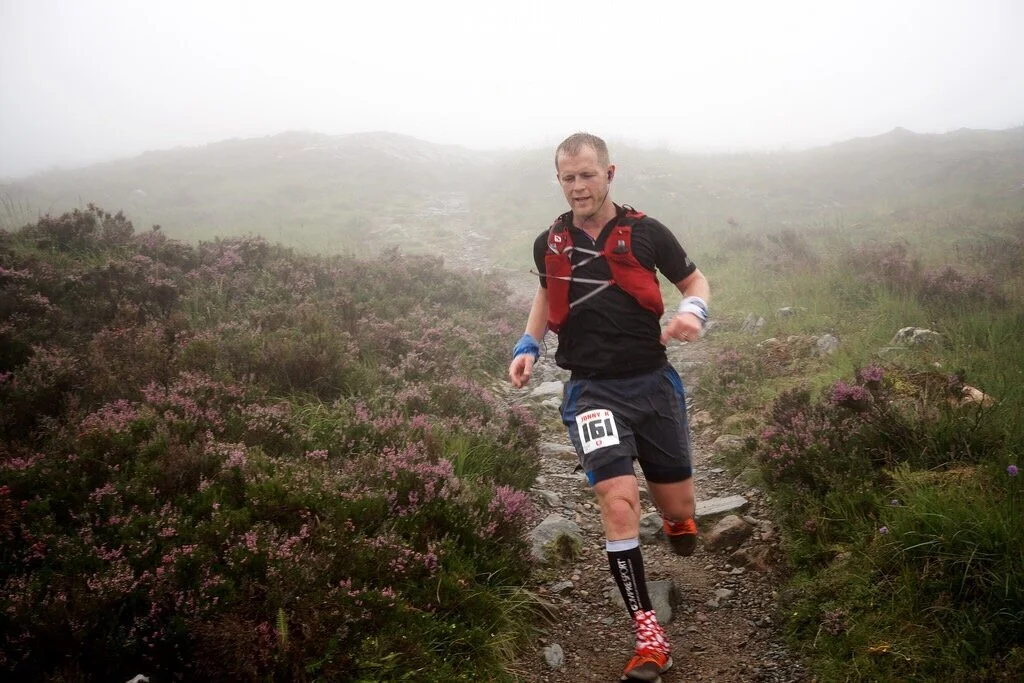
Jonny Kilpatrick - Ultra-Runner

Animal flows - What, How and Why?
Animal flows are a great addition to any exercise plan, warm up routine or injury prevention plan. Learning to move like a monkey, frog, or bear helps to build full body strength, mobility and motor control which in turn will make you a more awesome human and less prone to injury. This blog with video tutorials will explain what these movements are, how to utilise them and why you should should be doing them
What are Animal Flows?
Animal flows essentially refer to movement and exercise patterns where we imitate different types of animals such as bears, monkeys, frogs or lizards. Moving in these patterns can be very challenging, especially for the stiff & inflexible among us, but can also be really fun & provide significant benefits.

Deep Squat
Practicing animal flows can help improve strength, flexibility, mobility and overall motor control which in turn will help to make you a better functioning human and less at risk of injury. These movements can really challenge us in unconventional ways demanding our joints and muscles learn to control movement in patterns and ranges we would rarely otherwise practice. They can provide a great way to warm the body up in preparation for other forms of exercise or can even act as a stand alone training session. Once you have tried some of these movements for a few minutes you will understand why!
Where do I start?
As with all areas of training and exercise when attempting something new or different our advice is always start slow and work safely within your own levels of capability. Never push through pain or injury and if in doubt about whether this is appropriate for you please seek advice from a qualified professional.
Very few people will be able to perform controlled animal flow movements perfectly or even well at the beginning. When incorporating these kinds of exercises with my patients it’s essential we first establish their base level where they feel safe to practice but also feel that it is challenging. I would advise starting with getting comfortable in the static positions required as the foundation for the movement. In this post we will look at 2 positions - Deep Squat & A-Frame (Downward dog). These are the foundation starting postures for progression onto the animal movements monkey, frog and bear.
Deep Squat
The squat is a great foundation exercise for strength and mobility in the lower limbs and yet for so many people it is a real area of weakness and frustration. A lot of us slowly lose our ability to sit into a deep squat mainly through neglect and lack of practice combined with our static and sedentary western lifestyles. We become weak, stiff and tight and can no longer control the range of motion required to allow a deep squat. We rarely challenge ourselves to sit into a deep squat position let alone spend time exploring and improving on our range and control in this position. So first things first lets get a measure of your baseline squat function - check out this video and see how you get on.
It may take weeks or months of work to improve your squat mobility and that’s okay. For a more detailed look at improving your hip and back mobility please click the links to see our previous blog posts on these areas. You can use these routines alongside your deep squat holds to improve your squat function.
If you feel up to increasing the mobility challenge of your deep squat lets check out this next video requiring some active hip rotation movements at the bottom of the squat - a great way to improve your range of motion and strength.
I would recommend slowly building these exercises into your routines, aim for 20-30 second rounds initially performed for 3-4 sets thereby accumulating 2-3 minutes in the deep squat. Try this at least 2-3 times per week. Long term the idea is to become comfortable spending longer periods in the deep squat and find it relatively easy to perform movements from this position. Try to build up to 5 minutes total in the deep squat per day of practice over several weeks.
Monkey & Frog Mobility
These animal flow progressions are suitable once you have a comfortable squat allowing you to sit at least to parallel depth without the need of hand support. Don’t worry if you’re not there yet, keep practicing the squat, back and hip mobility exercises and you can move on to these once you feel confident.
These exercises are difficult and physically demanding but the pay off of regular practice will be improved squat mobility, increased lower limb strength and motor control with an associated reduced injury risk in these areas. Give each of these a try and see how you get on.
Add these to your regular practice at least 2-3 times per week initially
Begin with 20-30 second rounds aiming to build up to 1-2 minutes or longer
Look to accumulate time in the positions - Try a 5 minute timer & while stopping for breaks when required, try to spend as much time actively moving in these flows
Ideally we want to develop a relaxed freedom of movement where you can drop comfortably into a deep squat and easily move through monkey and frog patterns. You can mix and match the movements to create variation in the flow and challenge your strength and mobility through mixed planes of movement. Don’t expect overnight success but as with all training with hard work and consistent practice you should be able to improve allowing you to move better and feel better.
A-Frame (Downward Dog)
This stretch position is probably best known in yoga circles, most people will of at least heard of the Downward Dog. Another term we will use is A-Frame which refers literally to the fact we are trying to get our body into a position whereby it looks the a capital letter ‘A’. This position is another staple in many exercise forms and for good reason, it challenges the flexibility and strength of our body in many areas. The shoulders, back, hips, knees and ankle joints will be tested and for many people deficiencies in strength and range of movement will limit the quality and range available in attempting this position.
For many of us just attempting this posture will be tough and tiring. A lot of you will be feeling significant resistance in the backs of the legs (hamstrings and calves) and through the shoulders and upper back. Build slowly and increase the time spent in the stretch as you feel able, again looking to improve on your own current baseline level. Before attempting bear movements from this position we can work on a couple of simple variations which are shown in the video - slow marching on the spot and active shoulder extension pushing the head and shoulders through. Let’s give it a try and see how you get on.
Bear Movement Flows
The bear crawl can be utilised as a full body exercise to develop strength, flexibility and control in many areas. It is challenging and will take time to develop the skill and movement control required to perform it well but as with all these exercises your only goal should be to steadily improve on your own current baseline level. Once you have developed some comfort and control with the A-Frame stretch the first Bear Crawl movement we will try is with straight arms and straight legs as demonstrated in the video below. The key here is control so take your time and just do what you can, even if it’s only a few seconds initially, you can build on that. Let’s give it a go.
In the next video we demonstrate a number of bear crawl variations to give you some more options to explore. Depending on your own levels of mobility and strength you may find some options easier and others harder but it is great to play around and explore a variety of positions to find any weaknesses or restrictions and ensure a variety of stimulus is achieved. The key is to safely work on your own issues and don’t be afraid to explore positions that are challenging as long as you do so gradually.
Add these to your regular practice at least 2-3 times per week initially
Try:
Straight arms & legs
Bent arms, straight legs
Bent arms, bent legs
Straight arms, bent legs
Begin with 20-30 second rounds aiming to build up to 1-2 minutes or longer
Move forwards, backwards and sideways
Look to accumulate time in the positions - Try a 5 minute timer & while stopping for breaks when required, try to spend as much time actively moving in these flows
Summary
In summary adding animal flow movement practice into your regular exercise routines or habits can have significant physical benefits by helping to improve full body strength, mobility and motor control. It is a challenging but fun way to mix up your normal exercise routines and pushes your body to explore a variety of joint postures and positions that are not routinely trained or strengthened. This variety of stimulus will help to ensure strong and healthy muscle and joint function. Enjoy exploring and playing with these movements and ultimately you can learn to move better & feel better.
Thank You
Thanks for taking the time to read this guide, we hope you find it useful. Please share with anyone who might benefit and if you have any questions comment and let us know. Please subscribe to our mailing list to receive more interesting and useful blogs. Good luck and remember to move better & feel better

Restore your core after pregnancy: A safe return to exercise
Returning to exercise after having a baby can be daunting & difficult. It is possible to cause yourself more harm than good if you return too soon or to the wrong type of exercise. This blog looks at the evidence and guidelines for returning safely to post-natal exercise and the specific benefits of Post-natal Pilates in restoring your Pelvic Floor muscle function, reducing Diastasis Recti and rebuilding your core strength and function. A FREE 30 minute Post-natal Pilates class is linked for you to try.
Written by Mariam Kilpatrick - Physio, Clinical Pilates Instructor, Ultra-marathon runner & Awesome mum
After 9 long months, finally, your cute little bundle of joy has arrived! Goodbye to feeling like a bloated whale and goodbye heartburn. Say hello to sleeping on your tummy and to eating stinky cheese & sushi again. You’re keen to get back to exercise, get that endorphin rush and reclaim your pre-pregnancy body! You’ve had your 6 week check-up and your doctor has given you the all clear to exercise. Yay! BUT…yes there is a but. You can sometimes do more harm than good if you push your body beyond what it is ready for. Here we review the guidelines for returning safely to postnatal exercise and look at the specific benefits of Postnatal Pilates which include improved Pelvic Floor function and reduced Diastasis Recti (abdominal separation). Read on for more….
As the saying goes, you shouldn’t build a house on a weak foundation.
For many women, it has become a common thing to accept “a little bit of wee escaping” with a sneeze or running for the bus, just because you’ve had a baby. But no matter what age your baby is, either 6 weeks or 6 years, this should not be the perceived norm. Some women may feel embarrassed to raise their concerns around continence and other intimate issues but this should never be the case. Please seek professional advice early, as with the right help and guidance, these issues can and should be addressed.

The Pelvic Floor Muscles
Your Pelvic Floor is a hugely important part of your body. It is made up of layers of muscle and connective tissue. These layers stretch like a hammock from the tailbone at the back, to the pubic bone in the front. They support your pelvic organs and control your bladder and bowel movements. The front passage (pee hole), the vagina and the back passage (poo hole) all pass through the pelvic floor muscles. Throughout your pregnancy, your pelvic floor has carried the weight of your baby, the placenta and a 50% increase in blood volume! As such, this will greatly affect its ability to do its job properly compared to pre-pregnancy function. It is therefore vital to work on these muscles after having a baby, regardless of the type of birth you had (whether vaginal or C-section).
Let’s practice how to correctly engage your pelvic floor…
Take a deep breath in, fill your lungs completely and allow your pelvic floor to relax.
As you breathe OUT, close your back passage as if you were holding in a fart, then pull upwards and inwards towards your front passage to close it, as if you were holding in a pee.
Visualise trying to "squish" your anus (poo hole) to your urethra (pee hole) towards your pubic bone.
Do this without clenching your butt cheeks, your jaw or tensing your neck and shoulders (tricky, huh?)
Let everything relax again as you breathe in.
Repeat x 10Now try and engage your pelvic floor as above in 10 x quick flicks on and off.
*Practice turning your pelvic floor on in both sitting and standing positions
**Practice turning your pelvic floor on when doing things at the same time like picking your baby up from his/her cot or picking a toy up from the floor.
Why do I still look pregnant months after giving birth?
In the latter stages of pregnancy, the connective tissue or fascia between your outermost abdominal wall (your six-pack muscles) can thin out/stretch to allow for a growing baby bump. After giving birth, you can be left with a gap between the two sides and sometimes it can look like you are still pregnant i.e. the dreaded “mum-tum”. This is called a Diastasis Recti or abdominal separation, a common condition that causes a lot of grief for many mums. However, like any muscle in the body, these can be addressed and worked on with specific corrective exercises - all hope is not lost! The key is to target the deep layer of abdominal muscles. This may mean avoiding certain traditional core stability exercises initially (e.g. sit ups and planks). Your deep abdominal muscles have functional connections to - guess what - the pelvic floor…so it’s a win-win situation all round!

Postnatal Pilates
Pilates is a great form of exercise to target the working relationships of your pelvic floor and core muscles (abdominals and diaphragm) especially in the first few months after having your baby. The benefits of Pilates include:
Strengthening your Pelvic Floor
Targeting your deep abdominal muscles to help heal Diastasis Recti
Addressing muscle imbalances that may be contributing to lower back pain or pelvic girdle pain
Targeting postural muscles of the back, neck and shoulder girdle
Postnatal Pilates Class at Physio Effect
Here is a short taster video of a postnatal Pilates workout:
We Want To Help You Get Your Body Back On Track
Physio Effect specialises in helping mums recover their health, fitness and confidence after having a baby. Our Cry-Baby Pilates classes where new mums attend with their babies has been a great success and very popular. We are working hard to bring this content to full digital online form so that all mums everywhere can enjoy and benefit from this safe, structured and fun specialist postnatal program. For advanced notice of when this course is available and for special early-bird promotional rates please register for your free sample class below and we will keep you informed.
Want to read some REVIEWS about our classes from other mums? Click the links & read below: Yell.Com Reviews or Facebook Reviews
The cry baby Pilates classes led by Mariam were an absolute highlight of my maternity leave. They offered important rehab for all the changes to my body left by pregnancy and a c-section and the strengthening work got me back safely running sooner than I expected - yay! The classes were warm, friendly and supportive and my baby Helena loved meeting the other babies too (as well as getting cheeky cuddles from Mariam). Couldn’t recommend more highly to new mums!
Katherine C via Facebook reviews
I’ve recently completed 2 blocks of Crybaby Pilates with Mariam & would highly recommend it for postnatal recovery. Mariam was great at making you feel relaxed, gradually building up the intensity of the exercises over the weeks so it wasn’t too daunting in the beginning. I liked how the exercises also allowed you to interact with your baby. The classes are small enough that you get the opportunity to get to know the other mums & babies, which helps you feel completely at ease in the class too. I now feel back to my pre-baby self & body, ready to start running & hitting the gym! Thank you!
Keri. L.K via Facebook reviews
Would you like a FREE 30 minute Specialist Postnatal Pilates class to try?
Please Click the following link to register & we will send you a video link to enjoy
Returning to Exercise - What do the guidelines say?
In the first six weeks after giving birth and when you feel you are able, you may commence your pelvic floor and abdominal exercises, functional bodyweight movements, as well as low impact cardiovascular exercise such as walking.
From six weeks onwards (or a little longer if you’ve had a C-section), you may commence light resistance exercise such as Pilates and light weights training.
The earliest you should start high impact exercise such as Running/HIIT/Bootcamp is between 3-6 months after having your baby. This of course may differ from person to person depending on the type of birth you had. A recent study for guidance in returning to running post pregnancy by some expert pelvic health physiotherapists can be found here

Seek Help & Advice Sooner Rather Than Later
As with everything in life, there isn’t a one size fits all when it comes to returning to exercise after pregnancy. Factors that need to be considered include:
Type of birth you had; was it a straightforward vaginal birth, a vaginal birth with complications such as forceps delivery/episiotomy/tears, a C-section? The timescales may be different for each case!
Previous level of exercise (e.g. were you a runner/gym-bunny/Crossfitter before pregnancy?)
Experiencing symptoms of lower back pain, pelvic or pubic pain, leakage and/or feeling of vaginal heaviness (which could be a sign of pelvic organ prolapse), coccyx/tailbone pain (which could be a sign of a hypertonic or tight pelvic floor)
Are you currently breast-feeding? Pregnancy hormones stay in the body for about three months postpartum, continuing to loosen joints, muscles, tendons and ligaments as they did in preparation for delivery. For those breast-feeding, hormones can still have a loosening effect even months after you stop.
If you are unsure, it is advisable to seek help from a specialist trained physiotherapist or a pelvic health practitioner.
If you would like to chat to one of our physiotherapists you can use the link below to book an appointment. Or if you prefer send us a message with any questions you have and we will get back to you as soon as we can.
Thank You
Thanks for taking the time to read this guide, we hope you find it useful. Please share with anyone else who might benefit and if you have any questions comment and let us know. Please subscribe for regular updates and advice on everything health and fitness related - Zero spam promise.
Postnatal Pilates at Physio Effect

Our simple 7 point strategy to keep you injury free in your new found love of running!
New runners are often the most vulnerable to injury. Your body needs time to adapt to the new loads and demands that running puts on your tissues and joints. This blog provides expert advice on preventing overload and injury through planning, awareness and patience as well as tips on how to maintain tissue strength and flexibility to minimise injury risk.
I Can’t believe it, I’ve only just taken up running and I’m injured already!

Unfortunately it is an all too common occurrence for us have a disappointed runner sat in front of us for assessment of a new injury from recently taking up running. More recently with the restrictions on the forms of exercise we can do during the Coronavirus pandemic, combined with the excellent weather during that period, this has become very common with many more people trying out and enjoying more outdoor running.
It has been shown that novice runners face a much greater risk of injury than recreational or competitive runners. This is due to a combination of overload in their tendons and muscles as well as technique and fatigue issues that unduly overload certain areas.
When you are running, multiple times your body-weight in the form of ground reaction force is produced on impact with the ground. This has to be absorbed and controlled by the tendons, muscles and joints in the legs. Over time and with progressive increases in running mileage and duration, the tendons in the lower limbs adapt and strengthen to this, making them less prone to injuries such as acute muscle tears or tendinopathy. Running technique and fitness are also shown to improve which can decrease the adverse and destructive repetitive loading on the joints as well as improve running economy.
The most common injuries we see in new runners, or those runners returning from a lay off tend to be at the front of the knee in the form of a patellofemoral joint irritation (under the knee cap) or patellar tendinopathy (the tendon below the knee cap). It is also very common to see a tear of the calf muscle or pain at the achilles tendon in the form of a tendinopathy. In a runner these are all overuse and overload issues and some of them depending on the severity can result in a lengthy time off running to settle and fix them.
What can I do to prevent these issues?
Most running issues and injuries are really preventable as they are nearly all as a result of overuse. It has been suggested that between 60-70% of all running injuries can be attributed to training errors. Novice runners are the most prone to injury but they are also a group who can easily adapt their training to limit exposure to common injuries and “start as the mean to go on”. Here are 7 simple suggestions for someone who is new to or has recently started running to lessen their likelihood of developing a running related injury.

Be realistic about your current running experience and plan your training to be conservative in the first few weeks with progressive increases in your distance by 10-15% per week.
Initially give yourself a day of rest after each run to allow any tendon or muscle overload to recover a little before your next run.
Don’t be hesitant to adapt your training to something non-impact based like cycling or take a rest day if you feel a niggle in your knee or achilles/calf/foot. This one day of change or rest from running impact may be enough to stop you causing a worse problem and it will likely result in a much shorter time off running.
Do adequate recovery work between runs to release tightness and restore normal muscle and joint range. This can include stretching, soft tissue release such as self-massage or equipment assisted massage like foam rolling.
Strengthen the muscles of the lower legs and core to help prevent muscle tears or tendinopathy and increase the muscles load bearing capabilities
Wear running shoes that you find comfortable. Shoes that do not feel comfortable when running such as when the toes feel squished or the cushioning feels too much or too little is likely to result in you offloading any discomfort and then abnormally loading your soft tissue and joints. Don’t get caught up in the marketing and hype of certain shoes or brands; try on a number of shoes and brands and go with your gut instinct as to which feel most comfortable to you.
Most of your runs should be at easy pace. With greater speed comes greater peak forces and also fatigue. You cannot expose your body to this too often otherwise you will acutely overload the legs and injuries may arise. I’d recommend a 2:1 ratio of easy to hard efforts, where if you do 3 runs a week, then 2 of them should be at your easy pace and one of them at a moderate to difficult effort. For an easy pace you should feel like you could speak normally or if you have a heart rate monitor watch, your heart rate should be at or below a value of 180-your age (eg. 180-36yrs = easy pace of <144 beats per minute). For the remaining session this can be ran a little faster or include variations in speed such as intervals. This approach will also give your musculoskeletal system and your cardiovascular system a chance to adapt well to your running.
Home Exercises to Try - Stretch, Strengthen & Release
Below are some basic strengthening, stretching and muscle release exercises that will benefit most people starting out running. Always work within your own comfort limits on these as they will improve gradually over time and you want to take a consistent and not a torturous approach that you dread the next time. If you can only do part of the movement or a modified / reduced range then that is fine, just do what you can. Try them twice a week to begin with and you should gradually start to feel better and move better.
Exercise 1 and Exercise 2 below are video links to some self-administered soft tissue massage and release for the thigh and calf muscles respectively
Foam rolling technique for the outer thigh
Calf release using a ball
Exercise 3
Couch Stretch
In a lunge position have the top of the foot or ankle on the left leg back against a wall or your couch making sure to have some padding underneath the knee left knee.
Pull your lower stomach muscles and belly button inwards while also engaging or contracting the buttock muscles on the left side and imagine lengthening your left thigh bone and knee downwards toward the floor.
This should produce a stretch along the front of the left thigh and up to the front of the left hip. Make sure to keep the tummy in and buttock contracted as this will keep the stretch focused on the front of the thigh and hip and stop you overarching your lower back as can bee seen in picture 2 below.
Hold this position for 1 minute and swap to the other leg. Repeat twice, making sure to ease yourself a little further into the stretch each time.

1- Couch Stretch

2- Over Arched Couch Stretch
Exercise 4
Calf Raises
Begin with the ball of the foot on the edge of a step. Using your calf muscles lift your weight up, raising the heel above the level of the step. (Image 1)
Slowly over 2-3 seconds lower the heel below the level of the step (Image 2)
Repeat this movement for 2 sets of 8-15 reps on each side depending on your strength.
If this is too difficult to begin with, you can do the same movement using both feet on the step and aim to progress to using a single leg over a number of weeks.
This movement can also be performed with the knee bent the entire time. This will primarily strengthen the lower portion of the calf (soleus muscle) which is also important in running (Images 3 and 4 below)

1. Calf Raise

2- Calf Lowering

3. Knee Bent Calf Raise

4. Knee Bent Calf Lowering
Exercise 5
Figure 4 Stretch
Begin by placing your left leg on the wall at 70-90 degrees of hip flexion (knee towards chest)
Place the right ankle just above the knee of the left leg and drop the right knee outwards
You should feel a stretch on the right outer hip and buttock
Hold for 1-2 minutes and repeat on each side twice

Figure 4 Stretch
Seek Help & Advice Sooner Rather Than Later
If you find yourself injured and unable to run it’s advisable to get your injury seen to and diagnosed as quickly as possible. Getting the right advice early with an injury will significantly decrease the amount of time you will have to take off from your running and it will likely decrease your levels of pain and the stress you experience associated with it.
At Physio Effect our therapists are experienced and highly skilled in advising and managing running related injuries and we will be able to help you reach a diagnosis and an understanding of your injury, including why this likely happened in the first place. We will be able to offer you advice on alternative forms of cardiovascular exercise as well as specific strength training to address your issue so you don’t feel like training has stagnated or regressed. All treatment plans can be time graded and clear to you, with milestones to achieve that not only address your current levels of pain associated with the injury but also the issues that may have contributed to you developing the injury in the first place.
Thank You
Thanks for taking the time to read this guide, we hope you find it useful. Please share with anyone else who might benefit and if you have any questions comment and let us know. Please subscribe if you would like to receive regular updates and advice on everything health and fitness related - Zero spam promise. Good luck and enjoy your running


Stiff back? Try our simple six step mobility routine
6 step mobility stretch routine to ease back stiffness and relieve back pain. Practice daily and you will see improvements in your range of movement and alleviate tension, stiffness and pain in your back.
Back Pain?
We’ve all been there…..
What’s up with my back?
We’ve probably all struggled with a stiff achy back at some point. The reality is that our modern lifestyles are often dictated by technology and we just don’t move enough to maintain healthy joints and soft tissues. If you truthfully counted up how many hours per day or week you spend in sedentary / static positions whether working from a computer, driving, or binge watching TV and social media what would that number look like? How would it compare with hours spent being active, stretching, moving and getting some exercise? Chances are you are in the majority with your results skewed in the wrong direction and sedentary hours winning hands down.
Even for those of us who do exercise regularly it’s often at the back of a long day of not moving much. There is often a misconception that working out a few times a week should be adequate to ward off the stiffness and tightness that comes from our daily work routines. While of course some exercise is better than none what most of us need to do is work harder at incorporating small amounts of varied regular movement into our everyday routines. Micro breaks of several minutes every hour are a great way to break up the day & if you can practice a few hip and back movements and stretches with these then that’s a winning combination.
Familiar hunchback posture?
Most of the back pain we suffer is not serious (but do ensure you have checked with a medical professional) even when the pain and stiffness reach fairly extreme and debilitating levels. It is most often a cumulative and gradual process which results in reduced joint and tissue flexibility and a lower threshold or tolerance for simple tasks.
You may have a sensation of achy stiffness and tightness in your back and feel the need to fidget and change position constantly just to get comfortable. Sometimes acute painful events occur as the result of a simple daily task like putting on your socks and you can feel trapped in a cycle of stiffness, pain and vulnerability.
These symptoms most often aren’t indicative of something seriously wrong but rather your body is sensing changes it doesn’t like and is giving warning that something needs to change. X-rays and MRI scans aren’t normally helpful, unless being used by a medical professional to exclude other suspected pathology, and more often than not can cause confusion and fear which can negatively impact behaviour and recovery.
What can I do?
All is not lost and it’s never too late to make positive change. For most of us that can be very simple in the form of developing strategies that encourage us to move more in our daily routines. Try these pointers:
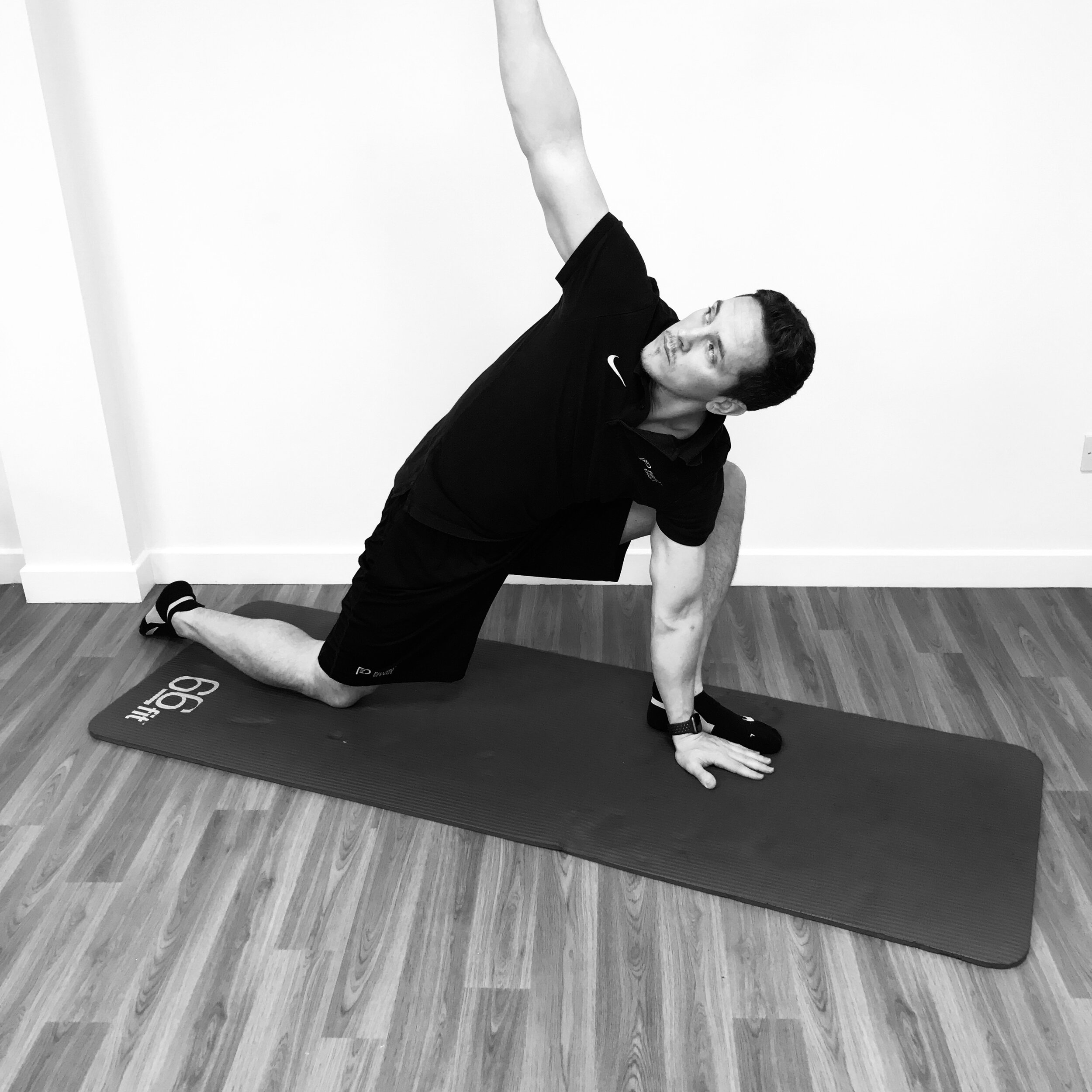
Be positive and take action of some kind. Note anything that seems to help or has a positive effect on how you feel and work to develop that
Focus on what is within your control to change and don’t worry or get hung up on the things you cannot do or cannot change
Develop simple daily habits and routines that encourage an increase in regular movement, exercise, and stretching
If you plan on being static/sedentary for extended periods plan micro-breaks of 2-3 minutes at least every 60 minutes and include some walking and simple stretching movements
Try to find a physical activity or exercise that you enjoy and doesn’t feel like a chore as you are much more likely to perform it regularly and achieve a long term change
Consider other lifestyle factors where you can implement simple change - e.g. drink more water, increase sleep, meditate or practice deep breathing & reduce daily screen time usage.
Let’s get started!
Below is a mobility routine for your back of 6 different exercises performed as a movement flow to get you started. Always begin slowly and gently and work within your own comfort limits. If you can only do part of the movement or a modified / reduced range that is fine, just do what you can. Try them every day and perhaps even multiple times per day if you’re able and you will gradually start to feel better and move better. Ideally try the whole routine or you can divide it up into single exercises and see which ones you find give you the most relief but aim to practice all the movements every day.
Back Mobility Flow Video:
Exercise 1
Cat & Camel Stretch
Begin in all 4s position. Cat posture - Allow your spine to soften and hollow along its entire length. Tilt your tailbone gently to the ceiling. Relax you lower back, rib cage, shoulders and neck
Camel Posture - Arch your whole spine slowly and gently to the ceiling in one large ‘C’ shape. Tuck your tailbone between your legs
Hold each position for around 10 seconds. Transition from one to the other 6-8 times.
1- Cat Pose
2- Camel Pose
Exercise 2
Childs Pose to Cobra
Begin in all 4s position. Childs pose - Gently sit bottom back towards heels as far as is comfortable opening knees and hips softly and as required
Cobra Pose - Allow weight to come forward and lower hips gently to floor. Stay relaxed in hips and lower back and if required bend elbows slightly so that hips can rest in contact with floor.
Hold each position for around 10 seconds. Transition from one to the other 6-8 times
1- Childs Pose
2- Cobra Pose
Exercise 3
Childs Pose Side Bend
Begin in Childs Pose - Walk you hands around to one side into side bend aiming for at least a 45 degree angle, you should feel a good stretch down your side. Hold 20-30 seconds.
Walk hands around in same way to other side and again hold 20-30 seconds in side bend.
Repeat 2-3 times on each side
1- Childs Pose
2- Side Bend Right
3- Side Bend Left
Exercise 4
Lunge Hip Flexor Opener
Begin in Lunge position. Gently engage your lower tummy muscles and tuck your pelvis in. Aim to feel a stretch in the front of your hip and top of thigh
Gently engage your buttock muscles and lean slightly forward taking care not to arch your lower back
Hold the position 30-60 seconds. Repeat 1-2 times left and right
1- Lunge Hip Flexor Opener
2- Lunge Hip Flexor Opener - Forward Lean
Exercise 5 - Part 1
Lunge Hip Opener with Alternate Arm Rotations
From Lunge position reach hands forward and rest on floor beside front foot. Take outside arm and reach under and between legs ‘threading the needle’ holding for a few seconds
With the same arm rotate outward and upward toward ceiling trying to get arm to a straight vertical position, hold for a few seconds then return to ‘thread the needle’
Repeat this 10 times
1- Lunge Position Hands Forward on Floor
2- Lunge Position Hands Forward ‘Thread The Needle’
3- Lunge Position Hands Forward - Rotate arm vertically reaching for ceiling
Exercise 5 - Part 2
Lunge Hip Opener with Alternate Arm Rotations
After completing Part 1 of this series stay in the same position but extend out your back leg as far as is comfortable
Take inside arm now and rotate upward to the ceiling trying to achieve the straight arm vertical position, Hold for a few seconds
Bring the same arm down and with bent elbow drive your elbow towards the floor down the inside of your shin. Hold for a few seconds then rotate back to the vertical arm position
Repeat this 10 times
4- Lunge Position Extend Back Leg
5- Lunge Position Inside Arm Rotate to Ceiling
6- Lunge Position Inside Elbow Drive to Floor
Exercise 6
A-Frame Walk to Squat
From the all 4s position drive your hips into the air with straight knees and gentle lower your heels towards the floor into the A-Frame (it does not matter if you can’t fully extend knees or reach the floor with your heels). Hold for 10 seconds feeling stretch in back of legs
Keeping hands on floor slowly walk feet in towards hands and slowly sit down into a squat, hold for 10 seconds
Walk back to A-Frame position and hold for another 10 seconds
Repeat 4-6 times
1- A-Frame Position
2- A-Frame Walk to Squat
3- A-Frame Walk to Squat 2
4- Finish in Squat
Thank You
Thank you for taking the time to read this post, we sincerely hope that you find it useful and can use it to implement some positive changes in your daily routines. Take your time and work at your own level but be persistent and try to slowly improve on your own baseline. Please download your own FREE Cheatsheet to keep and to help with you practice and share this post with anyone who could benefit. If you have any questions or comments please just ask we would love to hear from you. Stay healthy and move well.

Childs Pose

Stiff achy hips? Tightness or weakness and what can you do about it?
Complete hip mobility routine to increase range of motion, reduce pain and improve function. Explore your own limitations and work to improve them with daily practice of this routine. Rid yourself of stiff achy hips and restore strong, healthy movement while improving athletic ability.
Why are my hips sore?
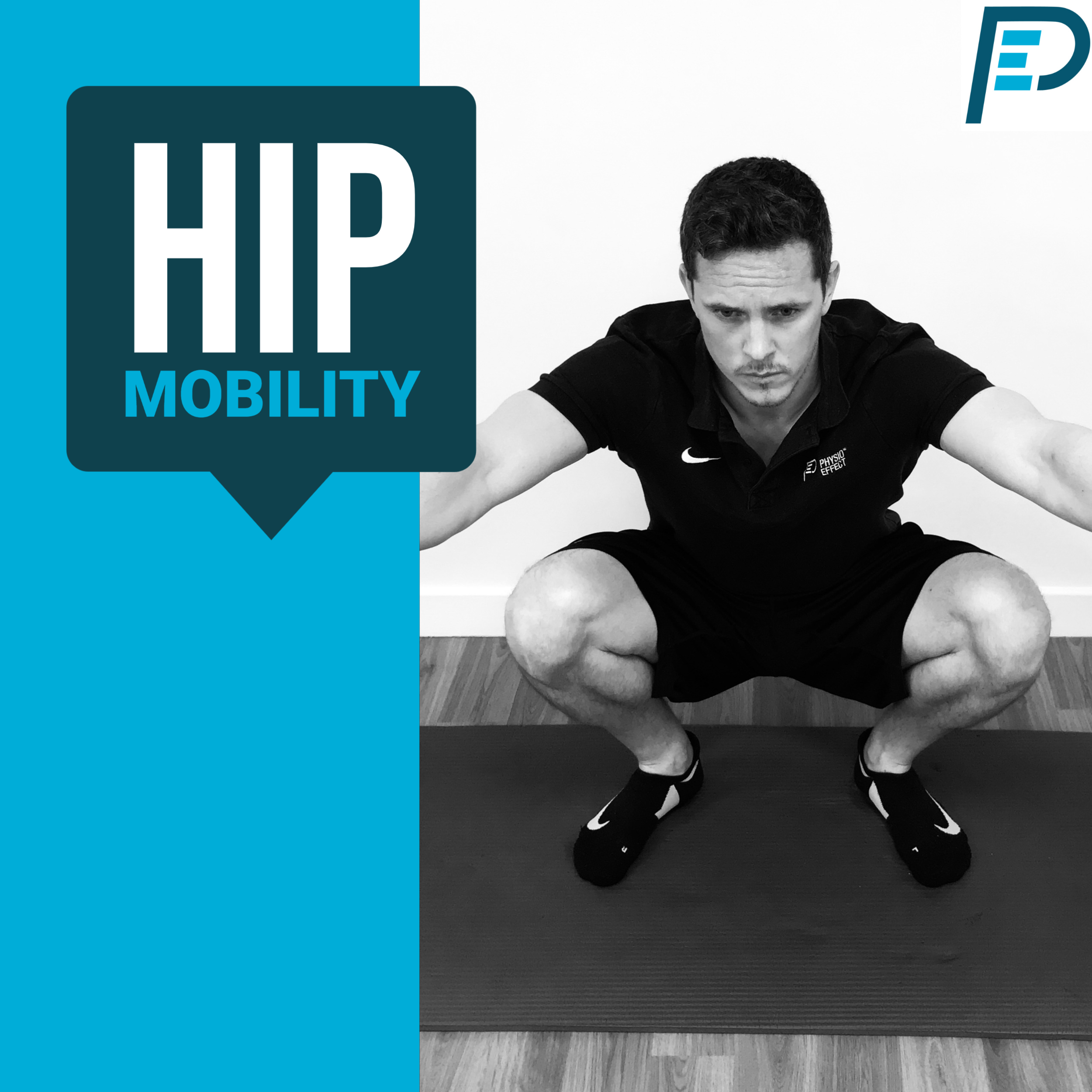
Deep Squat
Chances are if you’re reading this you have at least one hip and at some point it has given you trouble. Hip pain or stiffness has likely gotten in the way of your daily activities or restricted your ability to exercise on more than a few occasions. Our hips are at the centre of our body’s movement, so if they are functioning poorly then our ability to move freely and unrestricted will be compromised. Poor hip function can cause local issues around the hip but often contributes to pain and dysfunction in other areas like the lower back and knees.
The primary reason for developing hip pain for most people is a lack of movement and excessive sedentary behaviour, an all too common theme in our modern lives. You may workout regularly but chances are you still accumulate a lot of static postures through work or leisure and it’s unlikely that your exercise habits routinely explore and work the hip joints and muscles to anywhere near their full range or capacity. Though most hip pain is not serious and can be helped with the right exercise, we recommend consulting a health professional if you are worried or have persistent symptoms.

Modified Pigeon with Active Hip Internal Rotation
Am I Stiff or Weak?
Most likely it’s a combination of both. There is a lot of confusion out there around the terminology of flexibility, mobility and strength. Essentially flexibility can be considered passive and is about the soft tissues (muscles, tendons and ligaments) ability to temporarily elongate to allow movement through a range while mobility centers around our ability to move through a range of motion with control before becoming restricted. Mobility requires strength to control your flexibility.
Take for example someone who can squat 200 kilos to a parallel depth. This would obviously be considered strong in that range. However if the same individual cannot perform a body-weight squat below parallel depth without falling over or requiring support then we could say they have poor squat mobility. Passively if they can still achieve a deep squat position using some support we can say that they have reasonable flexibility in their soft tissues to allow this. Ideally this individual will work to improve their mobility so that they have better strength to control a greater degree of flexibility i.e they can drop comfortably and controlled into a deep body weight squat without assistance.
Should I Stretch or Strengthen
Again for most people the answer here is both but the key is identifying exercises that allow you to improve on both simultaneously whilst also offering functional value. Being inflexible is not great as your natural joint range of motion may be restricted and eventually painful. Inflexibility can lead to struggles with basic everyday activities like bending to pick something up or getting in and out of bed or your car. If you are weak then as discussed before you will not be able to control your flexibility or movement again making you more vulnerable to injury and pain.
This is where we need to be smart and specific in identifying our own needs and training with functional goals and targets in mind. You may have great flexibility and touching your toes is a breeze but when asked to do a basic lunge you lack the strength, balance and co-ordination. Conversely as with our example above you may have great strength for lifting weight but only in a limited range and the idea of touching your toes or sitting in a deep squat seems ridiculous. There is no single one recipe to fix all here but in essence mobility training will work both our strength and flexibility needs, we just need to identify the right exercises.
Try this mobility routine we have created to help identify your own personal problem areas. What to you find most difficult and are you struggling due to tightness, weakness or a combination of both?
Up for a challenge? Try this routine a few times and note the 3 exercises or positions which you find most restricted or difficult to perform. Now practice them consistently at lease 3 times per week for the next 4-6 weeks and see what changes and improvements you can achieve
At the bottom of this blog you can see each of the individual exercises that make up our hip mobility routine. Click the link below to download your FREE PDF copy of these exercises including some key tips .
Challenge to Change
For the vast majority of people our lives and even our exercise or training keep us moving in basic linear patterns (up and down). We don’t often (if ever) challenge our hips with lateral or rotational exercises and most people end up weak and unstable in these positions compromising their hip health and function. That’s why we designed these routines to explore and challenge these less common positions.
This next video demonstrates 3 more advanced hip mobility exercises that you can try. Please only attempt what you feel able and do not work into pain or through injury. Try the exercises in the video below and see how you feel. Chances are you will find this very tough but they are great exercises to improve overall hip mobility and function so if you feel able add them to your regular routine and with consistent practice you should see real improvements.
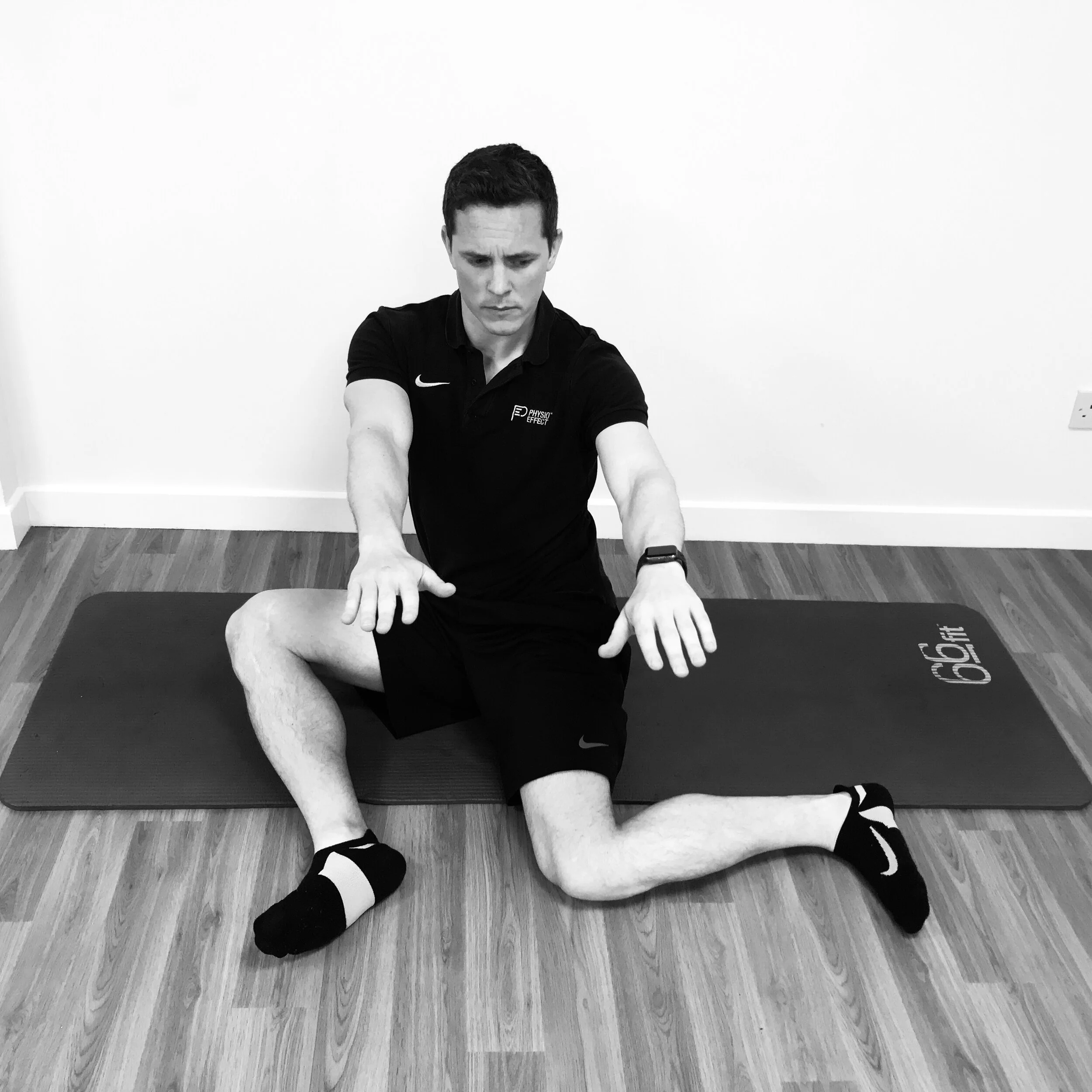
Exercise 1
Seated hip Internal / External Rotation
Begin in sitting leaning back on straight arms, knees and hips bent and relaxed shoulder width apart with feet flat on floor.
Gently and with control lower both legs to one side trying to touch the outside of one knee and inside of the other knee to the floor. Don’t worry if this range is too much, just work as far as you feel is challenging but comfortable. Return to start and repeat to opposite side.
Perform this movement for 60 seconds

1- Floor Sitting, Lean back on hands, high chest

2- Slowly Rotate Both Legs to one side
Exercise 2
Deep Squat Hip Internal / External Rotation (Advanced Option)
Begin in a deep squat. Ensure heels remain in contact with the floor
Slowly rotate one knee across mid-line aiming to touch knee to floor in front of opposite foot which should remain flat with heel on floor. Allow moving leg to rotate up onto toes. Static leg should remain open and avoid any inward collapse of knee/hip position.
Return leg to starting deep squat position and repeat with opposite leg.
Repeat with alternate legs for 60 seconds

1- Deep Squat, Heels on floor

2- Deep Squat- Active Hip Rotations
Exercise 3
Modified Pigeon
Begin in 90/90 hip and knee position. Gently rotate and square hips up facing forwards
Gently lean chest forwards through your hips and rotate slowly leaning over the forward knee
Option to gently contract front leg pushing knee into floor, hold 5-10 seconds and release. Repeat 5-10 times.
Work into and explore stretch for at least 60 seconds

1- Modified Pigeon 90/90 Sitting

2- Modified Pigeon- forward lean & rotate over front knee
Exercise 4
Modified Pigeon Active Hip Internal Rotation Lift
Begin in the modified pigeon 90/90 sit with slight forward lean supporting weight on hands
Gently lift back foot off the floor. Squeeze and hold for 5 seconds. Repeat for at least 5 contractions
You will repeat this exercise for the opposite side once you’ve completed the routine on one side

1- Modified Pigeon Forward Lean on Hands

2- Modified Pigeon Active Hip Internal Rotation
Exercise 5
Modified Pigeon Hip Active External Rotation
Begin in the modified pigeon 90/90 sit with torso rotated facing forward leaning weight back with hands behind you
Gently lift the knee (with inside touching floor) & rotate outward through hip. Squeeze and hold for 5 seconds. Repeat for at least 5 contractions. Ensure opposite leg remains still with outside knee resting on floor
You will repeat this exercise for the opposite side once you’ve completed the routine on one side

1- Modified Pigeon Chest Open

2- Modified Pigeon Active Hip External Rotation
Exercise 6
90/90 Sitting Lift to High Kneeling
Begin in approximate 90/90 sitting as shown, use hands to maintain balance without leaning on floor
Gently lift through the hips into controlled high kneel. Squeeze the buttocks and hold for a few seconds. Return to start position and repeat 30-60 seconds
Switch legs so back leg begins as forward leg and vice versa. Repeat active sitting movement 30-60 seconds.
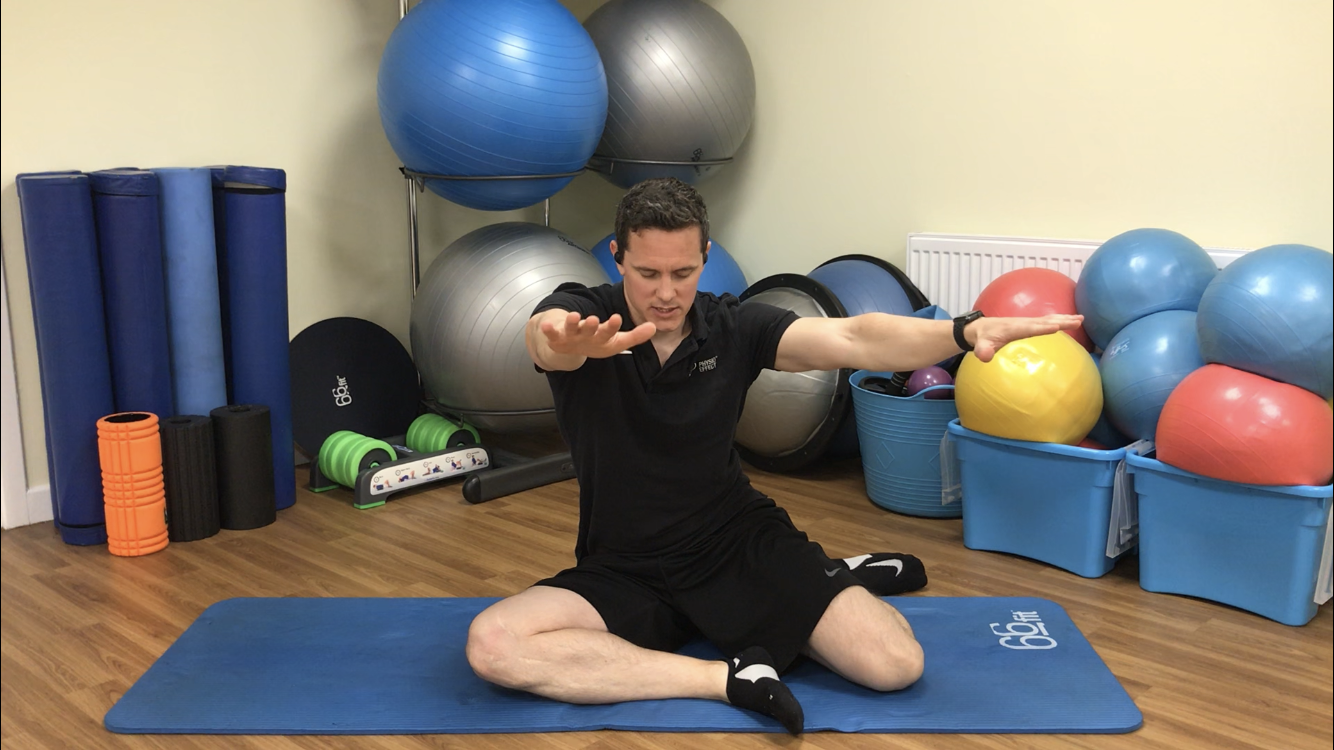
1 - 90/90 Sitting on floor (no hand support)

2 - High Kneeling
Exercise 7
Frogger
Begin in all 4s, forearms on floor. Walk knees open keeping insteps of feet and inside shins rotated inward in contact with floor
Gently rock back through hips/pelvis as if taking bum closer to heels, squeeze knees into the floor and hold/release for 5-10 second repetitions.
Gently work into and explore stretch for at least 60 seconds

1 - Frogger Start Position

2 - Frogger Rock Back Position
Exercise 8
Deep Lunge Hip Opener with Arm Rotations
Begin in lunge position, extend out back leg as far as is comfortable. Lean forward and try to come to rest on forearms. Actively drive open front knee/hip rotating out onto outside border of foot.
Take inside arm next to front leg and rotate upwards to ceiling with a straight arm. Stretch open through shoulder, chest and spine. Hold for 5 seconds at top position, return to start driving elbow back to the floor and repeat for 10 repetitions.
Switch legs front to back and vice versa. Repeat process.

1 - Deep Lunge, Forearms to floor, drive front knee open

2 - Deep Lunge Arm Rotations
Thank You
Thanks for taking the time to read this guide, we hope you find it useful. Please share with anyone else who might benefit and if you have any questions comment and let us know. Don’t forget to download your free hip mobility cheatsheet. Good luck and enjoy your improved hip health.

Deep Lunge with Arm Rotation
Tight shoulders? This routine will fix you up
5 step shoulder stretch routine to relieve stiffness and tension. Discover a new range of motion and rid yourself of nagging tightness in your shoulders and upper back
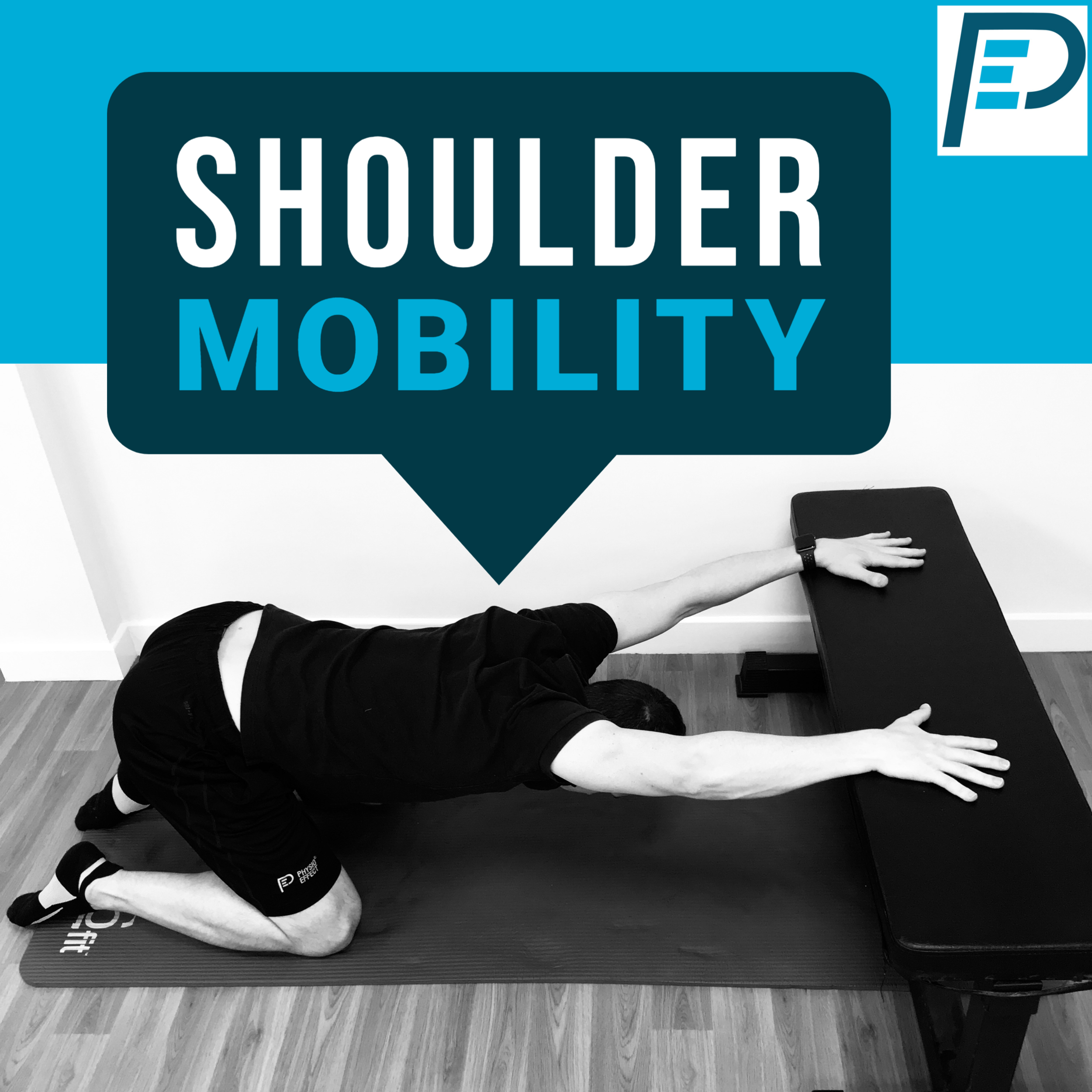
Why are my shoulders so tight?
Familiar Hunchback Posture?
Shoulders are a big sticking point for many of us. We constantly assess and help people with long histories of stiff, tight, achy shoulders and upper backs. More often than not there is no significant injury history but very commonly there is a base of sedentary behaviour, such as office work and driving, and a significant lack of any structured stretching or mobility exercise. Welcome to our modern lives!
Most shoulder pain can be fixed without the need for invasive surgery but it can take time to undo a lifetime of poor habits which have lead to soft tissue adaptations with weakness in some areas and tightness or stiffness in others.
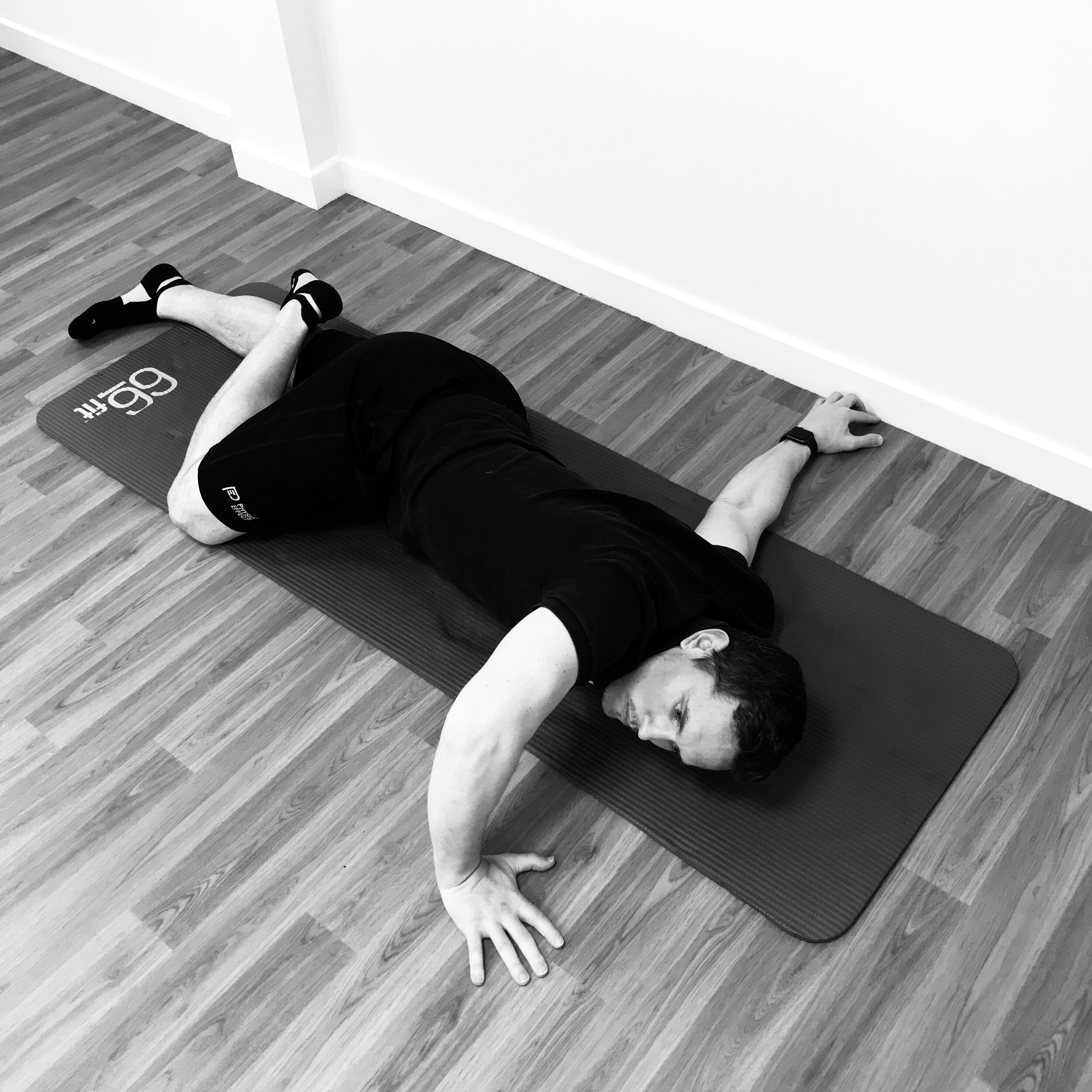
1/2 Crucifix Chest Stretch
Shoulders are very mobile and we put them through a lot over our lifetime with an expectation they will be fine with no real consideration given to tuning or maintenance work. Tightness and pain can easily creep in and often presents initially as discomfort reaching overhead, pain opening a door, or a struggle to weight bear through our arms. This can develop to more constant nagging pain and stiffness and a reduced ability to perform daily tasks or enjoy physical exercise or activities.
Many people just put up with having a dodgy shoulder and accept it as a new norm but with the right guidance and exercises most situations can be at least significantly improved if not completely fixed. Like everything in life though you won’t get something for nothing and commitment to changes in habit and daily routines will be required. A balance of stretching and strengthening exercises is normally key and we have provided a great starting point here with our 5 point stretching routine.

Let’s get started!
We must bear in mind that every body is different as is each individuals unique history and circumstances so please use this routine as a guide to start improving your shoulder health and flexibility but do so carefully. Start slowly and gently and never push in to pain. Work to better your own range of motion but do not compare yourself to the video or anyone else. Practice daily and be patient but also persistent. If you can only do part of the movement or a modified / reduced range that is fine, just do what you can. Of course as with all advice please consult with a health professional if you have significant pain or loss of normal function.
Mobility Flow Video:
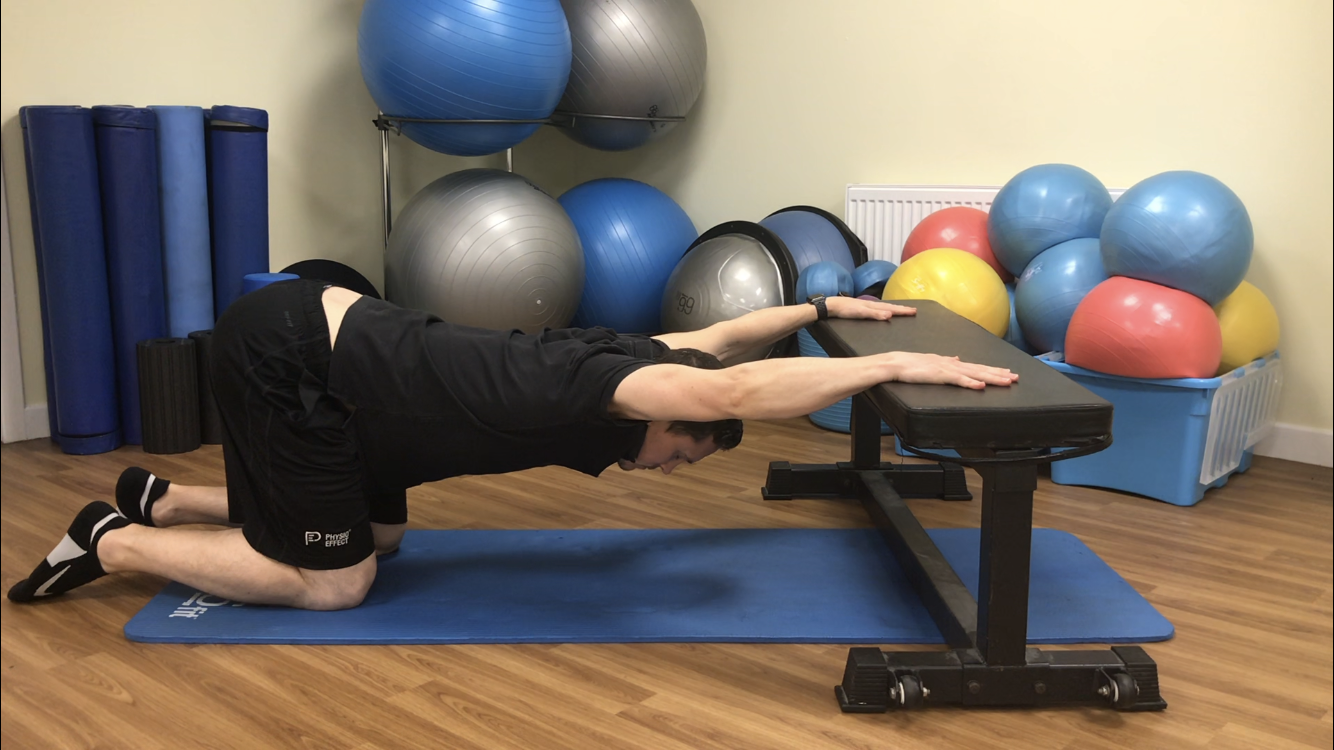
Exercise 1
Shoulder rolls / Scapular circles
Begin in all 4s position.Hands fixed under shoulders shrug shoulders to ears thenslide back and down and release. Then spread shoulder blades apart stretching across upper back, relax and allow shoulders and back to hollow.
Try to perform this as a slow circular rolling motion working in various directions
Perform this movement for 60 seconds

1- Shoulder shrug
2- Shoulder spread
Exercise 2
Elevated Arms to Partial Childs Pose / Prayer Stretch
Begin in all 4s position with arms straight out elevated on flat surface. Gently sit bottom back towards heels and let weight drop down between shoulder blades and through upper back
When in position try gently squeezing shoulders together and releasing and light pressing through the hands with slight twist/rotation movement
Try breathing in deeply and coming out of the stretch slightly then breathing out slowly and dropping deeper into stretch
Explore the stretch position with subtle movements and breathing for 60 seconds +

1- 4 point kneel arms elevated

2- Sit weight back and down between shoulders
Prayer Stretch (Option 2)
Perform stretch as above but move to have elbows resting on flat surface with arms positioned in ‘Prayer’ posture
Sit weight gently back and down relaxing between shoulder blades and across upper back. Try to let head bypass the bench (surface)
Try breathing in deeply and coming out of the stretch slightly then breathing out slowly and dropping deeper into stretch
Explore the stretch position with subtle movements and breathing for 60 seconds +

Prayer Stretch Start Posture

Prayer Stretch - Sit back position
Exercise 3
Shoulder Dislocates (Stick or Band)
Begin in high kneeling or standing - Holding a stick or band keep arms straight and core tight, slowly bring arms straight overhead and around down towards lower back. Allow shoulder blades to gently shrug then rotate and slide down as you circle arms overhead
Return to start point slowly ensuring not to over-arch through lower back
Repeat for 10-15 repetitions

1- Shoulder Dislocates - Stick (Overhead)

2- Shoulder Dislocates Stick (behind back)
Exercise 4
‘L’ Position Prone Shoulder Stretch
Begin lying on your front. Gently reach with shoulder to be stretched under and across your body at shoulder height with palm facing up. Allow other arm to stretch straight overhead forming an ‘L’ shape with your arms
Gently rotate into the stretch as if trying to square up shoulder blades increasing the pull/stretch felt in back of the shoulder reaching across body. Hold and release this motion for several repetitions
Work in this position for 60 seconds + on each arm

1- ‘L’ Position Shoulder Stretch Part 1
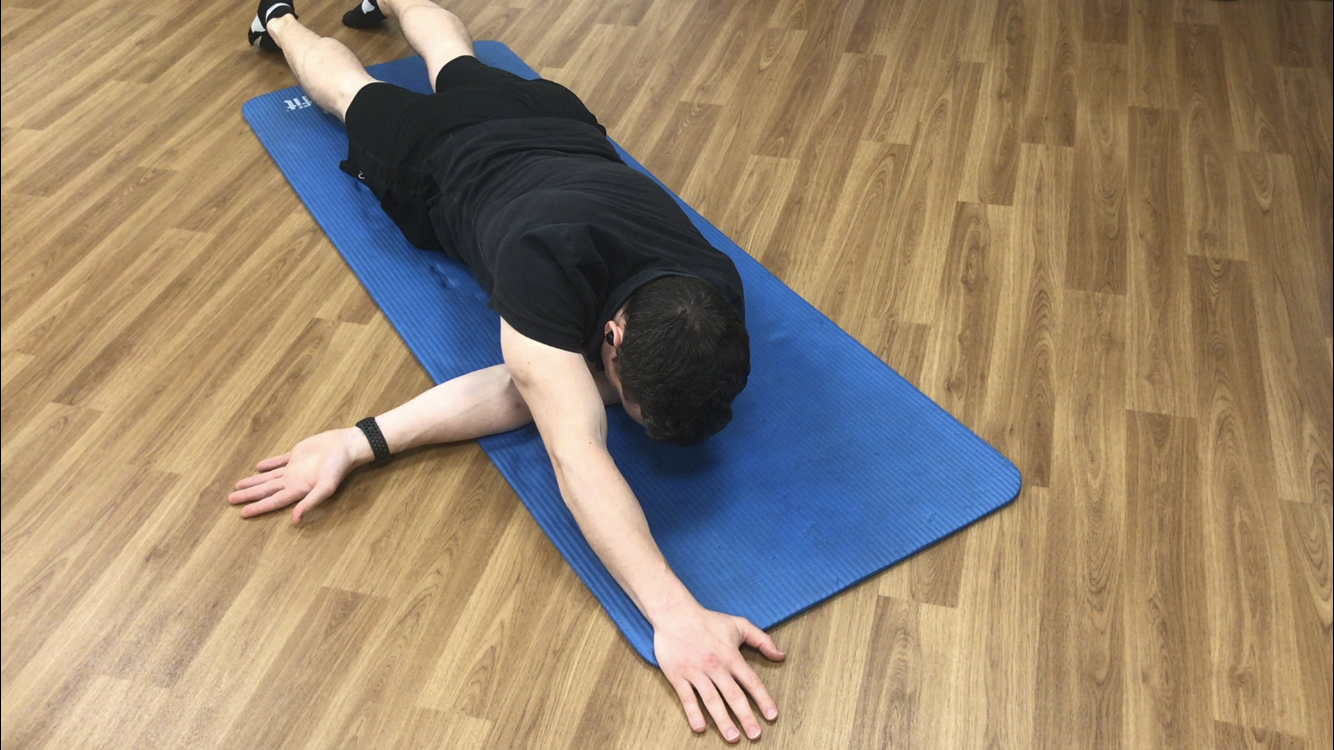
2- ‘L’ Position Shoulder Stretch Part 2
Exercise 5
1/2 Crucifix Chest Stretch
Start face down with side to be stretched arm extended fully out at shoulder height palm down. Opposite arm is bent at 90 degrees at elbow hand at shoulder height ready to push into stretch
Gently push with bent arm while rolling weight of legs over to create a strong opening stretch of the chest of the straight arm
Gently push in and out of the stretch holding for a few seconds then releasing and repeat
Explore this stretch for 60 seconds + on each arm

1- 1/2 Cucifix Start Posture

2- 1/2 Crucifix Chest Opening
Thanks for taking the time to read this guide, we hope you find it useful. Please share with anyone else who might benefit and if you have any questions comment and let us know. Don’t forget to download your free mobility cheatsheet. Good luck and enjoy your improved shoulder health.
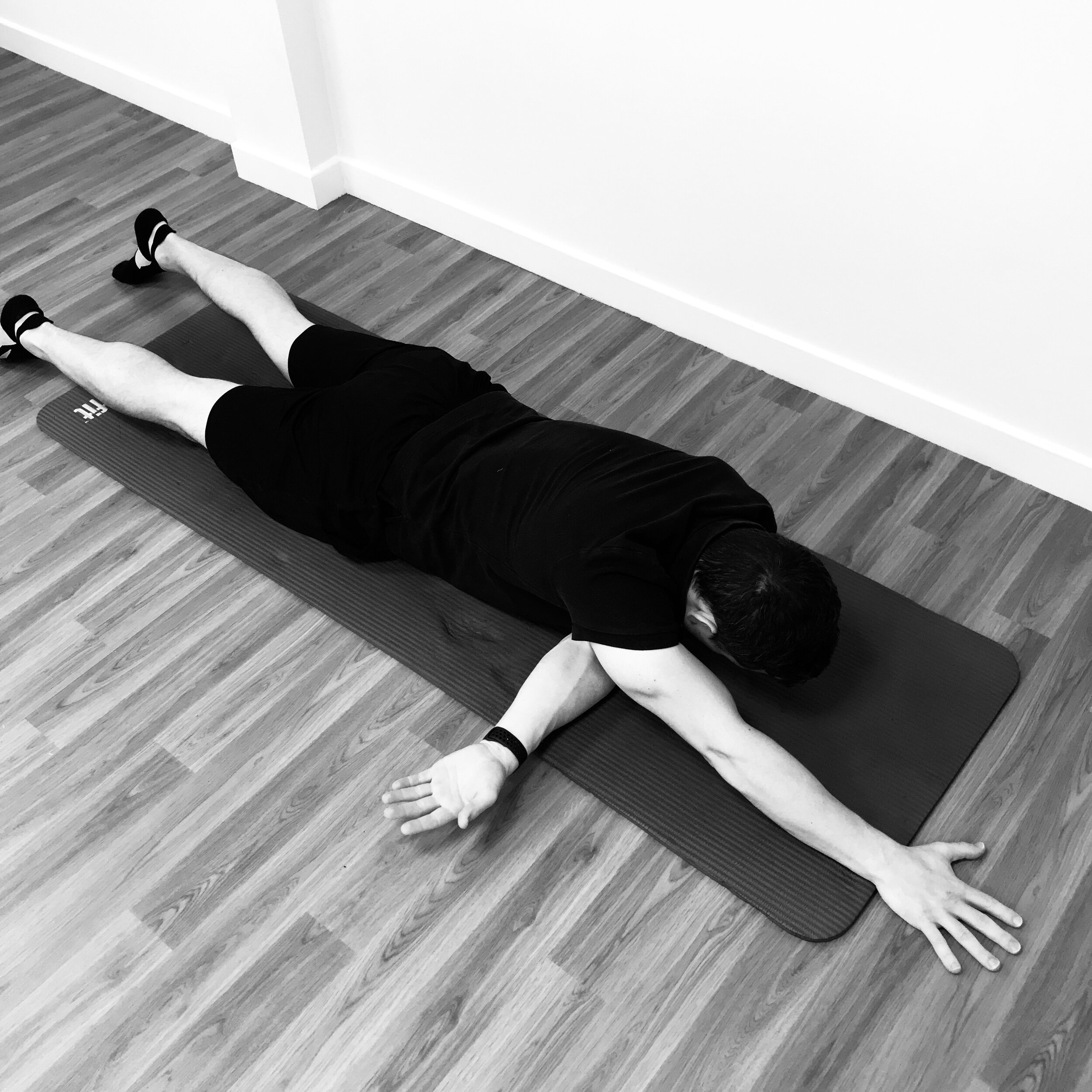
‘L’ Position Prone Posterior Shoulder Stretch

Check yourself before you wreck yourself - Injury prevention for knees and hips
Injury prevention is obviously preferable to injury cure. It is common for people to adapt their work desks and equipment to improve their posture as a form of injury prevention. It is also common for gym-goers and athletes to practice good form when using weights as a means of injury prevention. What is uncommon is paying attention to and correcting our most frequently used movements that arguably have some of the more devastating effects on joints if performed badly over a lifetime.
By Jonny Kilpatrick of Physio Effect
Injury prevention is obviously preferable to injury cure. It is common for people to adapt their work desks and equipment to improve their posture as a form of injury prevention. It is also common for gym-goers and athletes to practice good form when using weights as a means of injury prevention. What is uncommon is paying attention to and correcting our most frequently used movements that arguably have some of the more devastating effects on joints if performed badly over a lifetime.
With almost all leg injuries, as physiotherapists, we will assess basic movement patterns. Two of these are frequently found to be faulty and likely to either have contributed to an injury or are likely to hinder a speedy recovery. These movements are:
Standing to Sitting / Sitting to Standing
Step Up / Step Down
We perform each of these movements numerous times each day, hundreds of times each week and thousands of times each year. Little attention is paid to our “form” on these movements and commonly we will see people putting their knee joint under uneven stretching and compressional forces that over time will strain on ligaments and degenerate joint surfaces. Almost always the fault seen in both movements involves the person’s knees or knee drifting inwards once the hips are lowered. This puts the knee into a position known as genu valgum, which is associated with the following conditions:
Patello-femoral (knee cap) joint osteoarthritis
Inner knee pain from overstretching the medial collateral ligament
Outer knee pain from increased tension on the Iliotibial Band and compressional wear and tear to the lateral meniscus and joint surfaces
Osteoarthritis of the knee joint
Increased risk of knee trauma in sports such as ACL rupture
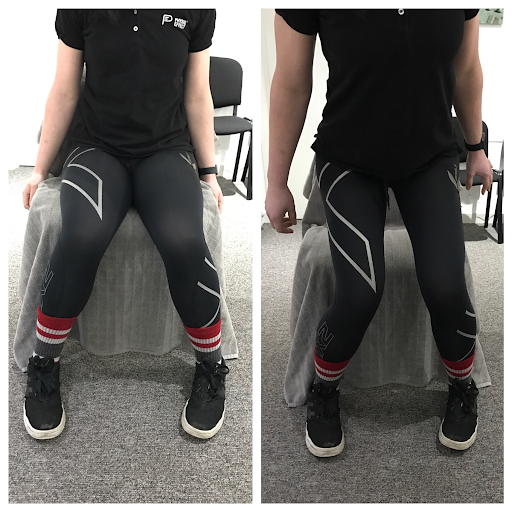
Poor movement pattern with Sit to Stand and Step-Ups fig.1
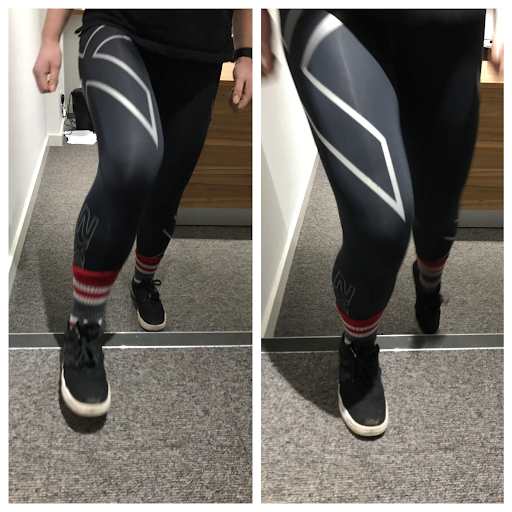
Poor movement pattern with Sit to Stand and Step-Ups fig.2
The reason this knee position and movement pattern has such a destructive effect on the knee is to do with the way our knee has been designed to move. There are various interlocking grooves and troughs within our knee that require a certain movement pattern to align correctly and provide stability. This movement is called the screw home movement and it involves the femur (thigh bone) rotating approximately 10 degrees inwards on the tibia (shin bone) to achieve a fully straightened position. Conversely when the knee is bending the femur should rotate outwards on the tibia to keep everything aligned correctly and avoid excessive forces to one area. This in practice means that your knees should stay out over your feet when bending and the hips flexing. This can be achieved by rotating your femur outwards by using your Gluteal Muscles (Butt).
We have seen this movement problem much more prevalently in women who also tend to suffer higher rates of frontal knee pain and knee trauma in sport than men. This is thought to be in part because of women having a wider pelvis than men which results in an increased angle (Q Angle) from the outside of their hips to the knee cap in normal standing. We also believe the cultural expectation of sitting in a “lady-like” way with their thighs closed rather than open may have contributed to women sitting and stepping in a manner that switches off their glutes and allows their knees to track inwards. With this consistently poor movement pattern during a “functional squat” such as sit to stand over a lifetime it is unrealistic to expect ourselves to move well when the task requires greater control and strength such as during single leg step-ups when going up or downstairs or running which is actually just a series of single leg hops.
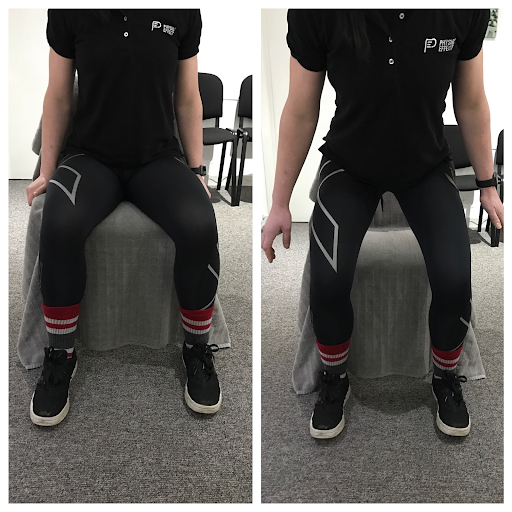
Correct movement pattern on Sit to Stand and Step-Ups fig.1

Correct movement pattern on Sit to Stand and Step-Ups fig.2
A common phrase within a gym or weights room when discussing form and technique is “check yourself, before you wreck yourself”. This, we would argue, is equally, if not much more, important with everyday movements as over a lifetime the wear and tear you inflict on your joints may not be reversible or easily rehabilitated in the same way as a minor muscle strain or postural stiffness. In the instance of these movements we would really recommend making time to practice some squats to and from a chair and step ups where you keep your knee from moving inwards of your foot. This should in turn help with how you move in everyday life if you are mindful of it.
At Physio Effect you can expect physiotherapy, massage and holistic services that address your unique needs. We will always strive to exceed your expectations through our honest and results-driven approach, delivered by our team of specialised practitioners.
You’ll be empowered to address your injuries and any associated lifestyle issues with a diagnosis and treatment plan that has been logically explained and is achievable for you.
Find out more and book online at PhysioEffect.co.uk

Trail With Us - first session report
On Saturday March 2nd, we had our first trial trail run at Chatelerhault Country Park - it was a great session and we definitely got the best of Saturday’s weather!
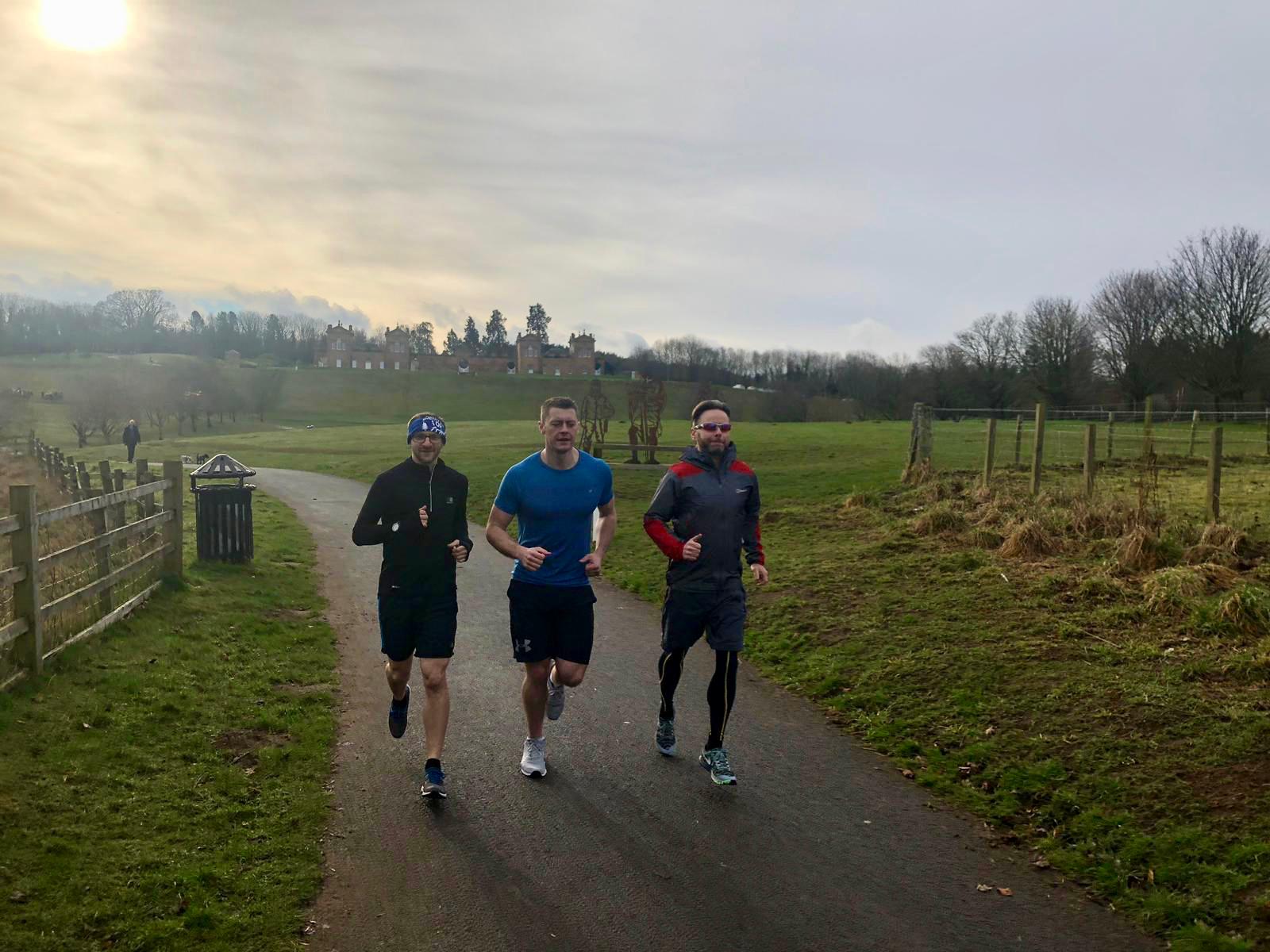

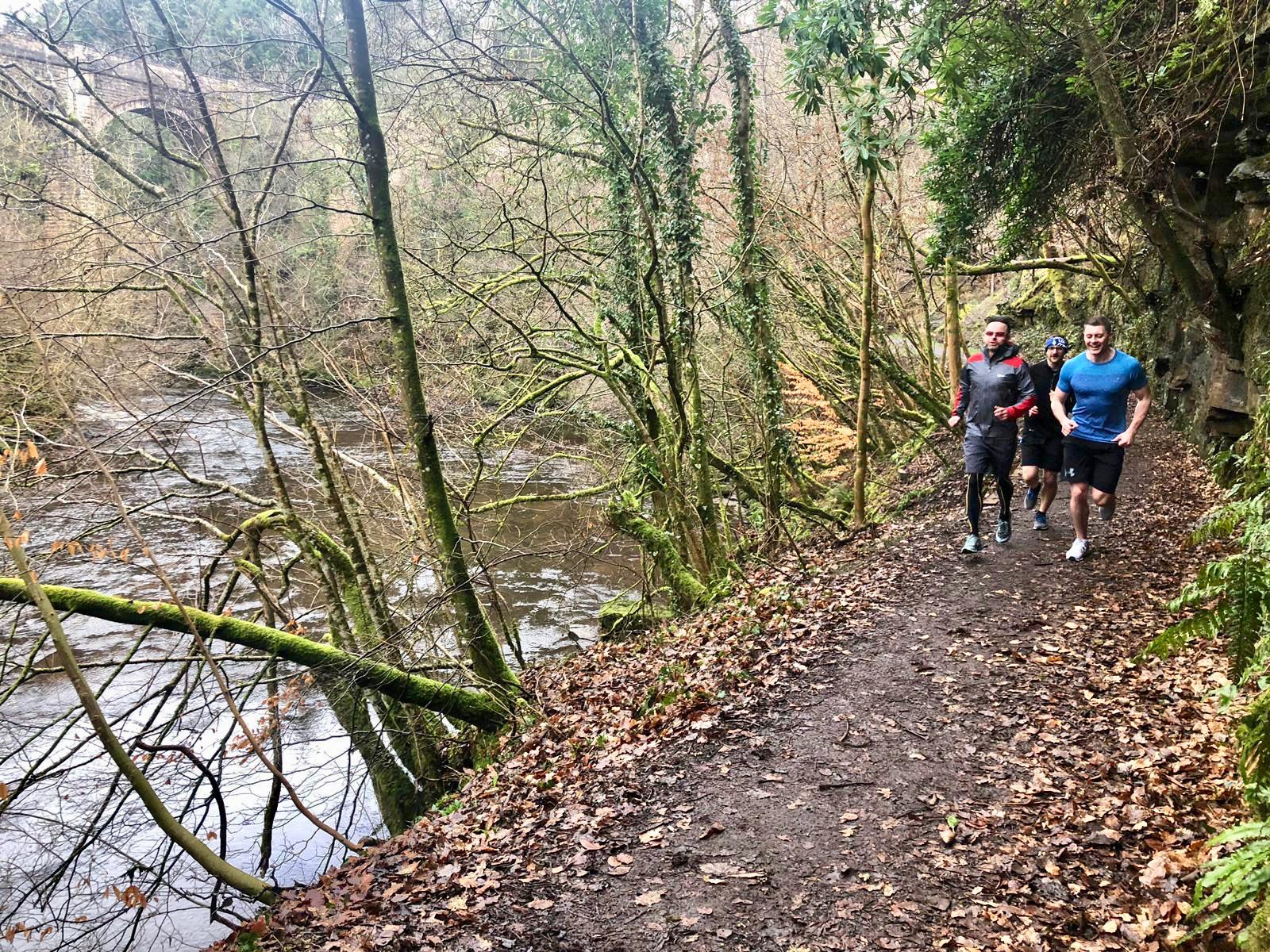

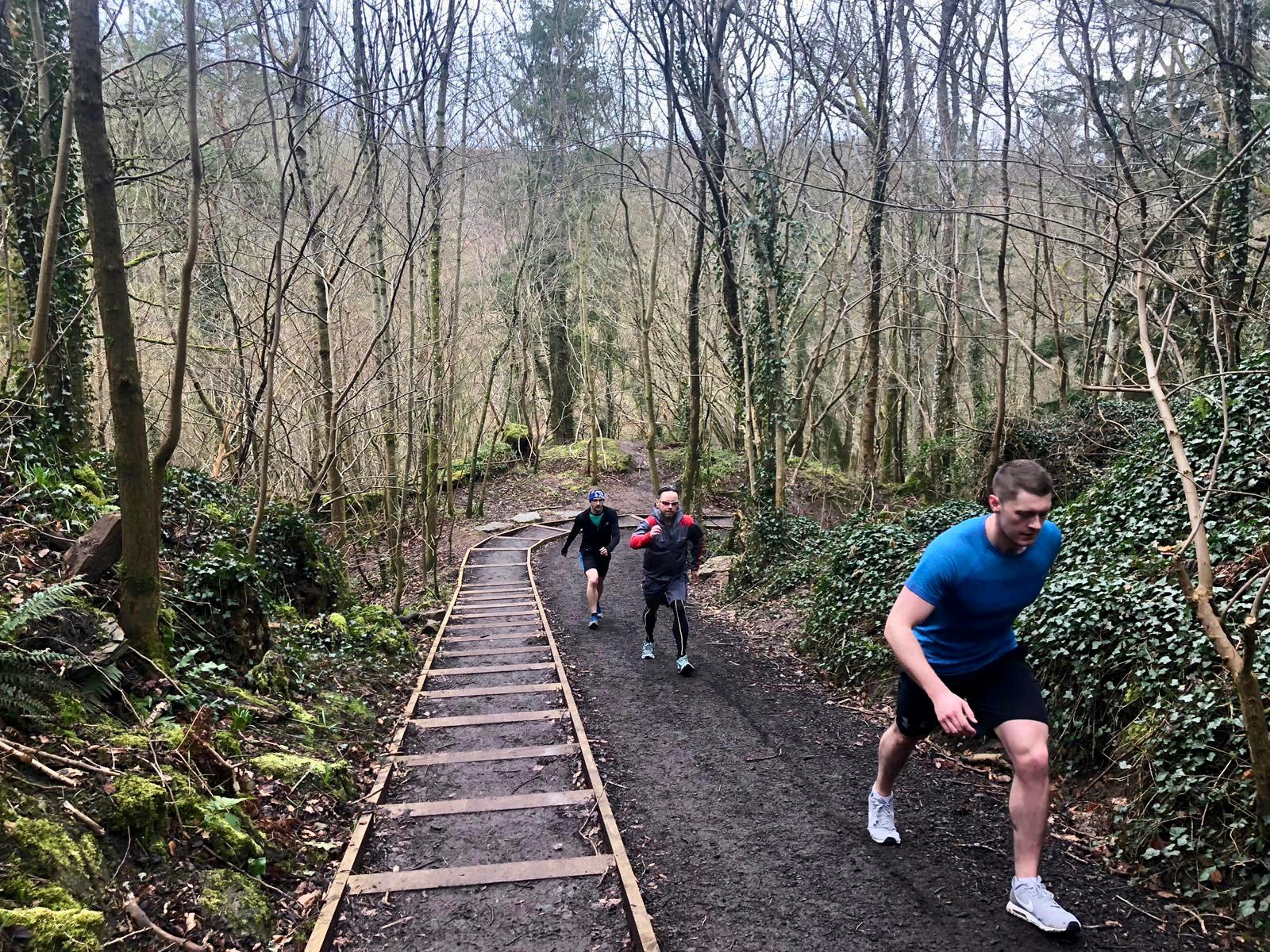



A small number of beta-testers agreed to come on our trial Trail With Us run on Saturday morning…
To find out more about the informal group - please click here.
If you’re interested in joining us in future please fill in the form below - we will change the venue around and make it so it’s accessible for walkers/ runners and everyone in between - we’re even talking about having a buggy-friendly route!
View some of the footage from the event here and even more on our YouTube Channel
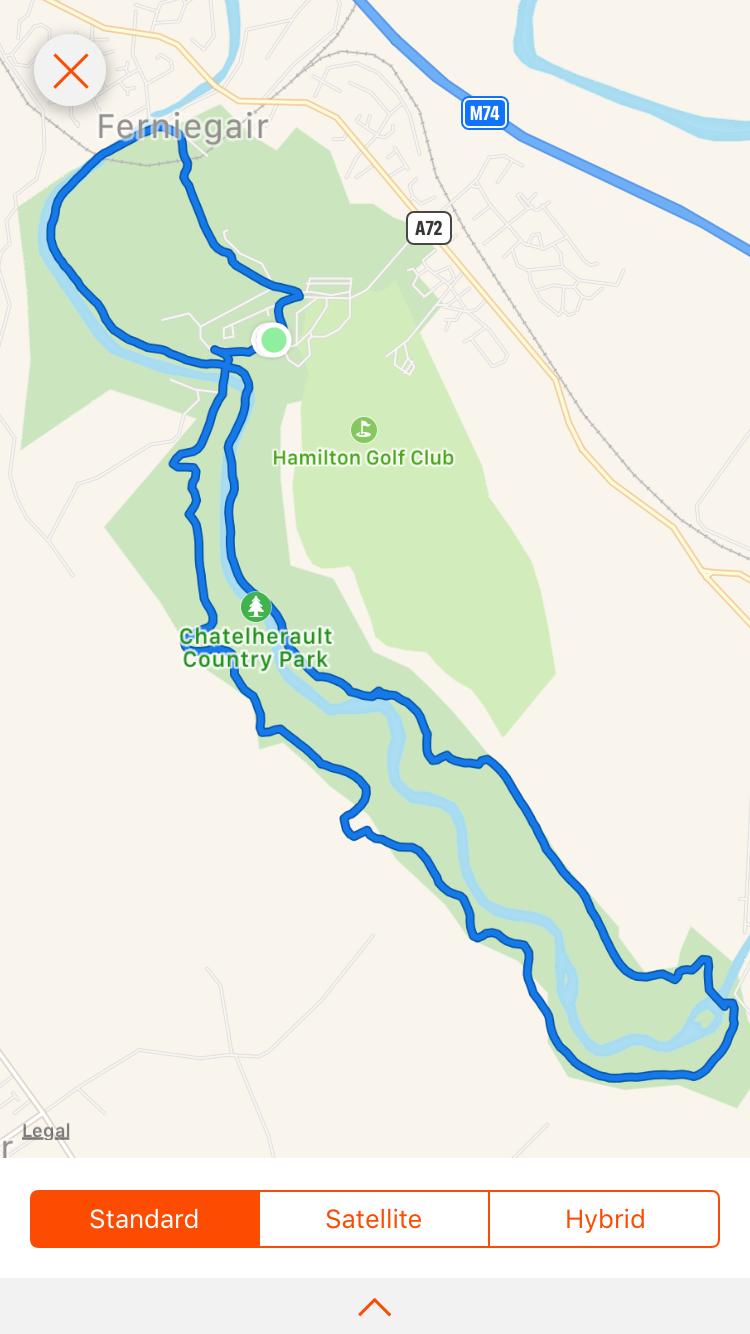
This is the 10k route the beta testers did on March 2nd

5 Tips To Keep Your Health & Fitness Goals On Track
5 Tips To Keep Your Health & Fitness Goals On Track - Physio Effect Director Danny Wray shares his advice on how to keep those New Year’s Resolutions going for the whole of 2019 and beyond!
1 - Plan Ahead
Failure to plan is planning to fail. It’s an old cliche but the message is important. Most people fail to stick with plans or goals in any aspect of life when there is a failure to set out realistic and measurable targets. If you’re new to exercise it’s unlikely you can suddenly manage 5 sessions a week of high intensity training. If you start out on this path you are likely to become overwhelmed or exhausted in a matter of weeks leading you to feel like you have failed and ultimately away from the initial goal of increasing your exercise output.
Try to diarise exercise as you would any other important aspect of your life and don’t see it as optional or something to be missed or moved as soon as you get too busy. I don’t believe anyone is ever too busy to exercise, it is just that they have failed to plan or make exercise a priority. Forming any habit takes repetition and consistency over many weeks or even months and exercise is no different. Make your exercise plan realistic, you are better to stick with 2-3 sessions per week consistently as a lifestyle choice than front load 5+ sessions a week in the short term and end up injured or unable to stick with your plan.
Be willing to adapt your plan as you go and react positively to the unexpected. Ultimately life happens and we will all receive the occasional curveball that disrupts our best laid plans. If you have missed a planned gym session or exercise class try and make up for it with a brisk walk or some light exercise at home even if it can only be a short session of simple movements or stretches. Your body and mind will thank you.
2 - Have Fun
Making healthier lifestyle choices and getting regular exercise can be challenging especially in our busy modern day lives. You are much more likely to commit to change if it is enjoyable. If the only driver to change is feelings of guilt or inadequacy then your commitment will quickly wain. Endeavour to make changes that, while challenging, are also fun and enjoyable.
Surround yourself with like-minded positive people and find a supportive environment for both exercise and lifestyle changes. Going to a gym or exercise class should be something to look forward to rather than dread and when you find the right setup for your needs it soon won’t seem like any effort at all and in fact should become a highlight of your routine.
When considering nutrition and lifestyle choices remember it is easier to change when supported by others who care and have similar interests so seek out groups and environments that support your goals in a relaxed and realistic way. You don’t need to give up all vices overnight but moderation and balance is key so work on gradual changes while remembering a little of what you enjoy is important and won’t compromise your long term progress.
When taking positive steps to improve your health and lifestyle it’s important to be open to trying new things as you may find a new passion you didn’t know you had which makes the whole process easier and more rewarding. Remember to stay true to your own goals and targets and make sure to distance yourself from negativity or anyone who belittles or criticises your efforts. Look for fun in the little things and the everyday stuff. Get outdoors more and try some new activities even if just to take a walk and appreciate our beautiful country.
3 - Eat Well and Drink Water
You can’t outrun a rubbish diet. A true statement for sure but it doesn’t provide any substance on what we should be doing. Planning your nutrition needs can be daunting with a minefield of information out there often providing confusing and conflicting advice. I am not a qualified nutritionist so the first thing I should say here is seek advice from someone who is qualified to give it and someone who understands your unique circumstances and goals.
Take simple, gradual steps to change your nutrition habits as a full overhaul or massive shift in eating habits overnight will generally be unsustainable. Stay clear of crash diets or supplements that use fancy advertising and fitness models to sell their products. Most of it is expensive junk. You can achieve fitness and health goals without starving yourself and while eating good, nutritious, whole food. Seek out solid sensible advice from a qualified health professional and put a plan in place
Drink more water. Simple, right? You would think this should be easy for us to get right but it's staggering how often people are chronically dehydrated. The average man needs around 2.5 litres of water a day and women 2 litres per day with these figures increasing significantly when balancing fluid loss from exercise. While water does of course come from multiple sources in our food and drinks, including tea and coffee, intake is best and most easily measured in its purest form when drunk straight from the tap. Get yourself a nice reusable water bottle and start keeping track of how much you are consuming. Try to sip regularly through the day and increase intake before, during and after exercise. Increasing water intake can be a simple solution for fatigue, irritability and muscle aches and pains.
4 - Sleep
How much sleep do you average per night? It’s recommended that adults aim for a minimum of 7-9 hours per night which many of us will routinely fail to hit. Sleep is a time for repair and recovery particularly if you have been exercising. Sleep deprivation has been linked with reduced strength and muscle mass and will leave you much more susceptible to illness while recovery from injury or illness will take longer. Regularly sleeping less than the recommended amount can have several negative effects on our hormones which regulate hunger and appetite. This can lead us to make poorer food choices and consume more calories.
How can we sleep more? Number one here for most adults will be go to bed earlier. With busy work and family lives most people will struggle to find extra hours for sleep in the morning so try getting routinely to your bed 1-2 hours earlier than your usual. The majority of us will be guilty of watching TV, checking our phones or using electronics in bed. This stimulation can make getting over to sleep more difficult and may negatively affect the quality of sleep we can achieve. Kill the electronics an hour before bed and leave the phone out of your bedroom.
5 - Manage Stress
All of the above factors will be easily undermined with increased stress levels and your best efforts can be quickly derailed if you don’t have strategies in place to manage this. Equally following the above points can help to reduce and minimise stress so ultimately we can conclude that stress and its potential impact is closely intertwined in all that we do.
Modern lives constantly throw us micro-stresses whether it’s rushing to get out in the morning, the nagging email you’ve forgotten to reply to, the endless traffic you seem to battle through or simply the constant battle to balance your work and personal life. Stress can creep up on anyone and often we fail to realise it is happening. Signs can include low energy and mood, headaches, increased aches and pains, an upset stomach or the seemingly never ending cold or flu. Any of these factors can easily lead us off path in our efforts to improve our health and lifestyle so be mindful.
Tackling and reducing stress takes us full circle again with regular exercise topping the list closely followed by ensuring adequate sleep and working to improve those nutrition and water targets. Many people will find using daily relaxation or mindfulness techniques help to reset the balance and prevent stress levels from elevating. Therapies such as massage, reflexology or craniosacral therapy can help promote relaxation and wellbeing or why not try a yoga class or use a meditation or relaxation application to help you along.
Work hard to manage your time through better planning remembering that exercise and time to relax and socialise are of equal importance to personal and professional obligations and should be diarised as such. Remember that there are events outwith your control & spending time worrying about these is ultimately pointless, focus on what is within your control and what you can change.
Talk with friends and family about how you are feeling and if necessary seek professional advice from your Doctor or a health professional you can trust. Early identification and recognition of increasing stress can reduce the impact on your health and help keep you on track.

Clinical Yoga - from a client perspective
When Raz Leonard, one of our Physio Team, suggested developing Clinical Yoga to create a platform for her to be able to help Physio Effect clients have another options through which to achieve their goals, we thought it was a great, and really interesting idea! Read more to find out how our Clinic Manager, Sarah, got on!
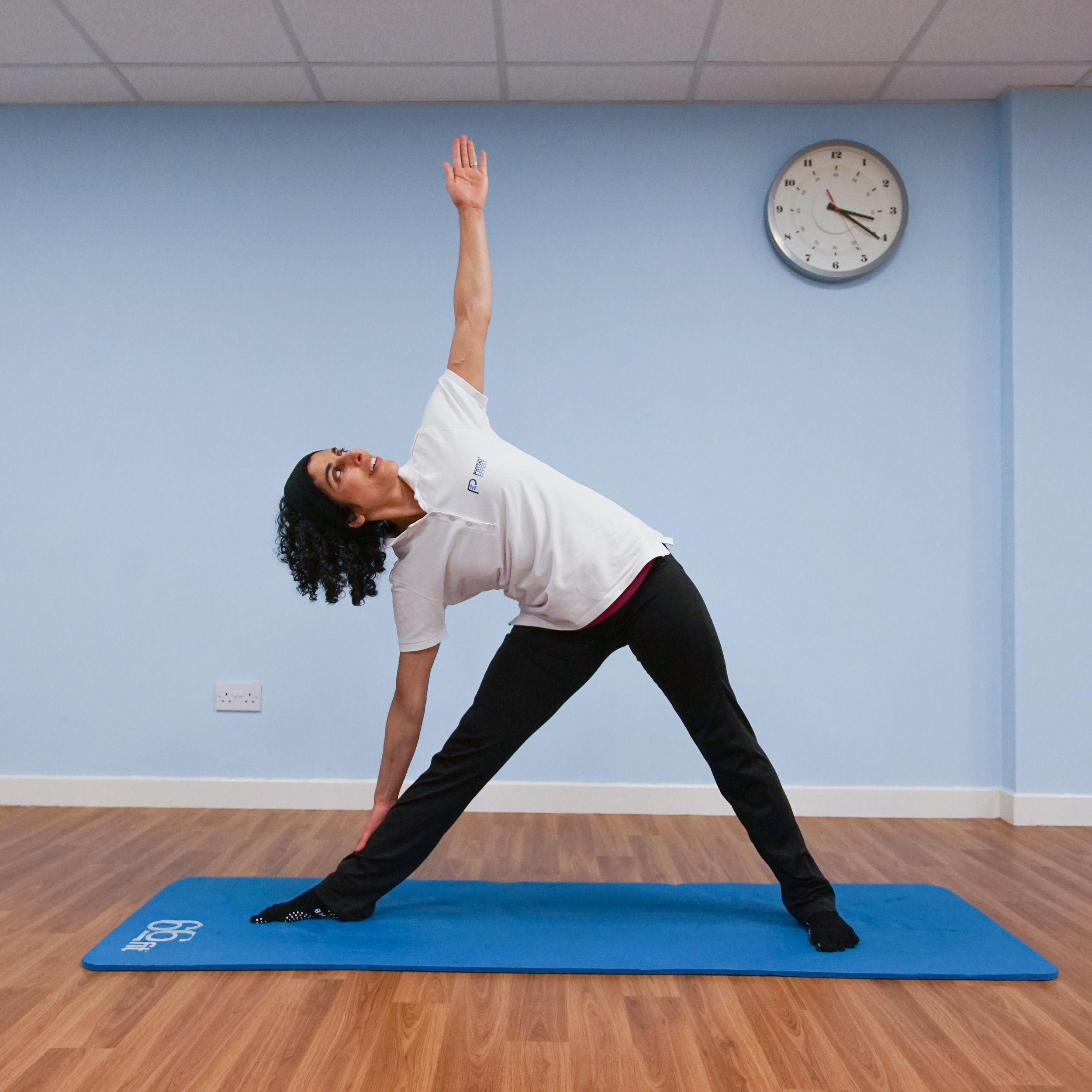
Physio and Clinical Yoga Instructor Raz demonstrating how it’s really done!
Introduction
Physio Effect has run specialist Clinical Pilates services for a number of years now; the way i explain clinical services as opposed to ‘regular’ services is that with the clinical option, you’re being instructed by a Pilates instructor who is also a qualified physiotherapist and who uses that amalgamation of learning to structure the service. We offer 1:1, 1:2 or classes here in our Northside Studio. The classes are small - maximum five people, and, whatever session size you choose, you have a clinical assessment with that physio before you start. They go through a specific assessment with you and work with you to identify your physical needs and ultimate goals for the outcome of the Clinical Pilates sessions.
I guess the Clinical sessions could be seen as bespoke rehabilitation (or prehabilitation) sessions which last a full hour and use a variety of our equipment here in the studio - everything from resistance bands to our reformer (see here for more!)
So, when Raz Leonard, one of our Physio Team, suggested developing Clinical Yoga to create a platform for her to be able to help Physio Effect clients have another options through which to achieve their goals, we thought it was a great, and really interesting idea!
Fast forward a month or two and I thought I’d try it out!
My Background
I’m Sarah, the Clinic Manager here at Physio Effect (hi!). I’ve done yoga on and off for around 20 years, sometimes very intensively and sometimes (more often than not!) much more sporadically. I’ve been to classes (Hatha, Ayengar, Ashtanga and Bikram) and done some at home. My brother is even a yoga teacher and yoga teacher trainer, so I know I should do more of it and really do understand the benefits. It’s just, you know, making the time (same old!).
The kind of yoga I always enjoyed was the more fast-paced, ‘power yoga’ where one posture flows into the next and I always thought I had a really good basis for this as I had a strong history of all the static postures initially.
What I hoped to achieve
As with most of us, I don’t spend enough time before or after exercise (or even independently to be honest) doing all the restorative things I should be doing - stretching being the big one here. So I hoped my yoga class would provide some balance to all the other physical aspects of my lifestyle.
How it all worked - 1:1, booking in for the block etc
Raz and I had a 1:1 session where Raz asked me about my lifestyle, goals for the class and where she asked me to do a range of movements to determine where I had limitations. This was really interesting as it identified a lot of things I was unaware of!
How the classes went
The classes were 60 minute sessions which, like any yoga class I’ve been to, started with standing postures and moved to sedentary and then lying down. That’s pretty much the only similarity as Raz had created a programme for me using yoga postures in a way that would help address my physical limitations - for example, I have, it turns out, very tight hips, so, in one session, we tested my squat depth and determined where I felt the strain, worked on that with a specific yoga posture, re-tested the squat, figured out what was the next limitation, did the next posture for that issue, and so on. It was really effective!

It’s not all lying down, I can assure you!
In addition to this, as I’ve mentioned above, I was under the impression before I did these sessions that my experience in yoga over the years had left me with pretty good posture and form in the yoga poses. Boy, was I wrong! When in a class where the instructor has the time and attention to detail to make sure you’re as aligned as you should be, it can make a massive difference with no option for those muscles that tend to overcompensate to do that.
Overall feeling and summary
I gained a real insight into how yoga can support and push my training as well as improve my recovery and flexibility. Clinical Yoga can be used to identify issues and give us the tools we need to overcome them as well as helping overall performance in a variety of ways.
The classes are great fun and I’d heartily recommend you consider signing up, if you like the sound of it!
“I thought I would just drop a short note about my experience in the 6 week yoga course.
I have to admit that before I attended a class I did not give yoga a moment’s thought because I did not know anything about it. When you said that you were running a course at the same time a friend on facebook who runs a boxercise class posted that he had just completed a yoga course and was singing the praises of it so I thought well if I don’t try it I will never know. I am glad I did and having attended all of the classes in the course I can feel the benefit of this.
Stretching to improve mobility is one thing but knowing which stretches are most beneficial and how to do them correctly to get the best results are very important. When doing stretches at home I believe that I am doing them correctly but that was in my own eye. “Oh wad some power the giftie gie us, To see oursels as other see us”. The benefits and results from the course greatly exceed anything that I could have achieved at home.
I have also found that when exercising at home there are too many distractions around. Being committed to attend the course provided focus on what I had to do in a controlled environment devoid of distractions. Maximising results from my efforts.
Thanks again”


Case Study: Frontal Knee Pain (Part 3)
Single leg exercises should be incorporated in strength and conditioning sessions as it is the best way to mimic the single leg work required in running with landing and push-off. It is also a good way to identify any imbalances from one side to the other. In the final part of this series, Jonny’s pain had largely settled and his rehab focused on single leg control. He also practiced a more efficient running technique to minimise loads placed on the knee.

Dry Needling: The most effective pain treatment you may never have heard of!
Dry needling is a type of acupuncture that has become very popular with physiotherapists in recent years in our treatment of injury and pain.
Dry needling is a type of acupuncture that has become very popular with physiotherapists in recent years in our treatment of injury and pain. Also known as Western Medical Acupuncture, Dry Needling differentiates itself from traditional acupuncture by being administered to soft tissue structures such as muscles and fascia (connective tissue) in order to stimulate the central and peripheral nervous systems. This results in the release of pain relieving substances within the body, which can desensitise painful structures as well as the loosening of excessively tight muscles, therefore restoring movement and function and facilitating a healing response. Dry needling is often used in conjunction with other treatment techniques as part of a treatment plan. This is different from traditional Chinese Medicine type Acupuncture which places needles along meridian lines and is based on a model of treating and restoring energy flow within the body.

Why is it called Dry Needling and how does it work?
This was to differentiate it from the more traditional western medicine approach to treating painful muscles and joints that involved the use of a hypodermic needle to inject a medication such as a steroid solution.
Dry needling uses only a thin acupuncture-type needle to stimulate and deactivate myofascial trigger points, muscles and connective tissues. This can also have both diagnostic and treatment benefits whenever a practitioner is attempting to address problems in deeper muscles and structures that massage techniques cannot be effective at reaching.
Myofascial Trigger Points can be found to be causing pain in nearly every musculoskeletal pain problem. (Myo=Muscle; Fascia=Connective tissue - the term ‘myofascia’ describes that area). These trigger points present as hypersensitive localised muscle tenderness that can also cause prolonged ache in a more widespread area. They can arise from overloading and overuse of muscles and structures such as in sport or after trauma, or even while sitting with a poor posture with the example being pain to the neck or back. As well as pain, myofascial trigger points can cause weakness of the affected muscles and restrict range of movement, both which can contribute to other problems and compensations developing.
Generally as the needles used are so thin, a patient can often not even feel the needle being inserted. When dry needling is administered effectively to a myofascial trigger point the patient may experience a local twitch response from the muscle. This instantaneous involuntary contraction confirms the presence of a myofascial trigger point and the practitioner may stimulate this twitch response a number more times manually using the needle or via an electrical current from a TENS machine to successfully deactivate.
Results can often be instantaneous when assessing restricted ranges of movement in muscles and joints and your practitioner will often demonstrate this with before and after treatment testing.
After a dry needling treatment a patient may instantly experience improvement in their pain and dysfunction being treated however it is quite common to experience muscle soreness around the needle site for between 24-48 hours. This post treatment soreness, however, is comparable to what can be expected from most hands-on therapies such as deep tissue massage.
As dry needling is administered in a clinical environment by highly trained and regulated physiotherapists, it should be considered to be a very safe treatment option and your clinician will have taken every precaution to minimise risk of injury or infection from the needle. It would however not be advisable to try for anyone who suffers from a significant phobia of needles.

Injuries and conditions to consider dry needling with:
Postural and work-related pain
Sports injuries affecting all muscles and joints
Muscle and Joint Tightness
Disc injuries
Migraines and Tension-Type Headaches
Tendon Injuries
Fibromyalgia and Complex Regional Pain Syndrome

Are you taking a HIIT in Training?
In the last number of years we’ve seen a huge shift in the exercise industry towards high intensity interval training (HIIT) as a means of providing time efficient and intense workouts.
In the last number of years we’ve seen a huge shift in the exercise industry towards high intensity interval training (HIIT) as a means of providing time efficient and intense workouts.
There is no doubt that HIIT training can rapidly increase fitness and provide the numerous health benefits associated with exercise but there are also a number of pitfalls to training exclusively like this that should be considered in order to ensure this works for you.
As Sports Physiotherapists we have seen numerous patients fall into repetitive cycles of injury while training in the gym. It becomes all too easy to just suggest this is because that person does Crossfit or trains at a boot camp and attribute the blame to this.
We work closely with a number of Crossfit and Functional Fitness style gyms and, in our experience, they are providing great instruction of movement form/techniques and offer a good variety of training ranging from strength and gymnastic to HIIT training.
We feel that the problem with injury usually arises because of the individual participating in this training not fully appreciating what is involved in it and where they fit into it at any point in time. Often, intense, sweaty workouts are favoured over the more strength or technique based sessions as there is a greater association with feeling fit or losing weight.
The problem with this is that in these HIIT type session exercises are being performed quickly in order to set a time or score. This requires pushing into fatigue using weights or load that can often be disproportionately high for your current strength levels and abilities. This can cause soft tissues and joints to become overloaded and injured. To train like this at a maximal or “competition” intensity 5-6 days per week is unsustainable and unproductive on so many levels and will nearly always lead to burn-out, disappointing performances and injury.
No professional athletes would ever train at full intensity on every session; instead they will do this in limited amounts and work on the various components of their sport in order to peak for short periods only a few times per year. This ensures continual improvement and decreases their likelihood of injury.
We appreciate most people have no aspirations with their exercise to compete in anything, however in order to train consistently, safely and effectively over a number of years, the principles need to be much the same whether recreational or competitive. Class-based exercise instructors will teach technique and oversee safe performance to the best of their abilities in a large group but they cannot be expected to know each individual or monitor everyone to the same degree as a personal trainer or coach. This is why it is essential to take more of an individualised approach and responsibility within these environments in order to lessen injuries, frustration and lack of improvement.
Things to consider with your HIIT sessions:
Have you been training regularly to have built up a sufficient base of fitness and strength to attack a workout at maximum intensity?
If not, you can always modify the workout slightly by going lighter, slower or changing the exercises to something that is more appropriate for you. There’s no shame in it, the shame would be to continually miss sessions due to injury
Do you warm up appropriately for intense exercise sessions?
Most people will exercise early in the morning or after work and at both these times the body is stiff from being sedentary for long periods. It’s unrealistic to expect to move well or safely during intense bouts of exercise without preparing the joints and muscles for this.
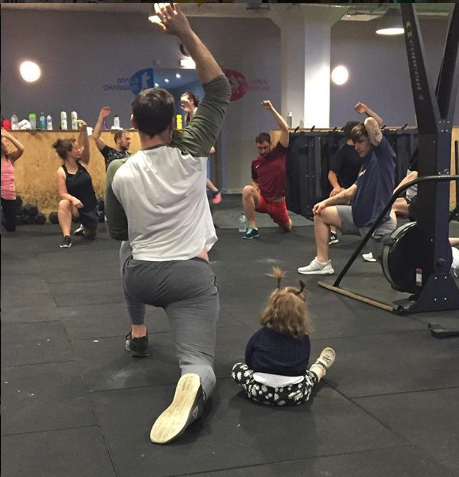
The Coach (and mini-coach!) at our Partner Gym EveryDay Athlete leads a structured warm up appropriate to the programmed HIIT workout
What are your individual needs when warming up? Eg. do you require extra stretching for your shoulders because that day you’ve been hunched over a desk all day?
This may not be covered in a class-based environment and you should make sure to cover this yourself before the class starts.
What are your expectations?
If you plan on moving quickly and repetitively with a weight or movement, do you have the strength and skill to perform this same movement in a much more controlled manner?
If you want to get a sweat on in every session that’s okay too but this can also be achieved by training at 80% instead of 100% on some sessions.
Long Term Goals
Year in and year out exercise and training requires consistency and dedication. Similar to more extreme diets, we shouldn’t be looking for a quick fix as it is often unsustainable and doesn’t provide long term results, as this approach can be tortuously difficult and we will lose motivation quickly or get injured.
Have you discussed with your coach, instructor or physio what your individual needs and expectations are with training?
This will reduce that feeling that you’re expected to perform at full intensity on every session. They can help identify things that you may do in your own time or out with class times in the gym that should help you progress to where you want to.
Image from one of the HIIT Classes at one of our partner gyms EveryDay Athlete at our Northside Clinic and Studio in Port Dundas
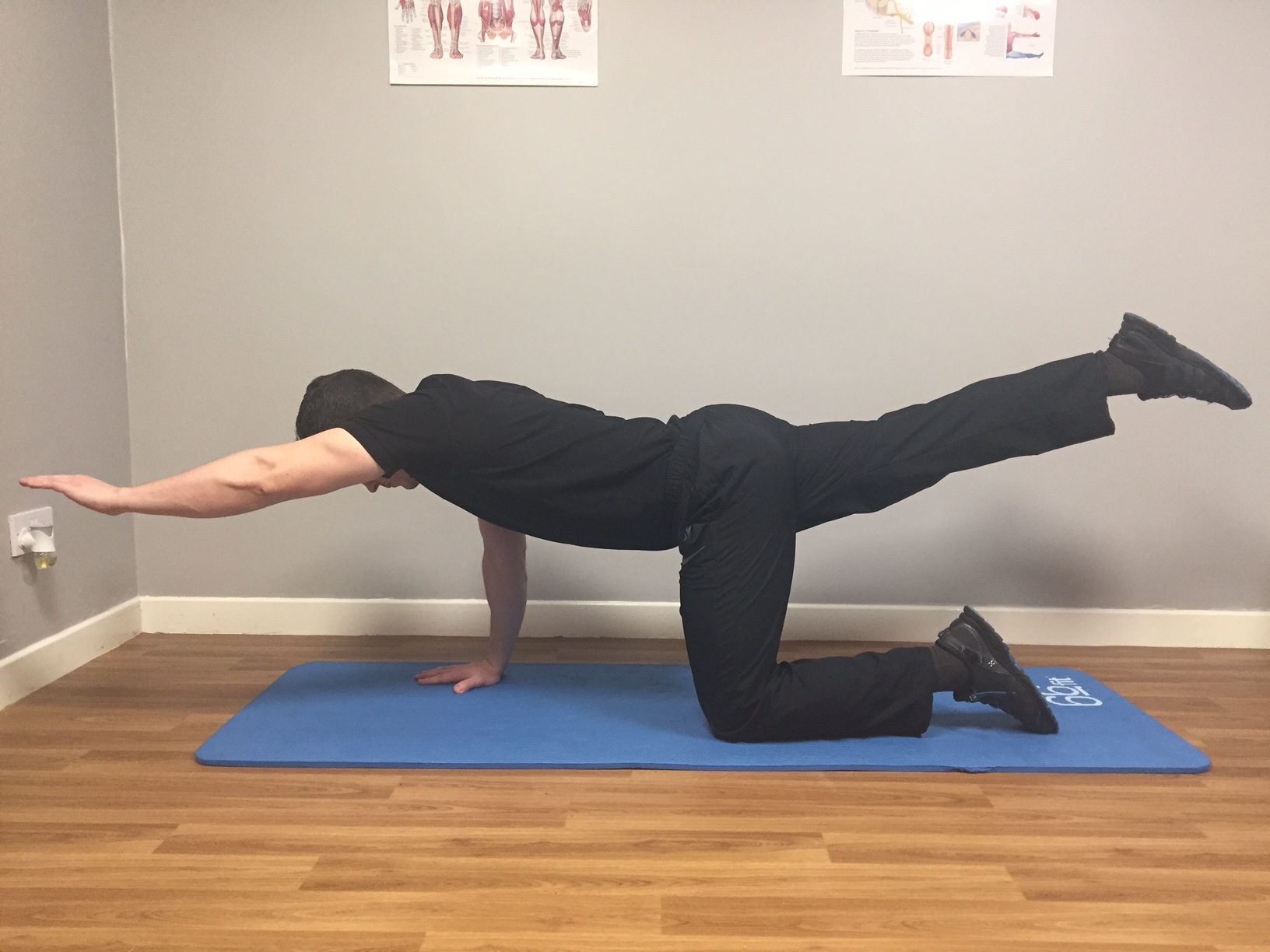
Back Strengthening Exercises for Desk-Based Workers
Let one of our Physios, Danny Wray, take you through a set of exercises which will help to strengthen your back and hips and that help counteract the negative effects of sitting.
At Physio Effect we routinely treat the general population for injuries and pain which can be attributed to a sedentary lifestyle. We have previously discussed the risks posed by excessive hours of sitting and how this is reaching almost epidemic levels in the Western world. Today's article provides some general exercise recommendations that can go some way to reducing this risk and counteracting the negative effects of sitting.
In an ideal world, those of us who have sedentary or sitting based occupations should aim to move, stretch, and be active for at least 1-2 minutes of every hour. While some of the exercises shown here may not be suitable for your particular work environment, any effort to perform a routine of this nature for 5-10 minutes before or after work or during a lunch break would go a long way to reducing the risk of pain and injury. General exercise and safe varied movement of any kind is also highly recommended.
Exercise 1 - Thoracic Rotation

Thoracic Rotation Start
Start on all fours with one hand placed behind your head.
Slowly turn the elbow towards the ceiling allowing your trunk to rotate and stretch
Hold at top position for 3-5 seconds. Repeat x 10 with each arm
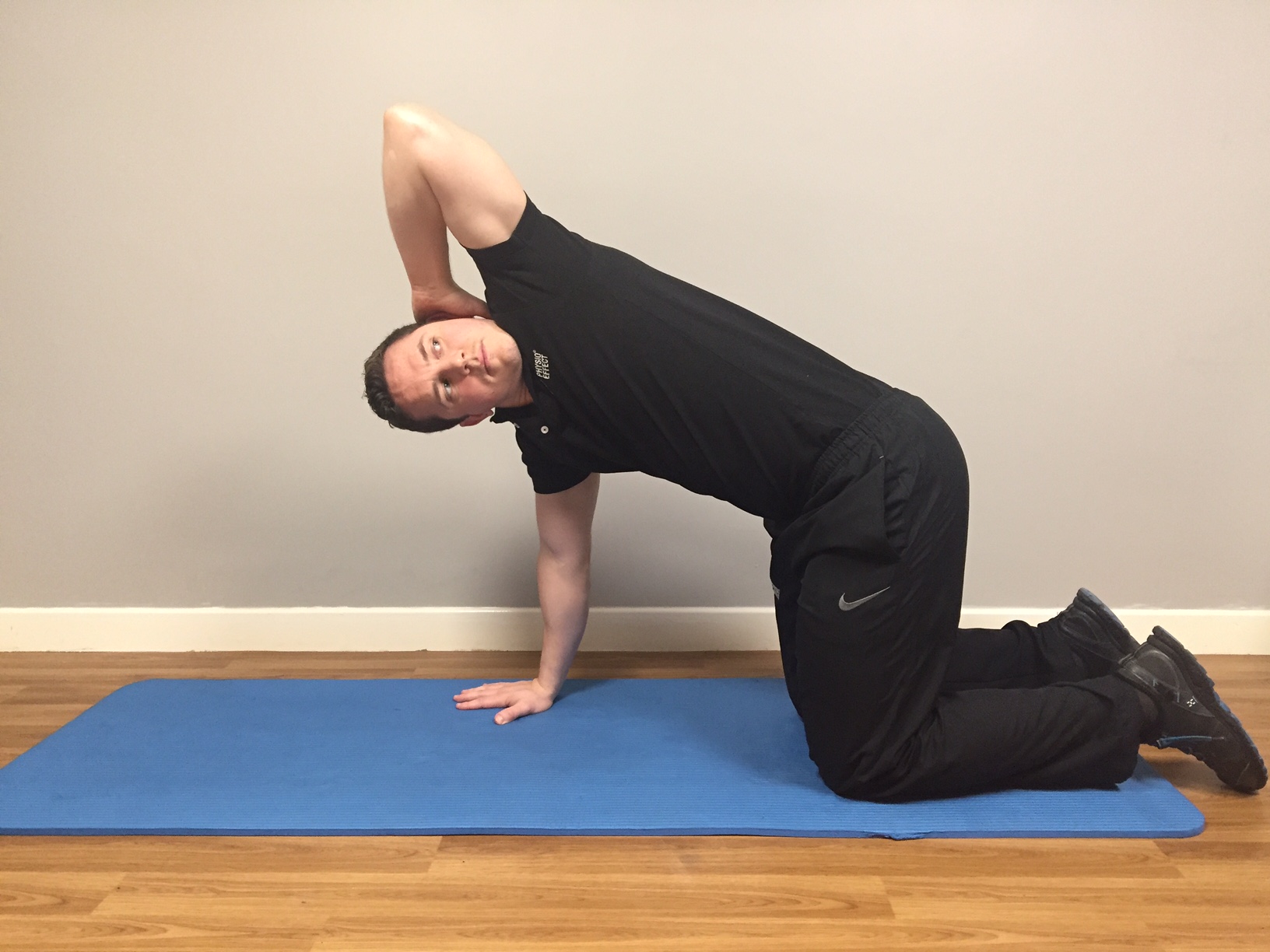
Thoracic Rotation Finish
Exercise 2 - Dart
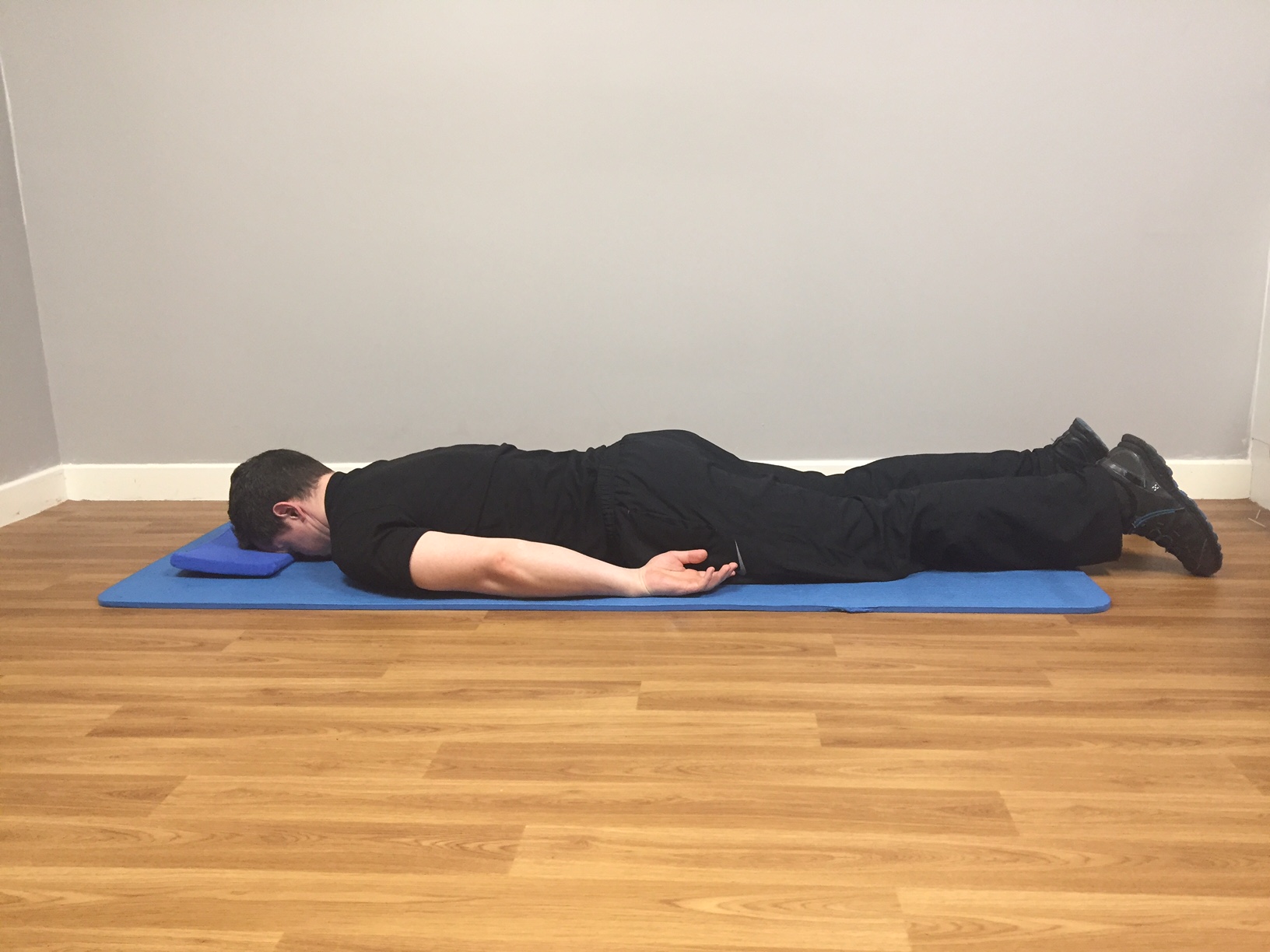
Dart - Start Position
Lay face down with thin pillow or folded towel for head support
Arms by your side, gently stretch your fingertips away from your shoulders allowing your shoulder blades to glide downward and slightly inward
Palms facing your hips, have your arms floating just off your side and not touching the floor
Keeping the back of your neck long and eyes looking to the floor, gently lift your head and upper body just off the floor - imagine lifting from your breast bone
Hold the finish position 3-5 seconds. Repeat 10 times 1-2 sets

Dart - Finish Position

Dart - Finish - Detail
Exercise 3 - Hip Flexor Stretch

Hip Flexor Stretch Start Position
Take a kneeling / lunge position as shown - use support of wall or furniture for balance if required
On the kneeling side gently engage your buttock and lower abdominal muscles - imagine you are tucking your tailbone in between your legs
You should feel a stretch at the front of your hip/ thigh. If balance allows gently raise the arm on the same side as the kneeling knee.
Hold the stretch for 30 seconds minimum and repeat 2-3 times each side.

Hip Flexor Stretch Finish Position
Exercise 4 - Cobra

Cobra Start Position
Lay face down with hands palms down about shoulder height
Using your arms slowly press out peeling your upper body slowly off the floor
Remain heavy in your hips trying to keep them in contact with the floor - relax your buttock muscles
Hold the finish position for 5-10 seconds, return to the start and repeat 5-10 times

Cobra Finish Position
Exercise 5 - Shoulder Bridge
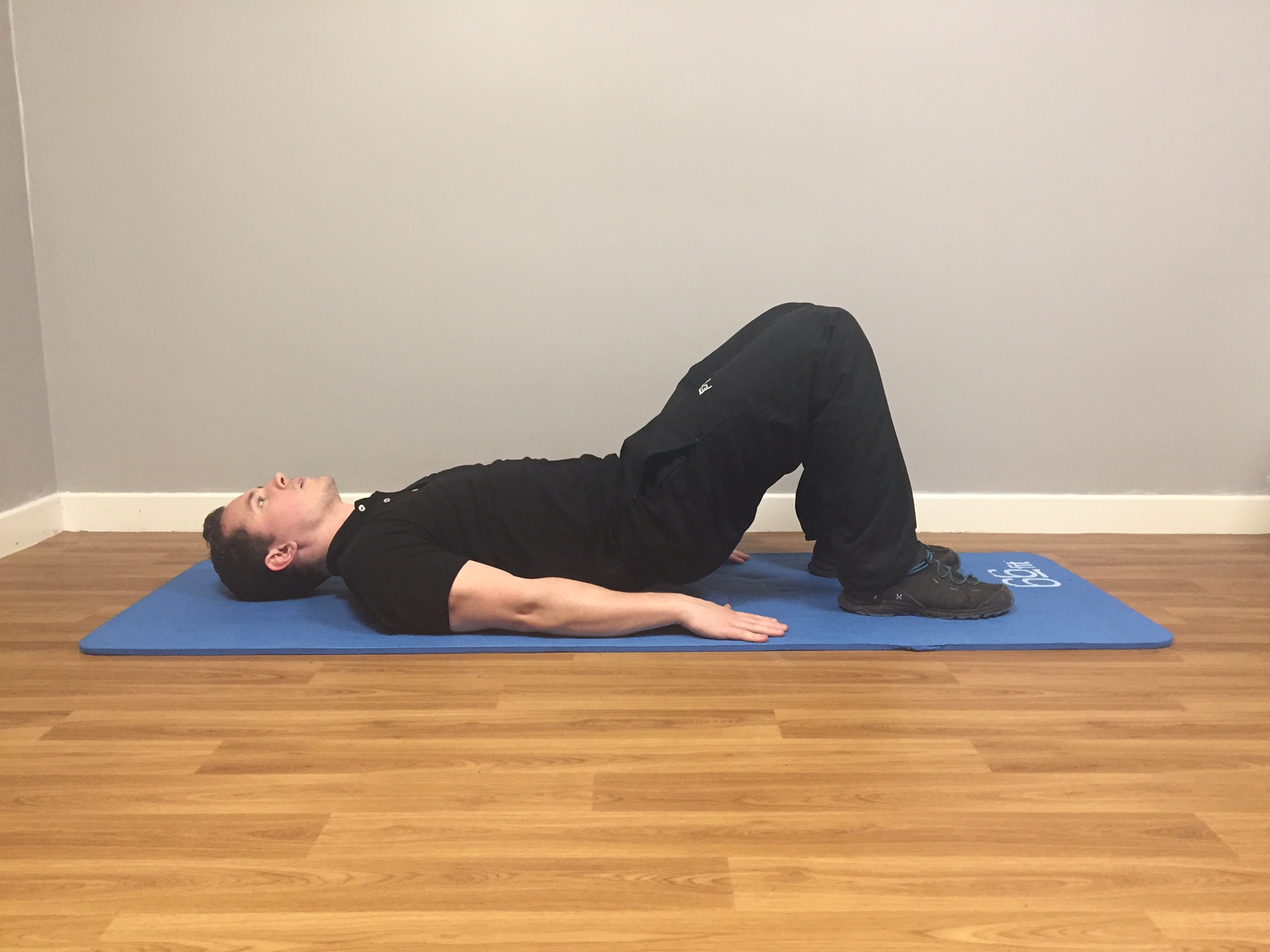
Shoulder Bridge Start Position
Lay flat on your back with feet shoulder width apart and knees bent
Using your lower abdominals gently tilt your pelvis to press your lower back flat to the floor
Pressing through your heels, using your buttock and abdominal muscles gently peel your spine up from the floor starting with your tail bone.
Finish with your weight resting across your shoulder blades and your shoulders, hips and knees in a diagonal line
Hold finish position for 3-5 seconds, return to start and repeat 10 times for 2-3 sets.
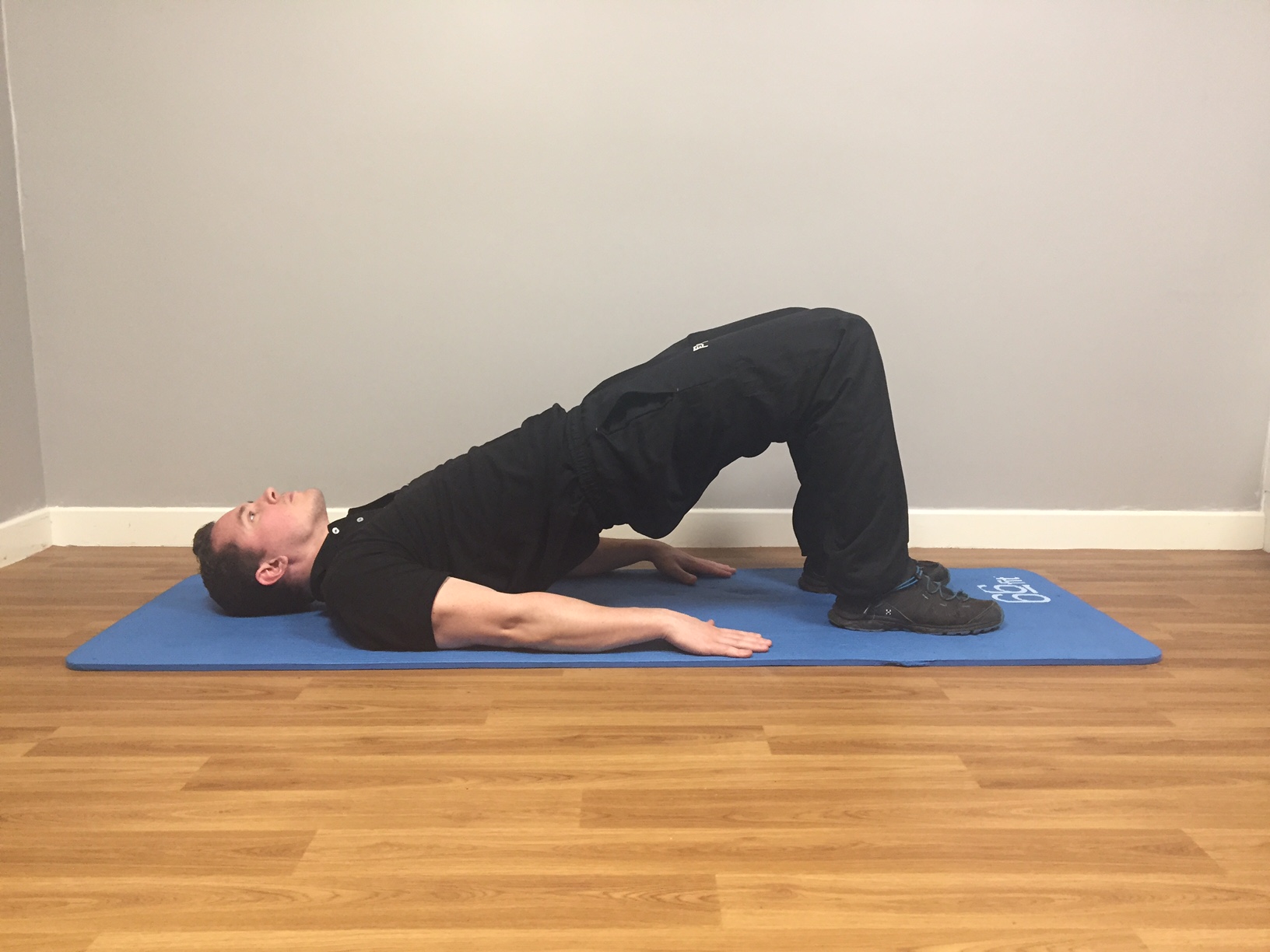
Shoulder Bridge Finish Position
Exercise 6 - Superman

Superman Start Position
Start in all fours position with knees under hips, hands under shoulders and spine relaxed
Slowly extend out opposite arm and leg pointing the toes behind and the fingertips to the front
Keep gentle tension in your lower abdominals - think about drawing your bellybutton in towards your spine
Try to maintain spinal position throughout the movement, return slowly to start position
Repeat with opposite arm and leg, try 10-12 repetitions for 2-3 sets.

Superman Finish Position
Exercise 7 - Thoracic Extension with Foam Roller

Thoracic Extension with Foam Roller Start Position
Lying on your back with knees bent and feet flat, place a foam roller under your mid-upper back as shown
Take a deep breath in and then, as you exhale, slowly extend back over the roller to stretch your back. Try to keep your lower abdominals engaged to avoid over-arching your lower back
Support your head with your hands and be careful to stay relaxed in your neck. If you find this too intense or uncomfortable, try using a pillow or pillows to rest back onto
Hold the finish position for 2-3 breath cycles, return to start position and repeat 5 times
Move the roller to another position in your mid-upper back and repeat the process, aim to work on 3-5 positions along your spine

Thoracic Extension with Foam Roller Finish Position

Thoracic Extension with Foam Roller Alternate Finish Position
Exercise 8 - Pec Stretch

Pec Stretch Start Position
Stand as shown with arm at approximately shoulder height and palm to forearm placed against the doorframe
Slowly turn your body away by stepping your feet around to open and stretch the front of your chest and shoulder
Lean gently into the stretch, keeping your neck relaxed, hold for 30 seconds+, repeat x 2 on each side
Alternatively, use a doorway to position both arms in the stretch position, step forward to feel the chest and shoulder open and stretch. Hold 30 seconds+, repeat x 2.

Double Pec Stretch Position
While these are general exercise recommendations suitable for the majority of the population they are not prescriptive for any specific pain or injury. These exercises should be performed slowly and gently in a range of movement suited to your own level of ability and flexibility. The exercises should not cause any pain and we recommend that if you are in any doubt or if you are suffering from spinal or joint pain issues you should consult a healthcare professional for advice.
At Physio Effect we provide a wide range of services allowing us to not only treat your pain or injury but ensure that you are given the best advice specific to your individual needs to prevent your problem from recurring.

Running injury prevention; do you need a musculoskeletal screening?
Sports-specific screening available!
Musculoskelatal screenings are available from our team of experienced and expert Sports Physiotherapists – but what is it? Imagine, someone could look you over and help flag issues before they become injuries!
Here's what Jonny says:
“A 60-minute assessment which will include a full body assessment of flexibility, strength, balance and body control to highlight potential for injury or problem shoot issues experienced by a runner. This may also include treatment if needed as well as education on issues flagged up with suggestions of how to fix these.”
We have a broad spectrum of sports expertise here at Physio Effect – everything from running, martial arts and football to rugby, mountain biking and roller derby! Whatever your sport or activity, whatever your level, we’ll be able to assess and treat you!


#KnowledgeShare – Shoulders Month – Mobility Exercises
Physio Effect physiotherapist Jonny Kilpatrick demonstrates some exercises to improve overhead range of movement using small equipment you’ll find in your gym
Here's Jonny from a few years ago demonstrating some exercises to improve overhead range of movement using small equipment you'll find in your gym

#KnowledgeShare – Back Mobility
It’s back month here at Physio Effect Glasgow - how to use a foam roller to help with back pain
17th March 2017
It’s Back Month here at Physio Effect! Here’s Jonny (and Ash) showing us how to use the foam roller for a bit of mobilisation!